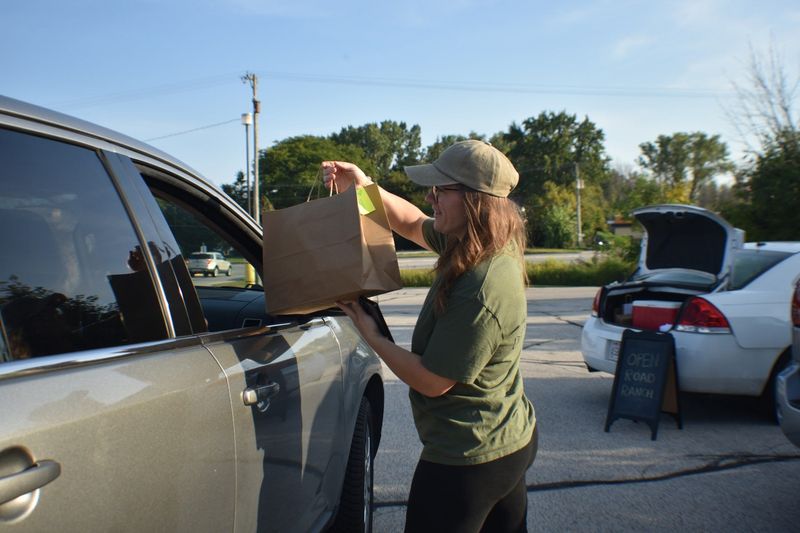
PLYMOUTH – Cars and trucks streamed steadily in a line through the Fleet Farm parking lot on the evening of Sept. 17. Business owners stood with signs and open trunks full of produce and goods as drivers shared their names through open windows for their orders.
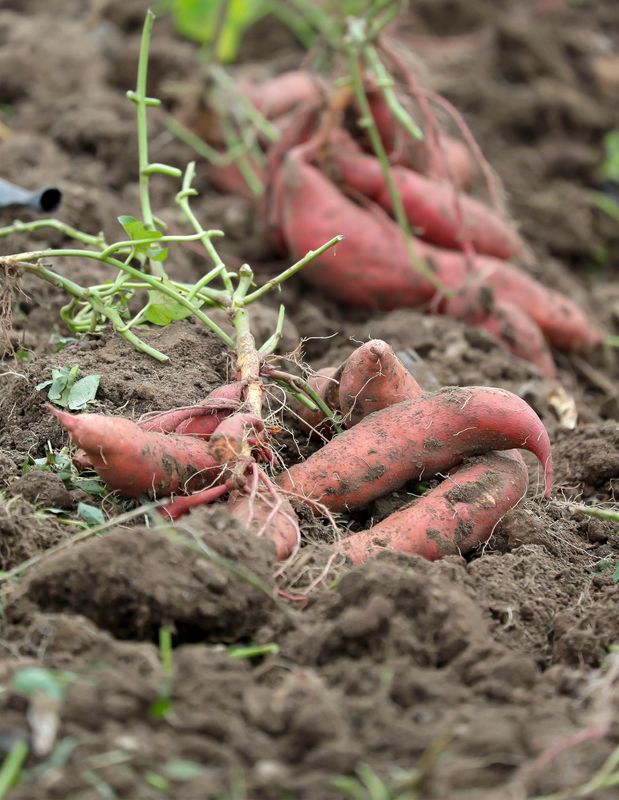
Glass bottles of milk, bags of peppers and potatoes, and even a box of several whole chickens were among the goods delivered from nine businesses around the area, including Plymouth, Sheboygan Falls and Elkhart Lake.

The half-hour exchange was the first meeting of the Sheboygan County REKO Ring, following the direct farmer-to-consumer sales model founded by Finnish farmer Thomas Snellman in 2013. REKO roughly translates to “fair consumption,” and was sought as an alternative to selling to grocery stores.
Hundreds of REKO Rings can be found throughout Norway, Sweden and Finland, but their presence is significantly smaller in the United States. In southeast Wisconsin, Ozaukee and Washington counties have REKO Rings.
Julie Schroeder, owner of Greenbush-based Open Road Ranch, helped establish the local REKO Ring. She often goes to farmers’ markets in the summer and works with some businesses to sell pasture-raised pork and sheep products, but she was trying to find a way to keep sales up in the winter.
Schroeder reached out to join Ozaukee and Washington counties’ REKO Rings, but she decided to start one in Sheboygan County.
“I’m sure this can help other farms in the area,” Schroeder said.
In addition to serving as another sales avenue and a possible way to avoid profit loss selling to a larger store, REKO Ring allows the community to directly connect with the people who make and grow their food and ask questions about their products.
Krista Fredericks, owner of microbakery Oak & Arrow, has established a community of customers on social media and has a growing demand for her sourdough loaves and baked goods. But she said it can be difficult for people to find local food unless they go to farmers’ markets or seek it out at traditional grocers.
“It’s almost like a grassroots effort for us to be reconnected with our local farmers,” she said.
Fredericks has seen a demand from the community for locally grown and sustainably made foods. She’s connected people with local farms growing vegetables or makers of honey she supports, too.
How does a REKO Ring work?
In a private Facebook group, farmers, producers and makers post what they have available for purchase with quantities and prices. The Facebook groups are private to limit to sellers and buyers, avoid spam and allow a page administrator to clear out old posts after weekly pickups.
Customers can comment on those posts with their orders and prepay to the business within a specific ordering period, which are Thursdays to Mondays for the Sheboygan County REKO Ring.
During the pickup day and time, customers will drive to the REKO Ring location and pick up their orders from respective businesses.
Though farmers’ markets are still heavily utilized by small businesses, REKO Rings can be more efficient: businesses have reassurance of the quantity of products to bring, payment has already been received and the pickups are significantly shorter.
REKO Rings and other direct sales models prove convenient, efficient in post-pandemic era
Grocery stores remain king for food sales, but the United States Department of Agriculture noted that direct sales at farmers’ markets and farm stores, community supported agriculture and other channels grew by 11% and 79%, respectively, from 2019 to 2020.
Erin Silva, professor of organic and sustainable cropping systems at the University of Wisconsin-Madison and director for the Center for Integrated Agricultural Systems, said direct sale models, like farmers’ markets, farm stores or CSAs, can be crucial for small family farms and new farmers entering the agriculture industry to stay economically viable.
Larger markets may offer a lower price point and require a certain volume of products, which isn’t feasible to support their families or staff.
Thelma Heidel-Baker, co-owner of Bossie Cow Farm in Random Lake, a fifth-generation grass-based organic dairy and beef farm, said the Ozaukee Area REKO Ring started because of the COVID-19 pandemic.
In spring 2020, farmers couldn’t sell to farmers’ markets and restaurants that shut down. Heidel-Baker said her friend reached out worried about what to do with accumulating eggs from her chickens and had heard of REKO on a podcast.
The pair, along with a third farm, organized the REKO Ring within a month. The idea was new to customers, but Heidel-Baker said they wanted to avoid health risks of in-person shopping and were desperate for another option.
“You didn’t have to get in contact with people. You could just deliver,” Heidel-Baker said.
She added REKO can be a convenient option for individuals with disabilities and families, who can avoid the hassle of shopping. The REKO is also favorable for her as a farmer, who doesn’t have time to sell at farmers’ markets, factoring in travel and time spent at a stand.
“But I can do a REKO because it’s all done online,” Heidel-Baker said. “I can be working on the farm at home and taking an order at the same time.”
Silva said a REKO can be appealing for consumers and farmers streteched for time in a post-COVID world. The modern consumer may prefer preordering and picking up, like with curbside store pickups. And farmers may not have time or staff to sell at a farmers’ market, especially if they’re facing labor challenges.
“It’s a win-win for both the farmers that are pressed on time and the consumers that are increasingly pressed on time as well,” Silva.
The Ozaukee Area REKO has grown to about a dozen farmers and producers, selling products like honey, chicken, kombucha, vegetables, microgreens and fresh-cut flowers. Some producers are seasonal and others have left.
Ozaukee’s momentum and broader interest brought REKO to West Bend in 2022. A few REKO Rings have popped up across Michigan and Minnesota, too.
The Ozaukee Area REKO Ring’s customer base has changed since the pandemic, but Heidel-Baker isn’t sure if it’s from people shedding COVID-19 precautions and going back to stores. People who’ve stayed like the REKO model, she said, and are looking for high-quality products directly from farmers and not necessarily bargain deals.
Although locally grown and organic products typically have a higher sticker price, Silva said access to healthy, locally grown foods may be supported by farmers’ markets accepting Supplemental Nutritional Assistance Program and FoodShare benefits and health insurance plans offering rebates for CSAs.
The Sheboygan County Interfaith Organization’s farmers’ market accepts benefits and offers nutrition vouchers for seniors.
“There is a recognition that people from all economic walks of life should have access to healthy local foods,” Silva said, adding it’ll be interesting to see if food assistance will be accepted as the REKO Ring model grows.
The REKO has given back to the community and strengthened local relationships between producers and customers.
“I have literally seen some of our customers’ kids grow up in front of us over the five years,” she said.
What businesses can you find at the Sheboygan County REKO Ring?
Businesses participating in the REKO Ring and product availability may change over time. Here’s who’s in right now:
When and where do Sheboygan, Ozaukee and Washington REKO Rings meet?
Find the Sheboygan County and other area REKO Ring pages on Facebook.
Sheboygan County REKO Ring
Ozaukee County REKO Ring
Washington County REKO Ring
Contact Alex Garner at 224-374-2332 or agarner@gannett.com.
This article originally appeared on Sheboygan Press: Want local goods directly from farmers? Sheboygan County just launched a REKO Ring.
Reporting by Alex Garner, Sheboygan Press / Sheboygan Press
USA TODAY Network via Reuters Connect