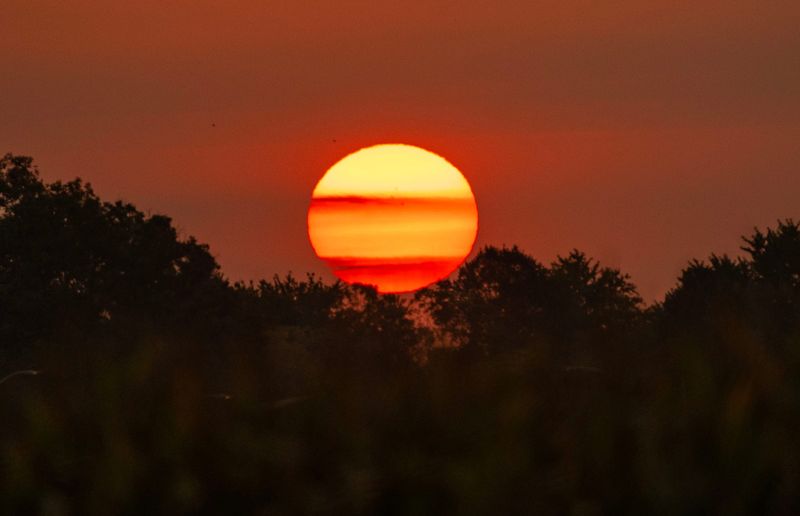
The Bible’s opening includes a simple line: “God said, let there be light.” We don’t think light was used as a metaphor. It wasn’t symbolic.
Light was the remarkable provision that both made life not only possible, and has sustained us across millennia. And so, we believe that those words were not just a command but a prophecy of a bright and hope-filled future for life on Earth.

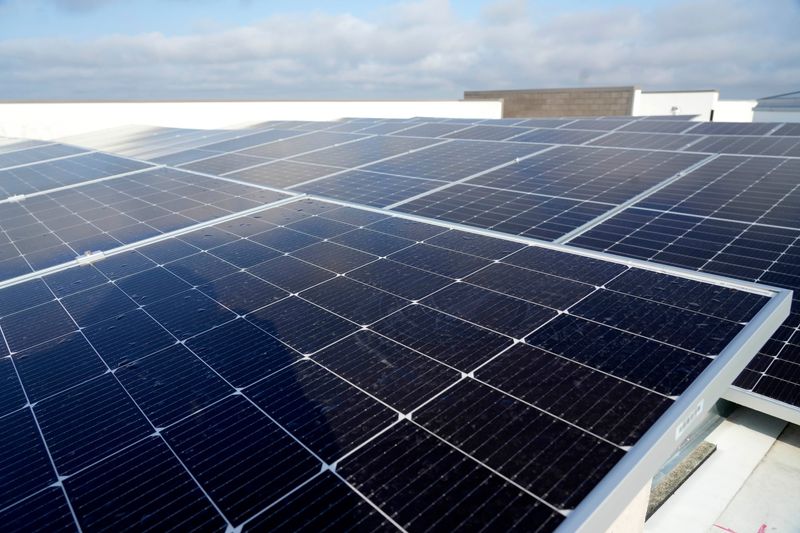
Finally our eyes were open and we discovered how we can use this solar power to produce electricity more directly: by solar cells and the winds that are driven by unequal heating of our planet that can turn the blades of wind turbines. Regardless of whether you believe more in theology or science, it is a fact that one of the most straightforward ways we can produce light now, is the same way it was created in the first place, in our part of the solar system — from the sun.
Solar power doesn’t require importing fuel from hostile nations. It doesn’t rely on fragile supply chains or compromises with despots. It isn’t about greed or pillaging the planet. And it doesn’t ask Americans to change who they are or what they believe. It simply takes something the sun already provides every day and allows us to put it to work.
Protecting our resources is a common sense American tradition
That’s just not a radical idea. For most of American history, protecting the land, our water, and other resources we depend on wasn’t political. It was common sense — especially in rural America.
People who live close to the land understand something city politicians often don’t: you can’t survive without respecting what keeps you alive. If our soil fails, farms fail. If our water is polluted, we and our families pay the price. If energy is unreliable or unaffordable, rural communities feel it first and ultimately we all do. That’s not ideological, it is our current reality.
Producing dirty energy, while ignoring Biblical principles, has also become a major health issue for all of us. Urban or rural, we all breathe the pollution. But asthma, heart disease, and respiratory problems hit harder where healthcare access is already limited. When energy is produced cleanly, the air is healthier, the water is safer, and families spend less time worrying about what their kids are breathing. Many people today yearn to restore the integrity of creation, and it’s the right thing to do. The Bible was pretty clear about that.
The Bible is a major source of writings about caring for creation. And taken as a whole, it turns out to be a powerful ecological handbook on how to live rightly on earth. Since its focus is on God as creator and sustainer of all Creation, we should expect the Bible to call us to bring honor to what is God’s — after all, God repeatedly calls his creation “good” (Gen. 1:4, 10, 12, 18, 21, 25, 31) and expects us to conserve and keep the Earth (Gen. 2:15).
It also decries creation’s destruction, calls for its restoration, and looks forward to it being made right again. The Bible’s call to take care of the creation with which we are entrusted is taken so seriously that in its final book, Revelation 11:18, it declares that the destroyers of the Earth will be destroyed.
True energy independence has always been bi-partisan issue
And now the technology, cost and benefits all make those biblical exhortations possible. How could we not have seen it? Every single day the sun rises. It’s so reliable. So inspiring. So faithful to humanity. So obvious. How can we still be ignoring it? Regardless of whether your faith is also your political compass, energy independence has always been a bi-partisan — conservative and progressive — value.
The more we rely on foreign energy or a handful of massive corporations, the less control regular Americans have — over prices, reliability, and our own well-being. Rural communities know this well. When power goes out, or climate disasters strike, help doesn’t come quickly. When prices rise, families feel it immediately. And when pollution increases, it puts our children at risk.
That’s why clean energy matters — for our freedom and our health. Across the country, farmers and ranchers are moving beyond awareness of the problems that face us, toward fostering stewardship and restoration of what has been degraded in the past. Installing solar panels on barns, on fields that are exhausted, or alongside existing operations, is an act of loving, caring and keeping what God has given us to hold in trust. It doesn’t replace farming — it supports it. Lease payments and on-site power generation help families keep land that they have owned for generations. Solar becomes another crop — one that produces even in tough growing years, without polluting the air or water their families rely on.
Texas figured this out. So did many other conservative states. Not because of ideology or faith, but because it made economic sense. Cheaper power, stronger grids, and income flowing into rural counties instead of overseas and all while preventing our land from destruction and reducing the pollution that contributes to health problems.
The same stewardship principles show up in soil and water conservation. Farmers adopt these practices because they want to pass on land that’s productive, not worn out. Clean water and healthy soil don’t just protect crops, they protect families. Faith reinforces this responsibility. The Bible doesn’t say the earth was created to be stripped, polluted and ultimately discarded. It says we are caretakers. Using what we’ve been given wisely — land, water, sunlight — is honoring our moral obligations. Rejecting self-reliance, stewardship, and health isn’t conservative — it’s short-sighted and faithless.
Rural America has always known that freedom means producing what you need as close to home as possible. Clean water. Healthy land. Reliable energy. Safe air for kids to breathe. Solar fits squarely in that tradition.
The Bible begins and ends with interwoven ideas. The Old Testament with “Let there be light.” The New Testament ends with Revelations and Revelations 11:18 tells us that God “will destroy those who destroy the earth.” Together these two divine guidance allow us to come full circle, a circle that embraces our faith, our obligations and our sun. Using that light to power our homes, protect our health, strengthen rural America, which in turn strengthens all of America. And it keeps our country independent. It isn’t political. It’s practical, responsible, and moral.
Calvin B. DeWitt is an environmental scientist at the Nelson Institute at the University of Wisconsin-Madison and President of the Academy of Evangelical Scientists and Ethicists. He chaired the CRC’s Creation Stewardship Task Force that reported to Synod in 2012 and is author of Earthwise: A Guide to Hopeful Creation Care (Grand Rapids: FaithAlive Resources). Helen Rose is an educator and non-profit leader who worked as the Director of Grassroots Programs of Climate Change Solutions Campaign and Campaign for Communities Director at EARTHDAY.ORG and as the Faith Coordinator.
This article originally appeared on Milwaukee Journal Sentinel: Our faith informs our care for God’s creation on Earth Day | Opinion
Reporting by Calvin B. DeWitt and Helen Rose, Special to Milwaukee Journal Sentinel / Milwaukee Journal Sentinel
USA TODAY Network via Reuters Connect