MADISON – In a move unheard of in Wisconsin, state lawmakers and Gov. Tony Evers passed and signed into law a new state budget in less than 24 hours as they raced to set funding levels before Congress could enact new limits.
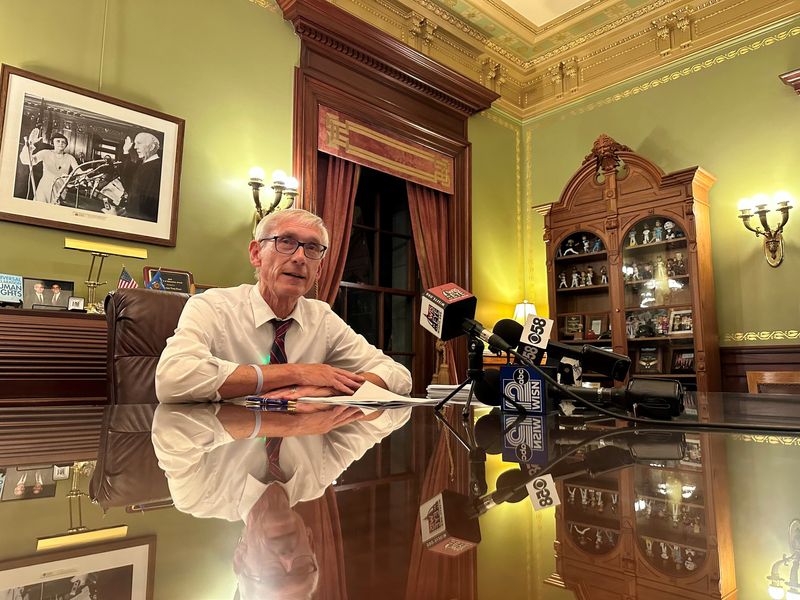
Evers signed the $111 billion two-year spending plan into law just after 1:30 a.m. Thursday, July 3, less than an hour after the state Assembly sent the Democratic governor the final budget bill.

“We’re a purple state,” Evers told reporters before signing the bipartisan compromise bill. “We’re going to be a purple state for, I’m guessing, a long time, and so we need to work together. … It’s hard work, and we accomplished lots of things. We didn’t accomplish everything we wanted, but you know what? That’s the way it works.”
The 2025-27 budget is the product of weeks of negotiations between Republican legislative leaders and the Democratic governor — the first bipartisan agreement of its kind since Evers was elected seven years ago, ushering in an era of divided government.
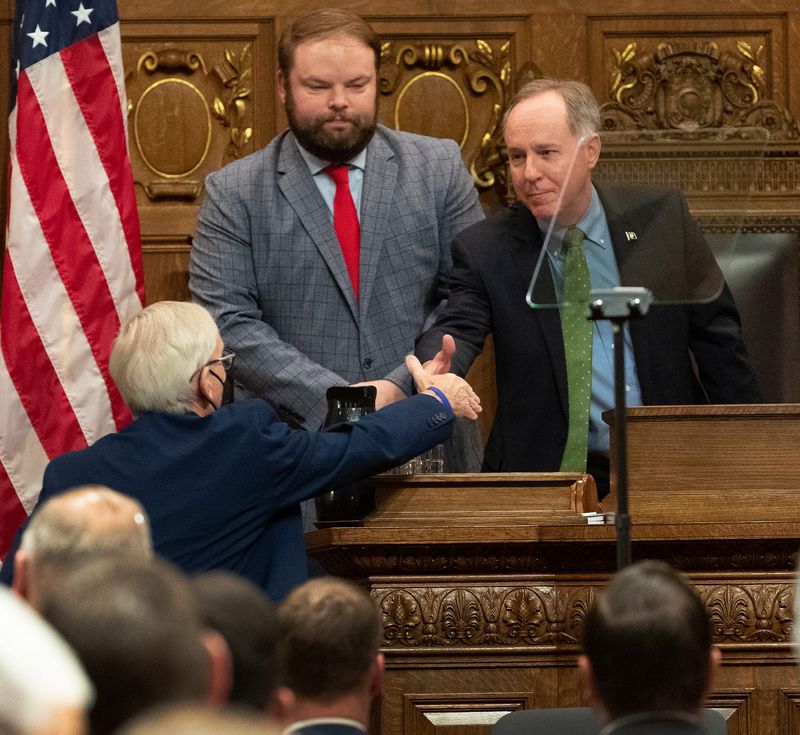
“We’re at a time in politics in America where people believe that it’s hard to get anything done, where two sides are such polar opposites on so many issues,” said Assembly Speaker Robin Vos, R-Rochester, ahead of the vote. “But … on an issue like (the budget), it really took both sides to come to the table, listen to the other and try to be able to put our differences aside and focus on what brings us together.”
The state leaders raced to pass the state budget Wednesday to lock in more funding for hospitals before President Donald Trump signs into law a plan that would prevent such increases in the future.
The state budget plan includes a provision that would expand the state’s tax on hospitals from 1.8% to 6% and use those funds to draw down additional federal matching dollars for Medicaid programs. These funds would be used to offset ongoing costs and to make additional payments to hospitals.
Trump’s spending bill bars states from increasing such taxes in the future, prompting Wisconsin leaders to lock in new rates before the bill is signed into law as early as Thursday, July 3.
“We want our health care system to be in good shape, and in order to do that, we’re going to need help from the federal government,” Evers said after signing the budget. “And whatever we can do before they pass … the federal budget, we will be able to access help from them to keep our hospitals afloat. It’s absolutely critical for us to do that.”
The state Senate passed the spending package 19-14, with four Republicans and 10 Democrats voting against the plan, just after 9 p.m. Wednesday, July 2 — 12 hours after the chamber was scheduled to begin debate.
But lawmakers debated in fits and starts, pausing to meet in caucus as legislative leaders sought to whip votes for the plan.
At one point, lawmakers in the state Senate recessed for hours while leaders drafted a new amendment to the budget bill that added tens of millions in spending and a measure requiring the University of Wisconsin Board of Regents to study efficiencies at campuses experiencing declining enrollment, among other changes.
The Assembly passed the budget 59-39 shortly before 1 a.m. after about five hours of debate.
Throughout the debate, Republicans praised the budget as one that was improved by the removal of some of Evers’ proposals, while Democrats credited the Senate seats they picked up last fall with earning them a seat at the negotiating table.
Tax cut, funds for UW building projects
The overall package cuts taxes by $1.3 billion, spends hundreds of millions on building projects on University of Wisconsin System campuses, expands Medicaid funding, increases funding for special education and funds new childcare programs, among other measures. In all, it spends $111 billion, a 12% increase over current spending levels.
The agreement gives Republicans a win with the $1.3 billion tax cut plan that expands the state’s second-lowest tax bracket to include more filers, exempt some retirement income from taxation, eliminate the residential utilities sales tax and create a film tax credit capped at $5 million per year.
Democrats see a win in funding levels for the UW System, which saw one of the biggest turnarounds in the budget as a result of the bipartisan negotiations. Republicans in June threatened to cut universities by $87 million. Instead, the state’s public universities will receive a more than $256 million boost over the next two years, the largest increase in more than 20 years, according to the governor’s office.
But the budget plan caused heartburn among lawmakers on each side of the aisle.
“It’s going to drive up property taxes, the least popular form of tax that we hear complaints about — why?” Sen. Mark Spreitzer, D-Beloit, said on the floor before voting against the plan. “This budget just does not meet the mark of the political moment we find ourselves in.”
Rep. Robyn Vining, D-Wauwatosa, voted against the budget despite it containing “a lot of good stuff,” including funding for mental health, UW capital projects and a film production tax credit. She criticized a set of childcare regulatory changes and, like other Democrats who opposed the bill, said it fell short on education funding.
“This budget is … an insult to educators and it is an attack on public education,” Vining said.Senate President Mary Felzkowski, a Republican from Tomahawk, said she voted against the budget because it did not go far enough in reining in healthcare costs.
Felzkowski, who has been mentioned as a potential GOP candidate for governor in 2026, chastised Evers for “selling out to special interests” instead of including hospital price transparency changes at the state level in the budget.
“Gov. Evers, you failed Wisconsin,” Felzkowski said. “Elections have consequences and the Dems are at the table. Look what we could do if we were in control. That’s what Democratic control gets us.”
Asked about Felzkowski’s characterization of the provision as a giveaway to hospitals, Evers said, “That’s bullshit.”
Overall, the budget had more supporters than detractors.
Democratic state Sen. Brad Pfaff of Onalaska said the plan was “considerably better than not having a budget at all” after Democratic lawmakers were looped into negotiations.
Included in the budget plan is $194 million to expand the University of Wisconsin-La Crosse’s science building. Pfaff praised the inclusion before voting “yes.”
“Not funding a building for 12 years because of partisan politics was ridiculous. I am very grateful that this has finally come to an end,” he said.
Evers used his partial-veto authority
The spending plan Evers signed largely retained the provisions the Legislature passed, with some use of his partial veto authority. Notably, the governor removed the 2029 deadline from a provision that would have closed the Green Bay Correctional Institute by 2029.
“We’re going to close it, but we need more compromise on that,” Evers said, pointing to the Legislature’s bipartisan efforts to close the Lincoln Hills School for Boys and Copper Lake School for Girls as an example to warn against setting such deadlines. Nearly 10 years after a law was passed requiring their closure in 2021, they remain open.
Evers also reduced the amount of money allocated in the budget for new positions within the Legislative Audit Bureau, arguing the agency has enough funding and posiiton authority to fulfill its duties.
This article originally appeared on Milwaukee Journal Sentinel: Legislature passes and Evers signs budget after sprint to get ahead of Trump big bill
Reporting by Molly Beck, Jessie Opoien and Anna Kleiber, Milwaukee Journal Sentinel / Milwaukee Journal Sentinel
USA TODAY Network via Reuters Connect