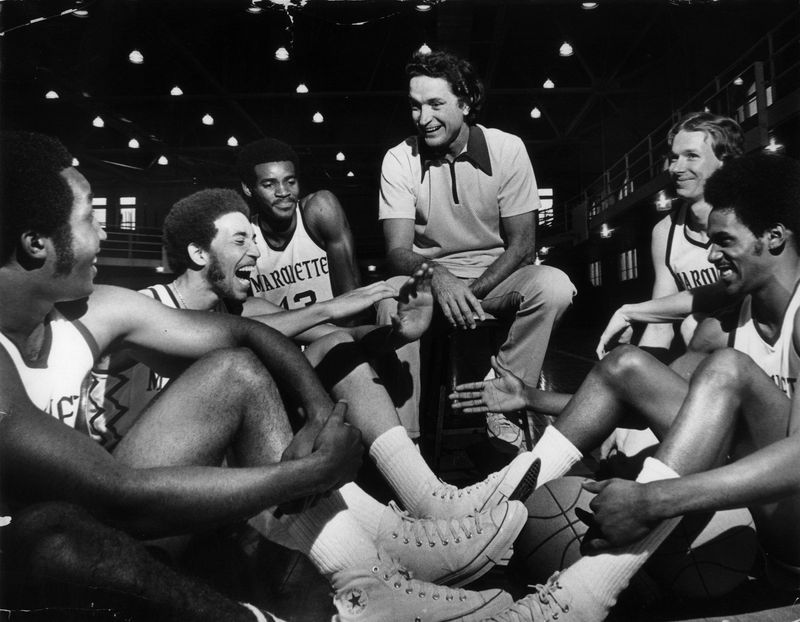
Al McGuire coached until the final buzzer.
The legendary Marquette men’s basketball coach died 25 years ago, but his influence has been long-lasting. When MU plays St. John’s on Feb. 18 at Fiserv Forum, it will be celebrated as “Al’s Night” as it is every season because McGuire was a feisty guard for St. John’s from 1947-51.

His was a singular American life.
McGuire’s basketball legacy was secured when he led MU to the NCAA tournament title in 1977, just a few months after announcing he would step away for a business career. McGuire then found a second act as a beloved television broadcaster, with his streetwise asides often bouncing off the acerbic Billy Packer while Dick Enberg acted as traffic cop.
In contrast to his very public persona as a slick-talking New Yorker, McGuire was incredibly private. When he was diagnosed with a rare blood disease, he didn’t make any announcements and few outside his immediate circle knew how serious the situation was.
His final TV broadcast came on March 5, 2000, at the Kohl Center in Madison. Later that year, he entered hospice care at the since-shuttered Franciscan Woods in Brookfield.
“At one point, the doctors said to him that the end will be near when you start coughing,” said Rob McGuire, Al’s youngest son. “And he said, ‘Well then I just won’t cough.’ ”
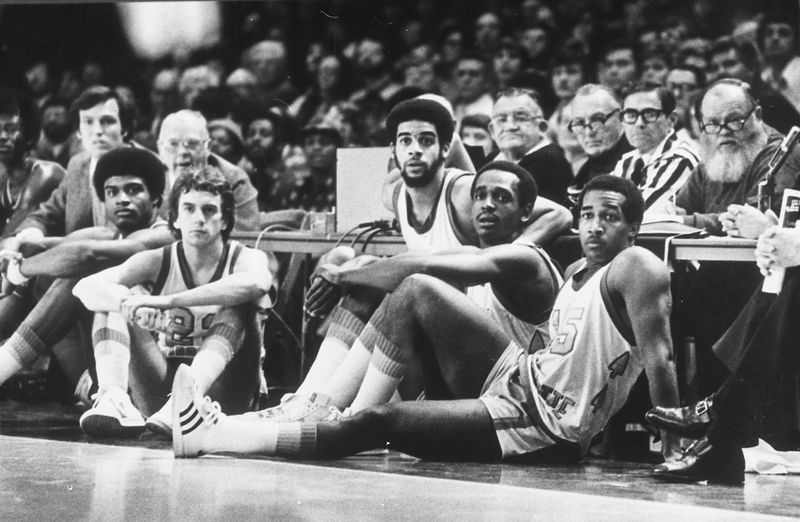
As word of McGuire’s health trickled out to former MU players, many made trips to a small room at Franciscan Woods that didn’t have a name on the door. They came to share laughs and swap stories about the amazing things that they accomplished at a small, Midwestern Jesuit college.
They also said goodbye.
Rob was with his father when he died on Jan. 26, 2001, at 72.
McGuire had been getting blood transfusions with increasing frequency for several years. When Rob was visiting with his father, a nurse came in.
“She said, ‘Al, it’s time for your transfusion,’ ” Rob said. “And he looked over at me and shook his head ‘No.’ And he looked at her and said, ‘No.’ And within 24 hours, he was gone.
“So he was in control at the time. It was really peaceful and he controlled the scene. And he had no regrets.”
Many people who visited with McGuire in those final months also have passed away. Packer and Enberg. Rick Majerus, who learned the game from McGuire and became a successful college coach himself. George Thompson, McGuire’s first great player and the progenitor of a line of New York guards at MU.
McGuire’s former players are now around the same age or older than McGuire was when their coach died. The final lessons that they got from McGuire in that hospice room have stuck with them.
Here’s what they learned.
Jack Burke (Marquette guard, 1968-70)
Burke, known in MU lore as “Trickster,” was a New York guard recruited by McGuire. He was a member of the 1969-70 Warriors who won the National Invitation Tournament at Madison Square Garden after McGuire spurned the NCAA Tournament.
Burke visited McGuire in November 2000, after he heard that McGuire’s health had taken a turn for the worse.
McGuire and Burke became close after Burke’s career at MU. McGuire often stayed at Burke’s house in New Jersey when the coach was in New York on business.
“The purpose of my trip was to thank him,” Burke said.
When Burke arrived, McGuire was working on his funeral arrangements with his son Allie, who was an MU guard from 1971-73.
“Which, at the time, really kind of backed me up a little when I realized what they were doing,” Burke said. “But I had an opportunity to thank him.
“And the door opened up and I said, ‘Hey, Coach, there’s really something I want to tell you. I want you to know that I really appreciate the fact that you took me. It was something that really changed my life, or something that put me on a path in life.’
“He said, ‘Jackie, we did good. We did good.’ That’s what he said to me: ‘We did good.’ So I got that thing done.”
McGuire was feeling good enough that they went out to lunch. When they said goodbye, McGuire had one last request: “Now at the thing, Jack … one drink. One drink, that’s all.”
McGuire dissolved into laughter. Burke would be a pallbearer at the funeral. There would be a cash bar at the repast after the funeral. Burke would get a drink for his duties.
Both of Burke’s parents died not long after he graduated from MU. Several members of the 1970 NIT title team also are gone. Burke carries all those losses with him into his 70s.
“Looking back now, it really gives you a grip on life and what it’s really all about,” Burke said. “Enjoy every day. And just try to do something good.
“At this stage, business career is over. Fortunate to have a house down here [in South Carolina] and we go back and forth to New Jersey. I look at my life today and everything is about Marquette. It really is. He has opened doors for me. Even today, people down here, when someone tells them that I played at Marquette and I played for Al McGuire, it just lights people up at a certain age.”
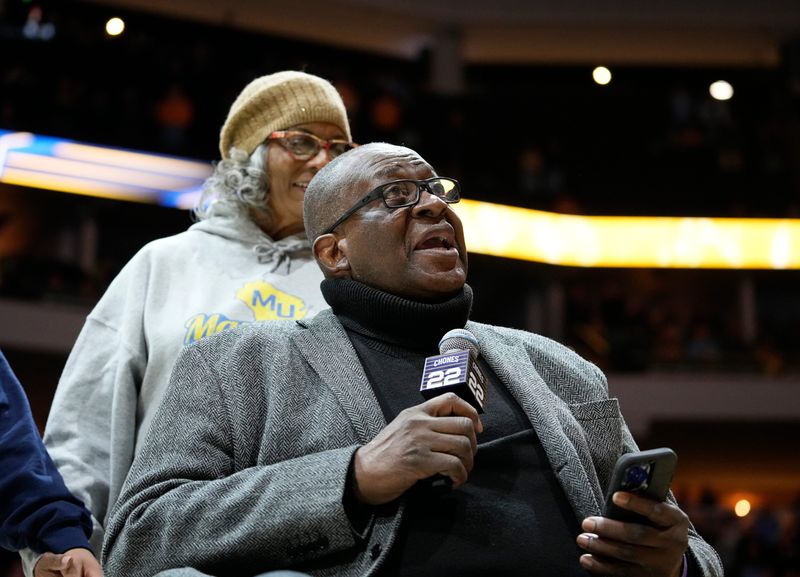
Jim Chones (MU forward, 1971-72)
Chones, a Racine native, is one of the greatest high school players in Wisconsin history. He was a prized recruit for McGuire. In his two seasons at MU (freshmen were ineligible at the time), Chones’ teams went an incredible 49-1. In the 1971-72 season, the Warriors started 21-0, but Chones left to join the American Basketball Association. McGuire gave his blessing, famously saying, “I looked into my refrigerator and I looked into Jimmy’s, and I said, ‘Jimmy, take the money.’ ” Chones had his No. 22 retired by MU in the 2024-25 season.
Chones visited McGuire in hospice with former MU player Ulice Payne. Allie McGuire and Pat McGuire, Al’s wife who died in 2011, were there.
“He was upbeat,” Chones said. “In fact, he was really positive, but he knew he didn’t have long.”
Chones likes to talk about how different McGuire looked at life.
“He was fearless,” Chones said. “We had a guy who was built like a bodybuilder. He used to come by the gym all the time.
“Walking down Wisconsin Avenue, then he’d go over to the practice gym and everybody was afraid of him. He had some real serious mental issues. But Al would walk up to him and they would shake hands and hug. They’d sit there and talk for hours, then we’d go to practice.
“I’d say, ‘Why do you talk to that guy?’ Al said, ‘Ah, shoot, he’s human just like you.’ He was fearless. He challenged your courage. Most of us were so young that we accepted that and we moved on from that and I think it improved all of us.”
Chones is a longtime broadcaster with the NBA’s Cleveland Cavaliers. He’s known a lot of basketball people, but nobody like McGuire.
“He was more of a teacher,” Chones said. “He was an excellent coach but he was also a great teacher.
“It was something in him when he always had to say something that was motivational and uplifting. I don’t know if all the coaches do that today. I know back then he was way ahead of the curve.”
Ulice Payne (MU forward, 1976-78)
Payne is a Pennsylvania native who started his college basketball career at Ohio University before transferring to MU. He was on the 1977 team that won the national championship, then he attended Marquette Law School. Payne became a highly successful local businessman.
Payne, a partner at Foley and Lardner law firm at the time, was in South America when he got a message from his assistant saying McGuire wanted Payne to call him.
When Payne got in touch with his old coach, McGuire told him to visit him at the hospital when he got back to Wisconsin.
Payne couldn’t find McGuire’s room. That’s when he realized McGuire was in hospice at Franciscan Woods. Payne got a sinking feeling, but had some hope when McGuire said he was talking with the National Institute of Health about a trial for a special medication.
“He said he asked them the question, ‘Will this thing cure me, for sure?’ ” Payne said. “The guy says, ‘No, we don’t know, we want you to be a trial.’
“He said, ‘Can I still take my gin and tonics?’ The guy said, ‘No. No alcohol.’ He said, ‘To hell with this trial.’ Honest to God.”
Payne then talked with McGuire for almost four hours. The coach was drawing up his final game plan, and Payne was going to be a key player at McGuire’s funeral.
“Front left side,” Payne said. “He named all the pallbearers.”
The instructions were simple: “I need you to be there. Don’t be late and don’t drop me.”
After those serious topics, they reminisced about all the fun times together.
“We talked about all kind of games, bus rides,” Payne said. “Crazy bus rides we had as a team. Beat Notre Dame and the Badgers. We never lost to Notre Dame or the Badgers.”
A nurse came in and kicked Payne out.
“He gave me a couple takeaways I’ll never forget,” Payne said. “Because I don’t know when I’m going to see him again. A couple things. He says, ‘I wish I had more time.’
“I’ll never forget that. ‘I wish I had more time.’ He said there were things he wanted to do, could do and had the money to do. But couldn’t do. So he reminded me: Don’t screw around with your time. Run your race because you have less time than you think.’
“I think about that right now and it makes me cry when I think about. But he was right.”
Payne showed up early at Church of the Gesu on MU’s campus for McGuire’s funeral. He didn’t drop the casket.
“Since then, I’ve been running my race, through the tape,” Payne said. “I was a partner of a major law firm, running an international practice.
“And a year-and-a-half later, I left to be CEO and president of the [Milwaukee] Brewers. You run your own race. Like Coach Al, he wasn’t a traditional coach. He was only at Marquette, I think, [13] seasons. And went on to TV. He was kind of a businessman coach.
“And he basically said, ‘Run your own race.’ Everybody’s got their own race. So I remember when specifically leaving the practice of law to be a Major League Baseball president. I thought about it, like, why not? If this is my race, go for it. I remember that.”
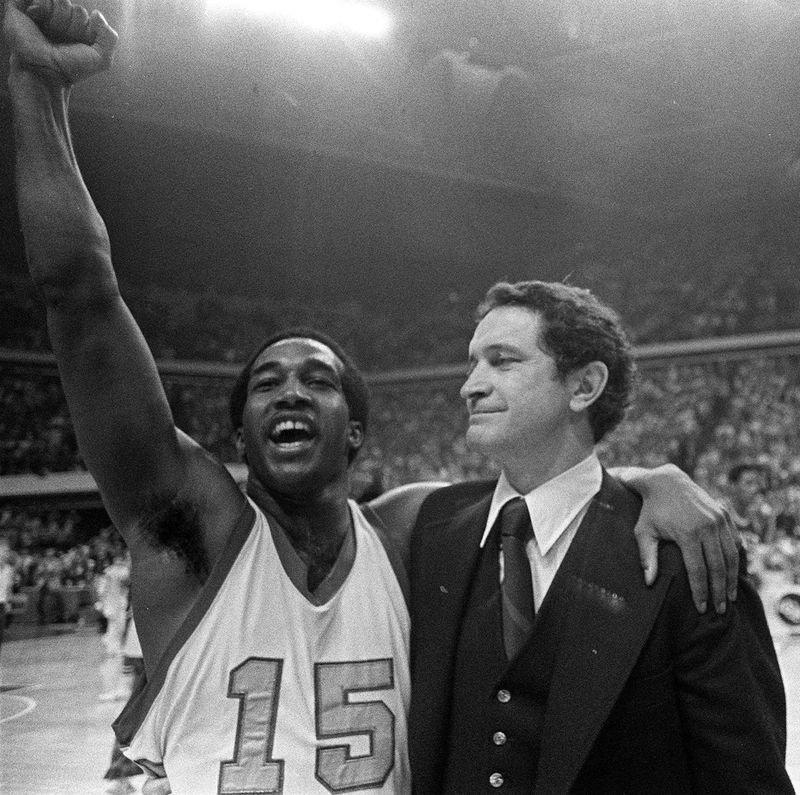
Butch Lee (MU guard, 1975-78)
Lee has to be on the Mount Rushmore of MU players. He was the Most Outstanding Player of the 1977 Final Four and won several NCAA player of the year awards in 1978. His No. 15 is retired by MU.
Lee is a longtime Puerto Rico resident, so he didn’t get back to Milwaukee to see McGuire before he died. But they talked on the phone one final time.
“It was very light,” Lee said. “It was nothing heavy.”
Lee said that whenever a former player would call McGuire, the coach would tell him it was the favorite one he received.
“Al was good with everybody, you know?” Lee said. “That’s a tough situation because what are you going to do? It’s going to happen to all of us. But we had a great time always. Talking with Al was a pleasure, you know?”
Lee said he was listening recently to a talk from business leader Scott Galloway, and Lee was reminded of those talks with McGuire.
“[Galloway] was saying a lot of people are born male but never become a man,” Lee said. “He said some people die 80 years old and don’t become a man.
“What he meant was when you give back to people, that’s when you become a man. And I thought that was very interesting because I like that. Kids are always looking for something from you, but you become a man you kind of recognize other people and you’re willing to help them.
“So I thought what he said was incredible. And that’s the kind of stuff that Al might have said. He always told us to take time out and smell the roses.”
Lee was the last of the transcendent New York guards that McGuire recruited.
“He would always talk about that he never saw me play [as a recruit],” Lee said. “And I was like, ‘How you know I’m so good if you never saw me play?’
“And he used to look at me like I wasn’t that smart and he’d be like, ‘If you the best player in New York City, I don’t have to see you play.’ ”
Kevin Byrne (MU sports information director, 1974-77)
Byrne spent 41 years with the NFL’s Baltimore Ravens, rising to executive vice president of public relations. The Ravens were on the way to a win in Super Bowl XXXV in 2001, but Byrne took a rare day off during the season to visit McGuire in December 2000.
Byrne called his visit with McGuire one of the most meaningful conversations of Byrne’s life.
After Byrne arrived, McGuire showed him a few handwritten pages that were the start of an autobiography. The opening scene was McGuire waking up his father near the water in Rockaway Beach just down the street from the family’s bar in New York.
“I said, ‘Boy that’s good. That’s really good,’ ” Byrne said. “It was written just how Al speaks, and I said, ‘Well, how far have you gotten so far?’ He said, ‘Well, that’s all I have so far.’
“And I said, ‘Well that’s optimistic.’ And he says, ‘Don’t be a smartass.’ ”
They talked about religion for a while. McGuire said he had requested a Catholic priest who didn’t speak English so he could confess his sins.
Just then, they heard a commotion in the bathroom. Byrne asked what was going on.
“He goes, ‘It cost $100 more a day to have a single room. So I asked for a double but I asked for somebody who was going to die right away so I could have the bathroom to myself. But the guy next door keeps hanging on. He’s in there now,’ ” Byrne said.
McGuire and Byrne pieced together that the man was embarrassed because he had soiled himself while trying to use the bathroom. The nurse was calmly explaining that everything was OK and she was there to help.
McGuire motioned to Byrne to keep listening.
“He looks at me and says, ‘You came here from Baltimore to see a dying friend and get advice from a dying man,’ ” Byrne said. “I said, ‘No, Coach, I came to see you and I’ll be back to see you.’
“He said, ‘No you won’t. I am going to die. But here’s my advice to you: What you just heard was kindness.’ And he goes, ‘You should try to be a part of kindness all the time.’ He said, ‘This kindness was within two minutes of my house and I had no idea this was going on. There is kindness all around us all the time. Be a part of it.’ I thought, ‘Holy cow’ and I got a little teary.”
Not much later, Byrne had to get to Chicago for a flight back to Baltimore, with McGuire giving Byrne a little stick for glancing at his wristwatch while visiting a dying friend.
“God he was special,” Byrne said. “He just saw the world differently. Saw the world differently and expressed it differently. I smile every time I think of him.
“His story of the kindness and to pay attention to it, that was dramatic for me. I don’t think I was unkind before, but I certainly was more aware afterwards. At least I’m pretty sure I wasn’t unkind.
“Yeah, not what I expected. I was going there to give him encouragement and once again he educated me.”
Bo Ellis (MU forward, 1974-77)
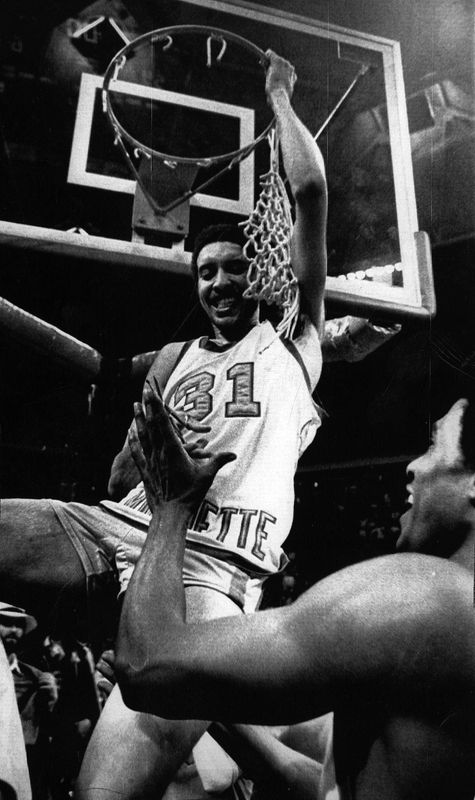
Ellis is one of the most beloved former MU players. He was an All-American in 1977 when the Warriors won the national title. His No. 31 is retired by the program.
Ellis was the head coach at Chicago State in the 2000-01 season. Thompson told Ellis that he needed to visit McGuire, so Ellis found a break in the schedule to drive up to Brookfield along with Thompson, Payne and former MU player Robert Byrd.
“We went early in the day because at the time he was getting the blood transfusions,” Ellis said. “And when he got the transfusions early in the day, he usually felt pretty good. Pretty perky. Once the day went on, he didn’t feel as good.”
When the former MU players got there, McGuire was on the bed staring out the window.
“He started to perk up,” Ellis said. “When we walked in, he had the radio on and one of Nat King Cole’s songs was on the radio.
“Once we walked in and told him it was us and he slowly turned around and sat up on the bed, he looked at us and started smiling and laughing and saying, ‘I knew y’all were coming to see me, that’s why I had Nat King Cole on the radio.’ We all just bust out laughing.”
They started telling old war stories, and McGuire laughed so much that he complained about his side hurting.
“The other thing he talked about with me, Byrd and Ulice was that ‘Remember as you get older, people forget what the three of you accomplished when you were playing,’ ” Ellis said. “He was saying don’t get mad when people forget or don’t remember the significance of what we did, winning the championship.
“He said you got to remember as the years go on, they might not be familiar. They hear the stories but they don’t really know exactly what happened. He said just take it with a grain of salt. But now that I’ve gotten older, stuff, and been around Marquette basketball for a long time, I understand exactly what Coach was saying and what he meant about that.”
McGuire also told Ellis that there won’t be another MU player who starts in two national championship games like Ellis did, but that he was proudest of Ellis getting his degree when he had chances to turn pro early. McGuire promised Ellis’ mother during the recruiting process that he would make sure her son graduated from MU.
“Because that was going to be more valuable to me to my life than basketball ever was,” Ellis said. “He was 100% right. That’s who Coach was.
“We had a great time and when George and I would talk later in life – and after Coach left us and before George passed, George would come to my daughter’s golf outing in the early years – and we would talk about that all the time and the importance of it.
“That’s who Al McGuire was, a lot more than a basketball coach, but a father figure, a friend, a mentor. From the day I met him ‘til the day he died.”
Al McGuire, the consummate coach. All the way until the end of the game.
This article originally appeared on Milwaukee Journal Sentinel: Last game plan | Marquette legends recall Al McGuire’s deathbed advice
Reporting by Ben Steele, Milwaukee Journal Sentinel / Milwaukee Journal Sentinel
USA TODAY Network via Reuters Connect