Just looking at the numbers, what Summerfest in Milwaukee offers is staggering.
Six hundred acts. Nine days. Thirteen official stages. Plus 15 ways to get in for free.

And the lineup for its biggest stage, the American Family Insurance Amphitheater, is especially impressive in 2026, with stadium-accustomed superstars like Post Malone and Jelly Roll; major breakouts like Megan Moroney and Alex Warren; one of country’s biggest A-listers in Cody Johnson; plus the first Wisconsin concert in 16 years from Muse.
But despite all of that, when the lineup dropped in February, the same thing happened that happens every year. There was plenty of praise on social media. But there also was scathing criticism.
All of which begs the question: why? Why is a festival that is designed to appeal to everybody so divisive?
In pursuit of some answers, I invited two of the most passionate music fans and Summerfest followers in the Journal Sentinel newsroom – business editor Jim Nelson, 66, and public investigator Tamia Fowlkes, 25 – to join this 42-year-old music writer in a Summerfest discussion.
Below is a transcript of the discussion that’s been edited and condensed for space and clarity. You can watch clips of our chat at jsonline.com/summerfest, and keep an eye out for our Summerfest coverage when the festival returns June 18 to 20, June 25 to 27 and July 2 to 4.
Piet Levy: (Summerfest) tries to be a festival for everyone. But it doesn’t seem like everyone can get on the same page, and there’s always discourse. Why is this festival such a big talking point in Wisconsin?
Jim Nelson: I think it’s because of social media, because it’s so easy for people to share their opinions. But also, I think the switch to the three-weekend format, I think that’s really still become something of a divisive talking point. And I think that gets people going, and then they tear apart the lineup, and they analyze it and overanalyze it. After 50 years or whatever it’s been, it was a major change. I’m not sure it’s the right move or the wrong move. The folks that book the acts and the folks that run the festival, I trust them, that they’re making the right decisions. But their attendance hasn’t been on the upswing. And nevermind weather and all that. Look at State Fair. State Fair’s got an 11-day run and their attendance is still continuing to grow. Obviously very different events. But I don’t think people are sold on (the Summerfest schedule).
Tamia Fowlkes: There’s of course a lot of young people and students going to this festival. And one of best parts about it, when it was 11 days, is it’s summer vacation. You probably genuinely have nothing to do unless you’re working a job. So I think that there was some excitement in the momentum of being able to say, I’m going to see this person tomorrow and this person next week and this person in three days and kind of building out your whole summer schedule around maybe who you’re going to go see. Weekends, of, course, get busy. People make other plans or they might travel. So I think that that is something that’s been lost in the experience.
JN: I’m a big fan of Summerfest. I think it’s awesome, and it is really great for the city, and people are always going to hate on the lineup in some fashion.
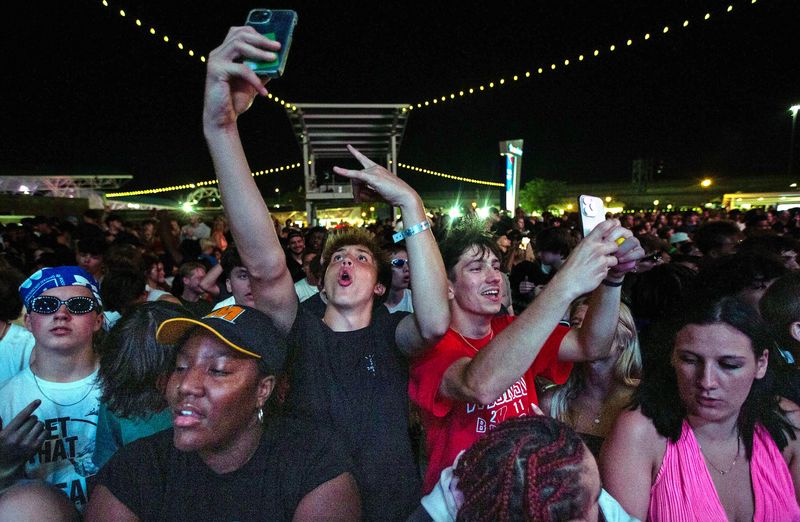
TF: It’s just such a core memory for everyone, for people like my parents, down to people in my generation. They’ve been going to Summerfest for decades and their memories of what it’s looked like has changed over the years. The evolution that I’ve seen, especially among Gen Z over the years, is that they feel like the festival just doesn’t cater to their interests. I think a lot of people want it to be a great festival, and given the number of days that it goes on, they’re looking for maybe bigger artists to show up for that experience. But when it is maybe people that are mostly bubbling under, or just genres that they’re not familiar with, it can be kind of contentious in that way.
PL: We did a survey at the Journal Sentinel, got a lot of comments. There were people that praised it, and there were people who were just like, “this lineup is trash.” Why do you think that is?
TF: I say to my friends all the time, and I have heard from people, we’re in a real pop girl deficit. There are a lot of artists who I’ve been watching bubble under for a couple of years, whether it’s someone like Chappell Roan, who was at the Rave in 2023, who hasn’t returned to Wisconsin. There is an absence of what we’re seeing kind of rise up on social media coming to Wisconsin for festival season, people like Addison Rae, who might engage some different type of excitement. And even an artist like (June 19 amphitheater headliner) Don Toliver, who’s having a really great moment online right now, is on a paid stage, and I don’t know if his demographic or audience is a group of people that have the money to spend $150 on a ticket. If they do, I’m not seeing it in the seat sales. I don’t think young people are having an easy time financially right now. I think Gen Z is just hoping to see some of those bigger, exciting, kind of social-media-conversation acts on smaller, free stages. They want to able to post an Instagram Live of an artist, like a Zara Larsson, who is having a big moment online right now, and be able to say, “I saw them when they were at the early stages of their rise.”
PL: I think it’s a really good lineup (this year), and I think it’s very cool because it’s not trying to be cool, in a way. There’s really no other festival where you can just stroll and see, like, Ginuwine for 10 minutes, and then go see something that’s more in your wheelhouse. There’s just such an honestly weird mix of acts that play there every single day that you don’t see anywhere, for a comparatively affordable price point, especially when you compare it to like a Lollapalooza. I think it’s a really awesome thing that they’re offering. And I’m a little puzzled why more people don’t see it that way.
TF: One of the things that I heard from a lot of people is like, oh, there’s one or two acts that I’m excited for and everybody else, I’m kind of a question mark about. And maybe that’s a question of social strategy and how effectively Summerfest is also exposing the audience to the artists. I think of Lollapalooza. They did a really fun social campaign where they sent hints to potential attendees about which artists would be there, to build social traction. Maybe that’s something that Summerfest needs to do, get the super fans engaged so that you have a specific demographic of people who are saying, “I am so excited to be there,” and that maybe changes the conversation.
I’ve talked to a lot of people about Summerfest over the years, and how the genre focus has shifted. There’s a lot more country artists, maybe not a lot of rap artists, and (potential ticketbuyers are) questioning whether or not they are within a demographic of people that the festival wants to have there. Rowdy teens might not always be who people want in the room, but I do think young people want to be a part of that experience. If there is a way to get younger artists that might excite them and maybe don’t put them at 10 p.m., put them on at like 5 p.m., and just give people an opportunity to still engage with those artists, I think that might be what’s missing.
PL: Milwaukee has an amazing hip-hop scene that was kind of neglected and overlooked with the bookings. They’ve really changed that in recent years. Same with Spanish language artists; there were years where there was none of that. K-pop was absolutely missing, but this year there’ll be Audrey Nuna from “KPop Demon Hunters,” that’s really awesome. It’s not necessarily consistent though. If you want to be something for everyone, it’d be great if they could make more strides including those genres that do get a lot of excitement, especially from younger fest-goers.
JN: One thing they’ve done really well is booking acts in the afternoon, at least for my demographic. Booker T. is playing there (at 4:15 p.m. June 25 on the Generac Power Stage). That’s an amazing act, and that is a great get. The way to go, for my mind, is to see as much as you can and see stuff that maybe is of your liking that I would never go see at the Eagles Ballroom or something. That’s what’s so fun about it.
PL: The fact that (Summerfest) causes so much conversation just shows how much people really care about it. Even the haters, to be that riled up about it, clearly are interested in Summerfest instead of just dismissing and ignoring it.
TF: People want this to be a great festival because they care about the city and they want it to be a landmark for both artists and also for fans. In recent years, there have been a lot of artists that have skipped over Wisconsin on tour cycles, and I’ve done plenty of drives to other places or even flights to see an artist in another place. And I think that’s becoming more common. So if there is any way that we can make the festival more attractive to up-and-coming artists, or even just get people when they’re on that wave up to maybe super stardom, that would be super exciting. I think that’s what people want to see.
JN: There (are) so many opportunities to get up close and personal to a musician, a performer, that you really enjoy. I remember Jeff Beck playing on the Briggs stage. I was able to walk up, and I was like 20 yards away from one of the best guitarists ever. Those opportunities make Summerfest really special. And you’re right, people want Summerfest to succeed. It’s a great thing for the city, for the region, for our state.
PL: Yeah, Summerfest really is exceptional and really distinct. There are very few festivals that want 80-year-old fans and 8-year-old fans, where it offers opportunities, if you’re open-minded and adventurous, to wander and see something you don’t know about. A lot of times, those are local artists who can find new fans in their city. Especially this year, too, I think they’ve done a really good job with the amphitheater lineup. They’re going to have a (predominantly) Spanish language artist (headliner) with Carín León, and that’s the first time they ever had that in the amphitheater. That’s incredible. This year they’ve got Ed Sheeran, who is still extremely popular, still playing football stadiums. They’ve got Garth Brooks. Those are the only dates he has in North America this summer. That’s incredible. He’s pretty much as big as you get. The fact that Summerfest can do all of that in Milwaukee, Wisconsin – that should be commended.
This story has been updated to add a video.
Contact Piet Levy at (414) 223-5162 or plevy@journalsentinel.com. Follow him at facebook.com/PietLevyMJS.
This article originally appeared on Milwaukee Journal Sentinel: If Summerfest is for everyone, why does it spark so much debate?
Reporting by Piet Levy, Milwaukee Journal Sentinel / Milwaukee Journal Sentinel
USA TODAY Network via Reuters Connect
By Piet Levy, Milwaukee Journal Sentinel | USA TODAY Network