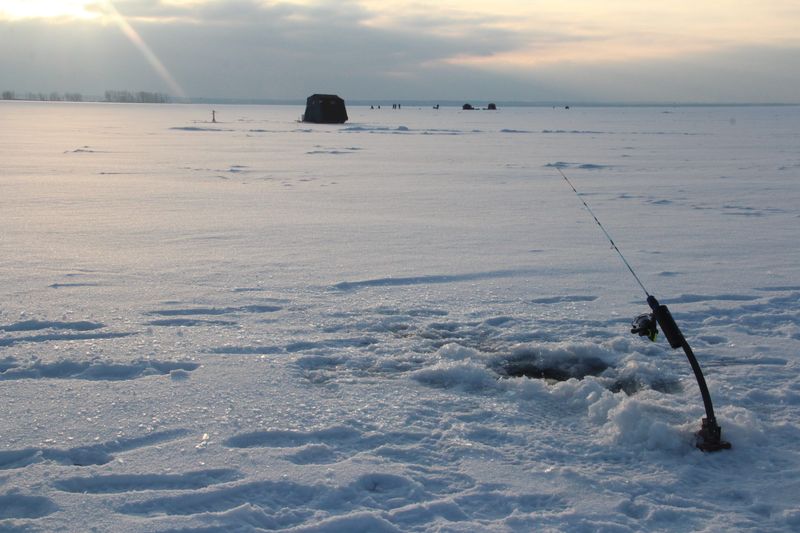
The early days of winter in Wisconsin carry unique excitement and opportunities, including the first skiing, ice fishing, snowmobiling and snowshoeing of the season.
Unfortunately the newly frozen landscape also brings risks for outdoor recreationists, especially for those who venture on ice-covered waterways.

And although ice safety is a perennial issue, Department of Natural Resources staff knows it’s in the best interest of public safety to repeat the key points each year.
With the 2025-26 ice season upon us, DNR experts are issuing safety reminders for those who venture onto frozen waters.
One of the biggest is an awareness that no ice is completely safe.
“Early in the season especially, ice conditions are unpredictable and can change quickly on Wisconsin’s rivers and lakes,” Lt. Jacob Holsclaw, DNR Off-Highway Vehicle Administrator, said in a statement. “The ice covers hide the currents, debris and underground springs still feeding lakes and rivers, thinning the ice in spots. No matter if you’re on foot, on a snowmobile or in a UTV, it’s important to remember that ice is never 100% safe.”
Falls through the ice result in injuries and deaths each year in Wisconsin. Other mishaps on the ice require expensive and risky rescues.
How do you know if ice is thick enough?
The Minnesota Department of Natural Resources publishes a general guide for ice travel. It calls for at least 4 inches of clear ice for foot travel, 5 to 7 inches for a small ATV or snowmobile, 7 to 8 inches for a side-by-side ATV, 9 to 10 inches for a small car, 11 to 12 inches for a medium SUV or small truck, 16 to 17 inches for a heavy-duty truck and 20 inches or more for a heavy-duty truck with a wheelhouse shelter.
But it comes with the caveat that conditions vary greatly and the guide assumes solid, clear ice.
With more than 15,000 lakes and thousands of miles of creeks and rivers, it would be impossible for any agency in Wisconsin to monitor ice conditions.
What the Wisconsin DNR does, however, is recommend anglers, snowmobilers and others who plan to set out on frozen waters to contact local fishing clubs, bait shops or outfitters for information.
Such businesses and organizations routinely check ice conditions and can provide the best and most current information.
The DNR also has an ice safety guide on its website, as well as tips for what to do if you fall through the ice.
For your safety on the ice, the DNR recommends:
This article originally appeared on Milwaukee Journal Sentinel: ‘Ice is never 100% safe,’ DNR says in perennial winter safety message
Reporting by Paul A. Smith, Milwaukee Journal Sentinel / Milwaukee Journal Sentinel
USA TODAY Network via Reuters Connect