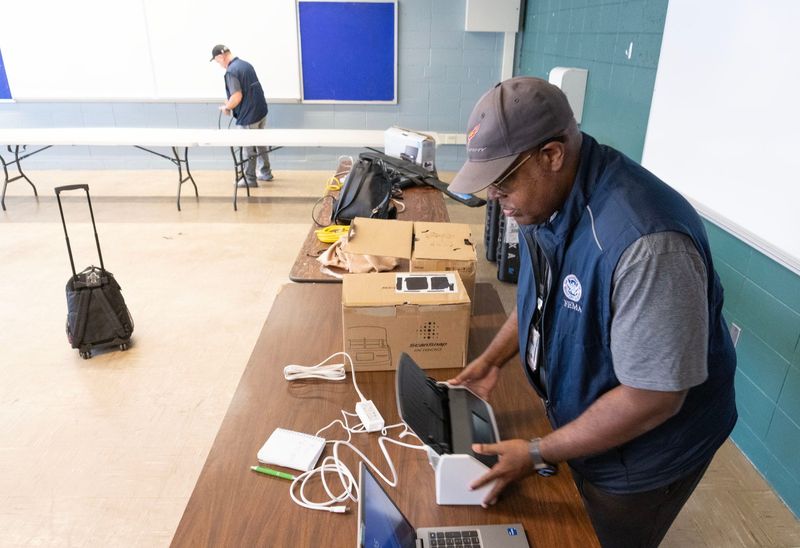
As the partial government shutdown extends into day six with no end in sight, some Wisconsinites may be wondering about the status of federal disaster aid following historic flooding in August.
In September, President Donald Trump approved $29.8 million in federal aid through the Federal Emergency Management Agency to help residents and local officials recover from flood damages. Separate from FEMA aid, the U.S. Small Business Administration is also granting federal disaster loans to Wisconsin businesses, nonprofits, homeowners and renters.

As of early October, FEMA had approved more than 3,500 residents’ applications for aid, with more than $26 million in aid granted across the county. The SBA, meanwhile, has distributed more than $6.1 million to Wisconsin residents and businesses.
Here’s what to know about the status of federal disaster aid as the government shutdown continues:
Will FEMA disaster aid continue in Wisconsin during a government shutdown?
Federal disaster aid, including aid distributed after Wisconsin’s historic August floods, will continue for the time being.
In an Oct. 6 email to the Journal Sentinel, a FEMA spokesperson said the agency “remains fully prepared and capable of responding to natural disasters” amid the shutdown. Residents in designated counties can still apply for and receive assistance.
“During this lapse in funding, FEMA will continue to conduct essential activities deemed necessary for the safety of human life or protection of property, such as payments to disaster survivors,” the spokesperson said.
However, if the shutdown stretches on, this aid may be under threat: FEMA is relying on immediate needs funding during the shutdown, which could be exhausted if the shutdown continues for especially long, PBS reported Sept. 30.
Additionally, one of the measures hanging in the balance of the funding battle is the Disaster Relief Fund, which is the main funding source for FEMA. In a Sept. 29 interview, House Speaker Mike Johnson said if the government isn’t funded, “we won’t have FEMA funded.”
Will the Small Business Administration’s disaster loans continue during a government shutdown?
The SBA’s disaster loan program will be available through the shutdown, and staff will continue to process disaster loan applications and disburse funding, a spokesperson for the agency confirmed to the Journal Sentinel.
However, though disaster aid is available, the SBA is currently pausing many of its other loans for small businesses and following a shutdown contingency plan, according to a message on its website.
The SBA’s shutdown plans include furloughing more than 20% of its staff, though employees in the agency’s disaster recovery office are exempt from the furloughs. The contingency plans also clarify that disaster recovery aid will continue through a shutdown, since the program is funded by “no-year appropriations” — funds that Congress has approved indefinitely, regardless of the fiscal year.
What happens during a government shutdown?
All non-essential federal agencies and services must stop working during a government shutdown, which can affect thousands of federal workers and millions of Americans.
Services deemed essential — such as the postal service, law enforcement and military — remain open.
Wisconsin has about 18,000 civilian federal workers, according to the Office of Personnel Management. Some of these workers will be furloughed, while the ones providing essential services will continue working.
Why is the government shut down?
The shutdown began after congressional Democrats and Republicans failed to agree on a continuing resolution to fund the government before the funding deadline.
Last week, Republicans passed a stopgap funding bill, but Democrats have demanded the bill extend Affordable Care Act insurance plan subsidies and restore some of the Medicaid funding that was cut in President Donald Trump’s “Big Beautiful Bill.”
Republicans refused, and without a temporary funding measure, the shutdown began at 12:01 a.m. on Wednesday, Oct. 1.
When will the government shutdown end?
The shutdown will end when Congress passes and Trump signs an appropriations bill to fund the federal departments and agencies currently shut down.
It’s unclear how long that will take. The last government shutdown was in 2018, during Trump’s first term, and stretched on for a record 35 days.
Claudia Levens contributed to this report.
This article originally appeared on Milwaukee Journal Sentinel: Here’s what a government shutdown means for flood disaster relief in Wisconsin
Reporting by Cailey Gleeson and Maia Pandey, Milwaukee Journal Sentinel / Milwaukee Journal Sentinel
USA TODAY Network via Reuters Connect