The Greater Milwaukee Foundation wants to help small businesses thrive.

The foundation is leveraging its philanthropic dollars to provide low-interest loans through its ThriveOn Small Business Loan program.
The program will loan up to $50,000 to disadvantaged small businesses in Milwaukee, Ozaukee, Washington and Waukesha counties. The foundation is accepting applications for its fourth round of funding until July 20. A virtual information session will be held on July 16.
Access to capital is still a big issue, especially in low-to-moderate income neighborhoods or in disinvested communities, said Kermiath McClendon, Greater Milwaukee Foundation’s impact investment manager.
“You look at commercial corridors, businesses that have been there for a while still have hard time finding traditional lenders or investors,” McClendon said. “Traditional banks still have a challenge in funding these organizations.”
That’s where the foundation steps in. The program aims to help small businesses increase capitalization, scale and become sustainable, something more challenging in the current market, McClendon said.
Small businesses and contractors can no longer rely on federal or even corporate contracts, he said. The foundation, he said tries to be flexible in the kinds of businesses its supports. Traditional lenders may solely rely on credit worthiness, but this program looks at a business mission, social impact and job creation.
“We kind of look at it from those lens – like what is the social impact that comes from this investment. Are we creating economic mobility not only for the individual but for the area,” he said.
It shows in the foundation’s portfolio. Since 2022, the foundation has given over $1.58 million to 34 small businesses. The loans supported consulting firms, healthcare companies, a dermatology office, a medical wig company and construction firms, including a Black woman-owned construction paving company.
The variety of businesses upends the stereotype that businesses involved in lending programs in disinvested neighborhoods are typically barbershops and restaurants.
“There is a wave or generation that’s just exploring more options,” McClendon said.
The key is to get them bankable so they can go to the larger lending institutions with a track record of securing financial investments, McClendon said.
As businesses repay the loans it provides the capital for the next round of funding. The funding can be used for working capital, equipment and supplies purchases, debt finance, building improvements, payroll assistance or business-related transportation vehicle.
Funding provided a boost for creative arts business
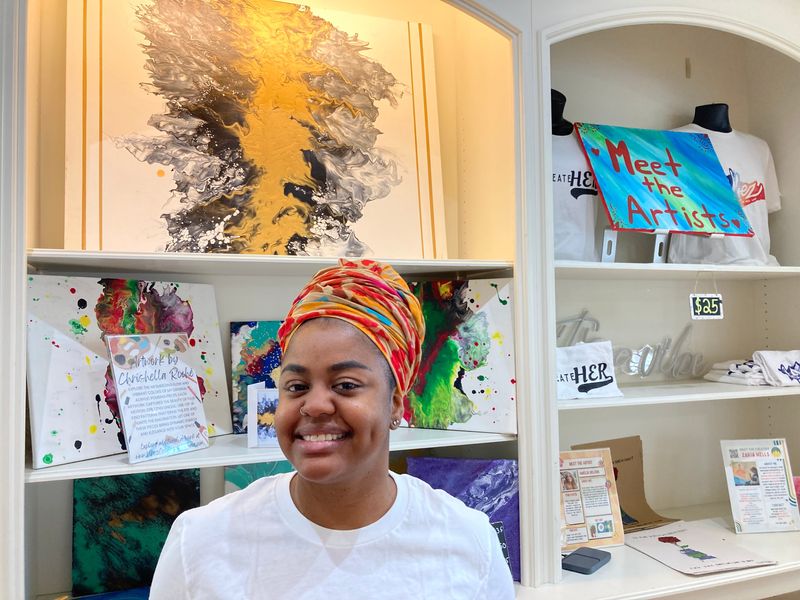
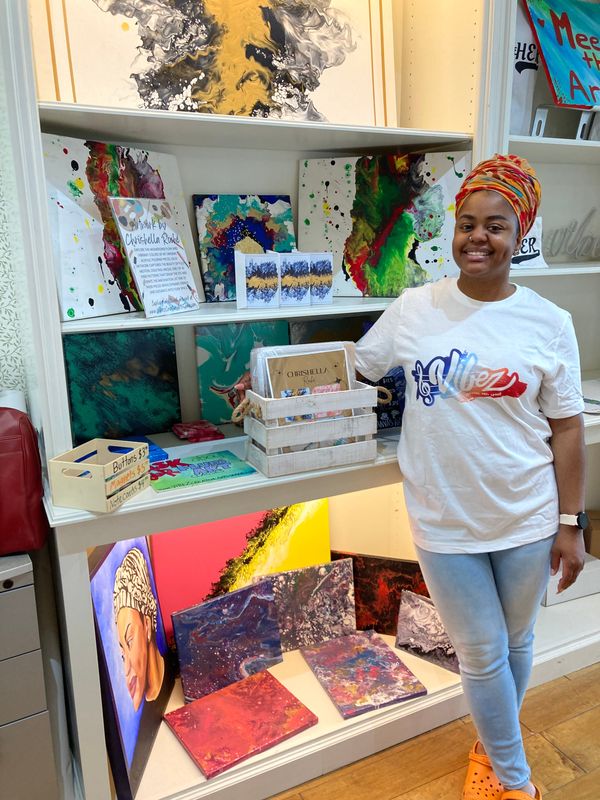
Chrishella Roché, owner of Vibez Creative Arts Space, applied for the loan last year. She was apprehensive about applying for another small business loan. Two banks already rejected her even though she had good credit.
But this program was different. It understood the mission of her creative arts space located in Bayshore Mall. The eight-year-old company offers school-based arts education, free community art events and paint and sip experiences for adults. Vibez Creative Arts Space host programming allowing adults and youths to explore their artistic side while offering space to highlight different artists and sale their wares.
“The program seemed like it was really there to help small businesses like mines,” Roché said. “I felt like they were willing to give me a chance looking at the things I wanted to do; how I would use the money versus what’s on paper.”
The loan allowed Roché to increased marketing efforts, purchase equipment and expand staff. She turned a part-time position into a full-time one and hired a program coordinator. That allowed Roché to do more arts education programming in Milwaukee Public School. Initially, she was in one school, now she is in three.
Roché also found the program technical assistance helpful. The foundation partners with Legacy Redevelopment Corp, to service the loans and provide business coaching tailored to specific needs.
The assistance helped Roché get selected for a Goldman Sachs small business accelerator program to explore the next evolution of her business. Her goal is to have her own building which will allow her to offer interactive workshops on graffiti art, oil painting or woodworking.
Her advice to entrepreneurs who faced loan rejections from major banks is to give this program a chance.
“Even if you don’t think you check all the boxes still apply,” Roché said. “A lot of times, we count ourselves out before they do. This maybe the first time it goes through and works for you.”
More information
To register for the July 16th virtual information session, contact Sonia Robinson at srobinson@greatermilwaukeefoundation.org or call at 414-241-7590
This article originally appeared on Milwaukee Journal Sentinel: Greater Milwaukee Foundation offers loans to disadvantaged businesses
Reporting by La Risa R. Lynch, Milwaukee Journal Sentinel / Milwaukee Journal Sentinel
USA TODAY Network via Reuters Connect
By La Risa R. Lynch, Milwaukee Journal Sentinel | USA TODAY Network