Milwaukee Area Technical College student Jordan Jones knows how to stretch — both on the basketball court and with his food assistance benefits.

Jones, 20, said he gets about $300 in monthly benefits to feed him and his father. The assistance was delayed for nearly a week because of a funding dispute tied to the federal government shutdown. A federal judge ordered the Trump administration on Nov. 6 to fully fund the Supplemental Nutrition Assistance Program, known as FoodShare in Wisconsin, the money Jones receives is still not enough to get by.
Jones, who plays on the MATC Stormers basketball team, supplements his benefits with visits to MATC’s food pantry twice a week. Many other college students similarly rely on their campus pantry to feed themselves and their families.
“This affects me as a student,” Jones said about food shortages. “It distracts me in the classroom. I can’t focus as well.”
Institutions typically don’t know how many of their students receive FoodShare benefits, and some estimate the number is fairly low due to confusion over eligiblity or barriers in registration.
But colleges survey their students about food insecurity, a problem in which students don’t have the resources to feed themselves nutritiously, or even at all. The most recent data show it’s a relatively widespread problem on campuses.
About half of University of Wisconsin-Milwaukee survey respondents last year and MATC respondents in 2021 experienced food insecurity, which is higher than the 41% of college students nationally facing food issues. At Marquette University, a 2018 survey indicated about 20% of students struggling with food insecurity.
“With inflation and increased prices, student financial aid is not stetching as far as it used to,” said Christine Little, who oversees Marquette’s pantry. “Students are maxing out on their loans, working multiple jobs and still living paycheck to paycheck.”
Most campus pantries seeing huge spikes in demand compared to previous years
The delay in FoodShare benefits put campus food pantries across Wisconsin in a tough spot. They braced for an influx of additional students but were already stretched thin. Consider data that predated the SNAP funding disruption:
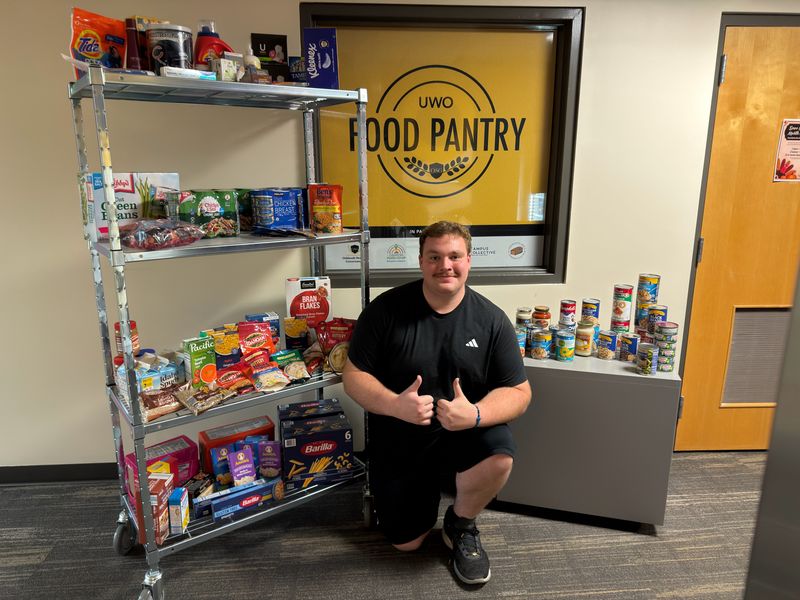
UW-Oshkosh junior Matthew Caine oversees his campus food pantry. He’s been overwhelmed by donations in recent weeks from students and employees.
“It says a lot about our community — more than what’s going on in the political ecosystem,” Caine said.
At UWM, pantry limits student visits due to lack of donations
The benefits of campus pantries are vast. Food insecurity is fundamentally a retention issue, and it hits Black, first-generation and two-year college students hardest.
About a third of UWM pantry users, for example, reported the pantry helped them stay enrolled. But even before the SNAP uncertainty, the UWM pantry was feeling the pinch.
In September, the pantry had to reduce the number of visits a student can make from once a week to twice a month. UWM basic needs coordinator Allie Martinez said the restriction is due to a decline in donations and higher food bank prices UWM has to pay.
Martinez hopes the twice-monthly cap will be temporary. She was encouraged by a recent campaign for the pantry that raised $15,000 in one day, mostly from UWM faculty and staff. Monetary donations stretch further than food items, she said. For every $1 donated, UWM can purchase about $10 in groceries from Feeding America, which offers reduced rates to partners.
MATC resource fair offered produce, diapers and more to students
Other institutions held food drives or hosted events to help ensure students stay fed during the week FoodShare recipients lived in limbo.
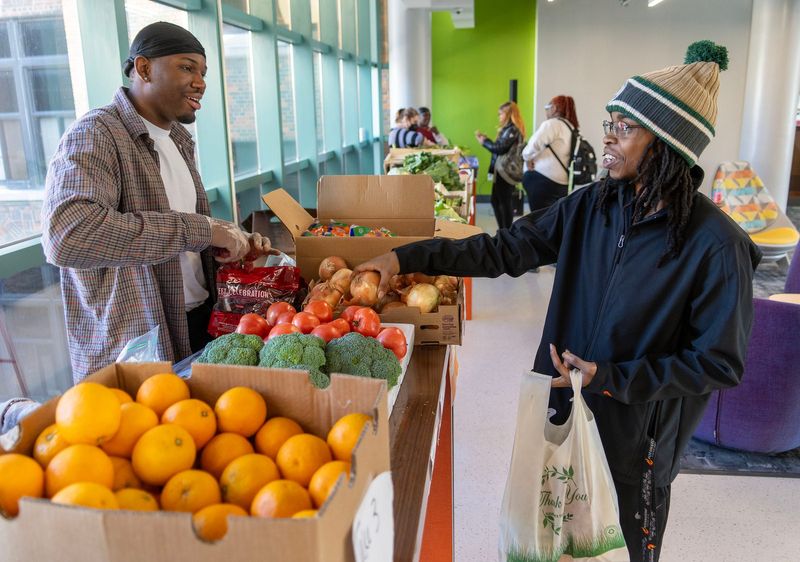
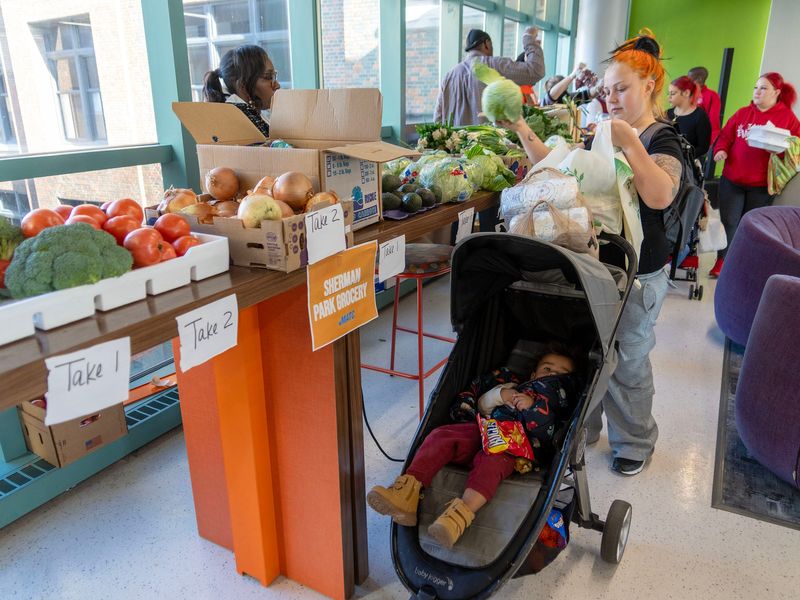
The student lounge at MATC’s downtown campus transformed into a makeshift grocery store Nov. 5. Students could fill a grocery bag with fruits and vegetables for free. The FAST Fund, a nonprofit offering emergency aid to MATC students, organizes the event a couple times each school year, and donated $5,000 to buy the produce. Sherman Park Grocery matched the donation to be able to distribute 350 bags.
MATC student Keeaira Thomason’s bag brimmed with broccoli, lettuce, green onions and more. The 30-year-old balanced it on the canopy of her stroller, along with a bag of free diapers provided by the Milwaukee Rescue Mission, another organization at the MATC resource fair.
Thomason, a part-time student studying animation, struggled to feed herself and her four children in the first week of November without the $1,100 in monthly FoodShare benefits she receives. She scoured online for pop-up pantries and giveaways for food to feed her family. She visitied MATC’s food pantry for the first time. She worried what Thanksgiving dinner would look like this year, if more inexpensive tacos would replace a turkey.
Thomason’s situation has improved since the benefits were restored. Thanksgiving turkey is back on. Still, she made a point to thank those who helped her through the tough time, like Sherman Park Grocery Store manager Moe Wince.
“You guys really make a difference,” she said.
How to help Wisconsin college students facing food insecurity
MATC: Visit matc.edu/foundation/emergency-food-support.html
UWM: Contact foodassist@uwm.edu or make a gift to the UWM Foundation Food Pantry Fund by visiting giveuwmfoundation.org.
Marquette: Visit give.marquette.edu/backpack.
UW-Oshkosh: Visit uwosh.edu/osg/cabinet-food-pantry/
Kelly Meyerhofer has covered higher education in Wisconsin since 2018. Contact her at kmeyerhofer@gannett.com or 414-223-5168. Follow her on X (Twitter) at @KellyMeyerhofer.
This article originally appeared on Milwaukee Journal Sentinel: FoodShare delays highlight problem at Wisconsin colleges: Students struggling to afford food
Reporting by Kelly Meyerhofer, Milwaukee Journal Sentinel / Milwaukee Journal Sentinel
USA TODAY Network via Reuters Connect