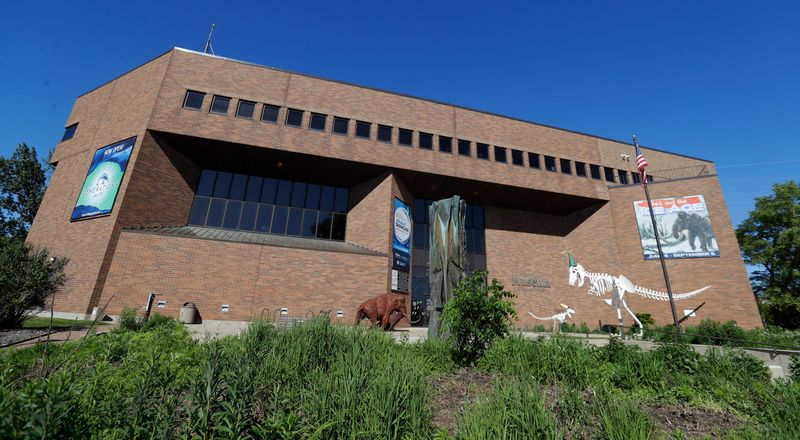
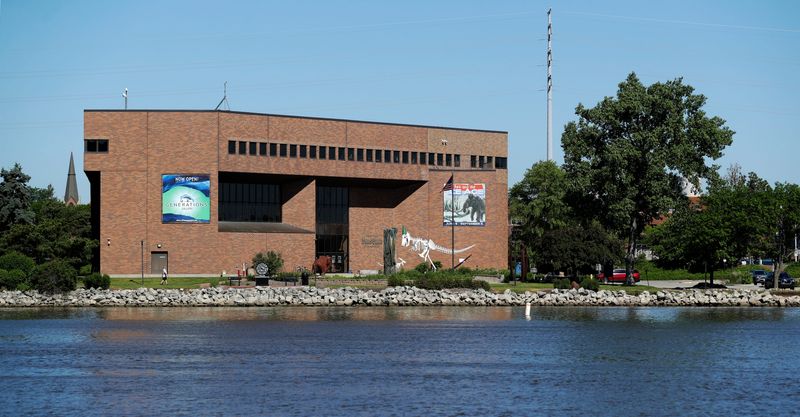
The Neville Public Museum of Brown County, an institution tasked to preserve the community’s history, finds its own history repeating itself now for the fourth time in 111 years.
Local governments have financially supported the museum for 101 years now, dating back to 1925 when the City of Green Bay pledged to fund the Neville’s operations, matching a donor’s pledge to fund a new building. It’s been funded by the city from 1925-1962, the city and Brown County jointly from 1962-1983, and solely by Brown County since 1983.

Forty-three years later, the Neville’s future once again is under discussion. Right now, one of the questions is whether a partnership between the the Neville and the Children’s Museum of Green Bay might offer a new way forward.
Key stakeholders acknowledge the effort could have gotten off to a better start after it became mired in controversy, raising concerns with the public. They hope a task force convened by the Greater Green Bay Community Foundation will reset the discussion, give the parties a blank slate, and focus on the key question: How to sustainably fund two beloved community treasures.
“There’s energy around answering this question,” said Foundation CEO and President Dennis Buehler.
The Press-Gazette sought to clear up some of the confusion, answer key questions and explain what lies ahead. Here’s what we found.
First, how is the Neville Public Museum funded?
The Neville’s $1,378,838 in budgeted expenses for 2026, according to the Brown County budget, will be paid by a combination of museum operations revenue, Brown County taxpayer levy and Neville Public Museum Foundation support.
What does the Neville Public Museum Foundation do for the museum?
The Neville Public Museum Foundation is a separate nonprofit that raises money to support the Neville’s operations and whatever needs may arise.
Kasha Huntowski, the foundation’s executive director, said the foundation has bought equipment like humidifiers, materials to renovate rooms for public rentals, and a replacement for the museum’s broken digital film transfer machine. The foundation helps pay for exhibits and programs, too.
The foundation also manages the Neville’s roughly $7 million endowment, which provides some of the annual income to fund Neville operations. The endowment includes about $5.2 million in restricted donations which donors can dictate be spent on specific things like scholarships, exhibition costs or collection care. It also has about $1.8 million in assets without donor restrictions.
What’s the controversy surrounding the Neville Public Museum?
A confluence of events began with museum director Beth Kowalski’s resignation in September 2025. Two County Board members in October requested the county look into changing the Neville’s programming to a children’s museum style model.
Brown County appointed Jeff Flynt, the deputy county executive, acting museum director while the county conducted a search for a new director. The job was posted in December 2025.
Sometime in spring, Children’s Museum Director Toni Burnett submitted a 14-page plan to merge the two museums. The plan involved the Children’s Museum taking over most of the Neville’s galleries, rental spaces and operations while the county would pay for preservation of the Neville’s collection and building improvements.
County officials evaluated the proposal and determined it did not meet its primary goals for the Neville: sustainable operation and preservation of its accreditation.
The county chose to not publicly acknowledge the plan, because they said it was not viable.
However, members of Green Bay’s Public Arts Commission still learned of the proposal and, coupled with concerns about the lack of a museum director, raised the issue with the public and approved a resolution encouraging the county to fill the position with someone experienced in museum operations.
The Green Bay City Council tabled the measure as both council members and county supervisors began to talk and pledged better communication going forward. In early June, a copy of the consolidation plan was made public. Days later, Brown County announced the community foundation task force would convene key stakeholders to reboot the conversation.
Is the task force using or considering the Children’s Museum’s 14-page plan?
No.
Buehler said the 14-page proposal amounted to skipping straight to a solution and is not the way to find a shared path forward. He said the task force instead will start with a blank slate.
What will the task force actually do in the next 90 days?
The group will dig into basic questions to determine whether there’s a partnership all the organizations feel is worth further exploration.
The task force will look to identify a shared mission and vision and assess its feasibility. He said the foundation has hired Somerville, which designed the Neville Museum building, to assess its condition and spaces so the group has accurate information on which to base decisions.
Buehler expects by August the task force members will come up with a recommendation for their respective boards of directors to vote on. Those board votes will determine whether the task force further explores the possible collaboration.
One important note: The community foundation has convened the task force and provided financial support, but it is not guiding the task force in one direction or another, Buehler said.
What is Brown County’s ultimate goal for the Neville?
The county owns the museum and its collection, has a responsibility to maintain both, and wants to preserve its accreditation. But it also would like to shift the museum from relying on property tax levy dollars to a model where it can sustain itself.
Brown County Executive Troy Streckenbach said the county faces mounting budget pressures to provide core services like the court system and jail, increasing inmate health care costs and human services. He doesn’t expect those pressures to go away.
One possibility he cited would make the Neville an county enterprise fund like the airport, NEW Zoo, and Brown County Golf Course. These county-run operations do not receive tax levy support and instead rely on different revenue streams to cover their operating costs.
Streckenbach acknowledged the Neville currently is not in a position where it could survive solely on admissions, rental fees, gift shop sales and foundation support. Most museums in the nation can’t. But he said there could be ways to get the Neville closer to a place where admissions, fees, fundraising and the endowment to cover more of its expenses, he said.
“There are many mechanisms that can allow the Neville to be successful long into the future. If it stays status quo, the Neville will always have the same pressures its faced since it was taken over by the county in the 1980s,” Streckenbach said.
Moving the Neville off taxpayer levy support also would also provide a layer of insulation for the museum from political and budgetary pressures. If the Neville were an enterprise fund, county supervisors couldn’t cut its budget for whatever reason, be it they didn’t like an exhibit or there’s a shortfall elsewhere.
Who’s on the task force?
It includes representatives of Brown County, the Neville Museum, the Neville Public Museum Foundation, and the Green Bay Children’s Museum.
Mike Reed, the Neville Museum’s newly hired interim director, will represent the museum in addition to his job leading the museum staff, providing guidance and helping plan future exhibits. Representatives of the other organizations have not yet been identified.
Will the task force host public input sessions on the Neville?
Not yet, because there’s no plan for the public to comment on.
The public’s desire to weigh in is being taken seriously, though. If the task force does find a shared path forward, it could expand to include community representatives like an educator, someone from the arts and culture community, and a member of the general public, Buehler said.
“There does need to be a broader community input into that. These are beloved institutions that people support, have a lot of care for, and deserve to have a voice at that table,” he said.
Should I be concerned about what could happen to the Neville Public Museum and the Children’s Museum of Green Bay?
Concern is completely understandable in a period of change. Two community treasures are looking for new ways to fund, partner and deliver services. The public concern and interest indicates how important these organizations are to the community.
Buehler said it’s common and healthy for nonprofits and businesses to always look for more efficient ways to do what they do in the face of financial pressures. He said such conversations are common in the Green Bay area and across the United States and that the foundation saw an opportunity to help bring the key stakeholders to the table for an honest, open conversation.
What are the positives the Neville and Children’s Museum see in a collaboration?
Buehler said the organizations could create a “powerful public-private partnership” that creates a major attraction in the heart of downtown Green Bay.
Burnett said it’s larger than just the Neville and Children’s Museum, but serving future generations.
“We have an opportunity to think boldly about how history, culture, art, literacy, STEM education and family engagement can work together to create something truly unique for northeastern Wisconsin,” she wrote in response to questions from the Press-Gazette. “That opportunity deserves thoughtful consideration.”
Huntowski said it is a “huge opportunity for the community to get something beautiful” that’s worth exploring further.
You mentioned earlier the Neville is accredited. Why is that important?
The Neville is accredited by American Alliance of Museums, a rare achievement only 5% of all museums attain. Museum advocates and supporters are concerned any change to the museum’s management, governance or oversight of collections could pose a risk to its certification.
Lisa Lamson, a UW-Green Bay lecturer with expertise in museum operations, said the museum doesn’t need to lose its accreditation for impacts and complications to emerge. She said a review of accreditation can create concerns with donors and patrons. She said a change in management and governance of the museum could raise legal questions regarding prior gifts to the Neville, too.
How does the Neville choose its exhibits?
The Neville chooses its exhibits about three years ahead of time and starts the process with a community survey to find out what residents would like to see. They use the data to review internal options developed by museum staff based on the collection and external, traveling exhibits.
The staff prepares a list of temporary exhibits for each year, which includes some recurring community exhibits, and presents the chosen list to the Neville Museum Governing Board for review and discussion. The Neville director also regularly provides the county’s Education and Recreation Committee a list of upcoming exhibits in their director’s report.
The Neville and county make a funding request to the Neville Foundation each year to support the desired exhibits and the foundation staff works with the museum to finalize the plan based on available space, available exhibits and their cost.
What is the Children’s Museum of Green Bay?
It is a learning institution that uses play, exploration and hands-on experiences to help children understand the world around them, Burnett said. The museum uses interactive exhibits, literacy programs, STEM experiences and cultural exploration to help children develop skills and curiosity about the world around them. It draws about 60,000 visitors each year.
Burnett said children’s museums may not fit the definition of a traditional museum, but all museums share the same fundamental mission: Education.
“Traditional museums often educate through observation and interpretation. Children’s museums educate through participation and discovery,” Burnett wrote. “Both seek to inspire learning, curiosity and understanding.”
Is the Children’s Museum capital campaign continuing while the task force meets?
The Reaching New Heights capital campaign remains a priority. Burnette said the community has already pledged almost $4 million to the effort to expand its home since 2019 at 1230 Bay Beach Road.
“We continue to move forward with our much-needed expansion plans while also participating in discussions about broader opportunities that may benefit the community,” Burnett wrote.
What kind of community events does the Neville host beyond its exhibits? How does it support other community groups?
The Neville houses what Streckenbach called “the people’s collection” of history, artifacts and community treasures. It also regularly collaborates with arts and culture groups, community organizations and schools. Here are a few examples:
How was the Neville Public Museum created?
The Green Bay Art Club in December 1915 established the Green Bay Public Museum following an exhibition of rare and historically significant objects from the region. The museum’s mission was to “bring the world” to the community and collect important, local artifacts.
How did Green Bay, then Brown County come to oversee the Neville?
Mr. and Mrs. George Mason in 1925 pledged $50,000 for a museum building as a tribute to Mr. and Mrs. Arthur Neville’s contributions to Green Bay. They asked for two things: The building be named for the Nevilles and the City of Green Bay fund its operation.
The Neville Public Museum Foundation was established to own the collection and manage the museum. A city council member sat on the board, the city paid all operating expenses, and it owned the museum building.
In 1962, the city and Brown County agreed to split the Neville’s expenses since half of visitors lived in the city and the other half in the rest of the county.
A 1980 advisory referendum led the city and county to split the $3.9 million cost to build a new home for the Neville. At this point, the city’s oversight ended and the county assumed responsibility for its operations and its collection.
How can I show my support for the Neville right now?
It may be obvious, but Streckenbach said people can buy a ticket and visit the Neville to check out the current exhibits. Attendance is increasing, but he noted the more a community asset is used, the more difficult it is to cut funding for it.
Here are two more ways:
How we reported this story on the Neville and Children’s Museum
The Press-Gazette used a variety of sources to produce this report. They include city and county government meetings, the 2026 Brown County budget, nonprofit IRS filings, annual reports, and the Green Bay Press-Gazette archives. We interviewed Buehler, Huntowski, Streckenbach, Flynt and Burnett, who responded to in writing.
Contact business reporter Jeff Bollier at (920) 431-8387 or jbollier@usatodayco.com. Follow him on X at @JeffBollier.
This article originally appeared on Green Bay Press-Gazette: Confused about Neville museum’s future? We have answers | Exclusive
Reporting by Jeff Bollier, Green Bay Press-Gazette / Green Bay Press-Gazette
USA TODAY Network via Reuters Connect
By Jeff Bollier, Green Bay Press-Gazette | USA TODAY Network