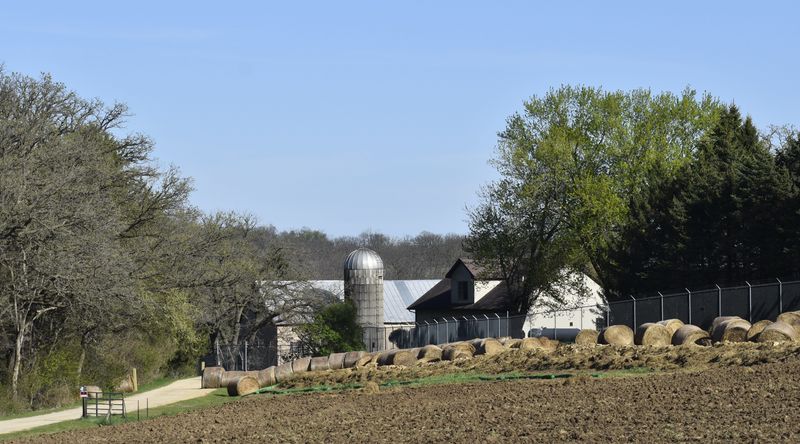
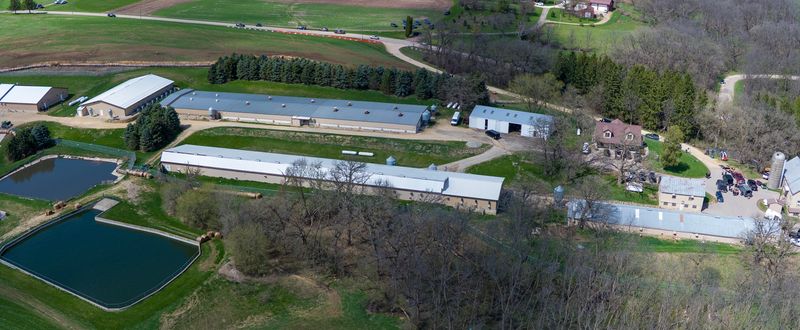
For 60 years, Ridglan Farms has sat on a rural road tucked in the rolling hills of Blue Mounds, a small town about 30 miles west of Madison.
Over time, the company became the second-largest beagle breeder in the country, supplying thousands of dogs per year for medical research and drug testing.

It also drew attention from animal rights activists, who tried for years to get local officials to investigate concerns that the beagles inside were being mistreated.
In October 2024, the activists finally got their chance.
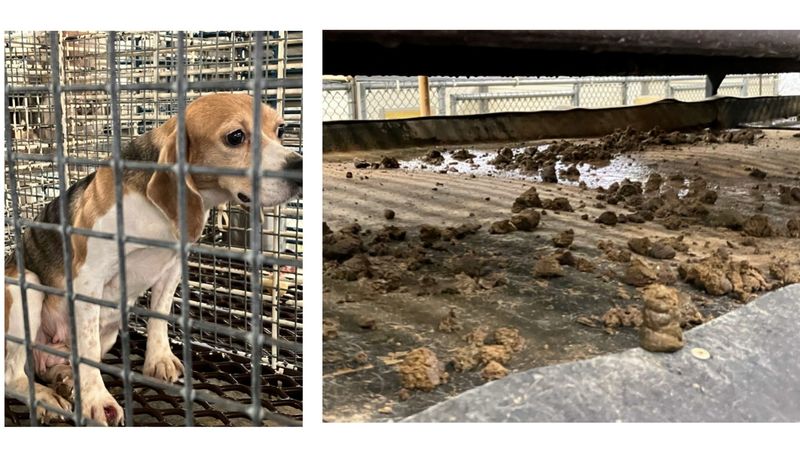
In front of a Dane County judge, witnesses took the stand and described thousands of beagles that had never seen sunlight. They showed photos of dogs in metal cages, some with sores on their feet from the wire floors. One former employee alleged that he and other staff helped sever dogs’ eye glands with scissors, without anesthesia.
The testimony was enough to prompt the judge to order a criminal investigation, even though Ridglan Farms strongly disputed the claims.
But the probe would not lead where activists hoped.
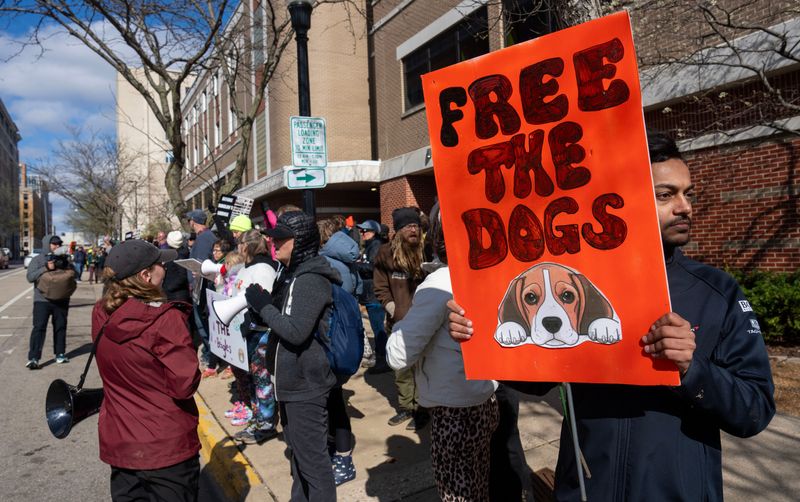
What came next would make national headlines, with more than 1,000 people descending on the rural farm last month in an attempt to free the dogs. Instead, they were met with tear gas, rubber bullets and felony charges.
The confrontation at Ridglan Farms didn’t happen overnight. A Milwaukee Journal Sentinel review of court records, inspection reports and regulatory documents shows that state and federal agencies documented problems at Ridglan for years without resulting in charges – creating a gap that activists ultimately tried to fill themselves.
“[The dogs] can’t advocate for themselves, they can’t contribute to campaigns,” said Lisa Castagnozzi, a Milwaukee animal rights advocate who participated in both raids. “That’s why sometimes these things come to something like this.”
How a Blue Mounds beagle farm became a target for the national animal rights movement
With an estimated 3,200 beagles in its care, Ridglan Farms says its work contributes to lifesaving research for both humans and animals. It is owned by three veterinarians, court records show: James Burns, Jeffrey Ballmer and David Williams.
Federal law has long required that new drugs be tested on both a rodent and a non-rodent species before starting human trials. Dogs are one of the primary test species. Nearly 43,000 dogs were used in research facilities in 2024, according to U.S. Department of Agriculture records.
Due to their small size and docile nature, beagles are often the breed of choice.
Eva Maciejewski, director of communications for the National Association for Biomedical Research, said the discovery of insulin is one of the most well-known examples of dogs’ medical legacy. Today, dogs remain the preferred animal model for testing diabetes treatments, such as automated insulin pumps, she said.
Many animal rights activists oppose animal testing entirely, on ethical grounds.
They also say that legal protections for animal welfare are too lax.
For example, Ridglan Farms houses its beagles in small chain-link enclosures. These cages are just wide enough for the dogs to turn around and lie down – consistent with federal regulations.
The dogs are also not required to be taken outside. Instead, partitions between adjacent enclosures are opened daily – also considered standard under federal rules.
In 2016, Aaron Yarmel, then a doctoral student of philosophy at the University of Wisconsin-Madison, organized one of the first vigils outside Ridglan Farms to protest what he called its “moral atrocities,” according to a recent piece in Isthmus.
The following year, Yarmel met Wayne Hsiung, a California attorney and co-founder of Direct Action Everywhere, a national animal rights organization.
DxE, as it was called, was known for its attention-grabbing protests and philosophy of “open rescue,” in which activists openly break into facilities to remove animals, accepting arrest and criminal charges.
Yarmel recalled telling Hsiung about Ridglan Farms. At the time, its address was not widely known.
Months later, DxE took action. In April 2017, three activists, including Hsiung, broke into Ridglan and stole three beagles.
Photos and videos taken by the group show dogs walking gingerly around wire enclosures coated in feces, including one with a large lesion between its toes. The footage formed the basis of a national investigation published by The Intercept in 2018.
Hsiung and his partners were charged with felony burglary and theft, crimes that carried up to 16 years in prison.
Their case wound through the courts for nearly seven years until March 2024, when Ridglan Farms asked prosecutors to drop the charges days before trial, citing threats made against employees because of the case.
Ridglan Farms told the Journal Sentinel it has received “countless phone and email threats” over the years, with some employees followed home from work.
“Looking back at 2024 in hindsight, perhaps we should not have withdrawn the charges,” a spokesperson said in a recent statement. “But at the time we were concerned about the likelihood of increased threats.”
Hsiung didn’t let Ridglan out of his sights.
From 2018 to 2024, he and others repeatedly petitioned local law enforcement and prosecutors to investigate Ridglan Farms.
Court records show the group contacted Dane County District Attorney Ismael Ozanne’s office at least seven times to request an investigation or in-person meeting, and that his office received nearly 1,000 emails from members of the public on the subject.
Ozanne met with activists once, for about 10 minutes, according to court records. He did not open an investigation. He has not publicly explained his reasoning, other than stating that his office never received a referral for charges from law enforcement.
For years, every door closed. Then Hsiung tried a different one.
A hearing sets off a criminal investigation into Ridglan Farms
In April 2024, Hsiung and two local animal rights groups petitioned Dane County Circuit Judge Rhonda Lanford to bring criminal charges against Ridglan Farms, under a state law that allows citizens to go directly to a judge when a district attorney declines to act.
That fall, Lanford heard testimony from six witnesses called by the petitioners, including Hsiung, two former Ridglan employees and an expert in canine behavior.
Among the witnesses was Scott Gilbertson, an animal rights activist who managed to get hired briefly at Ridglan Farms at the end of 2021.
In an interview with the Journal Sentinel, Gilbertson said he was assigned to clean a large building that housed hundreds of beagles, spraying down cages covered in feces while the dogs shuffled from one corner to the other.
He described the sound of hundreds of dogs barking at once as “unbearable.”
Paw injuries, he said, were by far the most widespread problem. Dogs lay flat because it hurt too much to stand, according to Gilbertson.
Gilbertson also described something called a cherry eye procedure.
When a gland inside a dog’s eyelid slips and protrudes from the inner corner of the eye, it is nicknamed cherry eye, named for the reddish lump it creates. Gilbertson testified that Ridglan employees, including those without veterinary training, regularly removed these glands from dogs without anesthesia or pain control.
Gilbertson said he personally held dogs down for the procedure four or five times in the month he worked there.
Ridglan has strongly disputed the claims of Gilbertson and the other witnesses.
Among other things, a Ridglan spokesperson said Gilbertson worked at the company for less than two weeks, was never present for the cherry eye procedures, and manufactured false testimony.
Ridglan has repeatedly cited its federal inspection record in its defense. U.S. Department of Agriculture records show that out of 30 inspections conducted between 2014 and 2026, only four resulted in any findings, none of them critical.
But Lanford, the judge, found the testimony credible enough to show probable cause that Ridglan Farms may have violated animal cruelty laws.
In January 2025, she appointed a special prosecutor – La Crosse County District Attorney Tim Gruenke – to determine whether Ridglan Farms should be criminally charged.
Parallel investigations into Ridglan Farms ramp up
Gruenke wasn’t the only person looking into Ridglan Farms.
State regulators had been examining Ridglan for years as part of their routine inspections into animal breeding facilities.
Of the seven inspections conducted by the Department of Agriculture, Trade and Consumer Protection from 2016 to 2024, each one documented problems at the facility. Two resulted in formal action: a warning notice in 2016 and a citation in 2024.
In 2016, inspectors found wire mesh floors with openings wide enough for puppies’ feet and legs to slide through and issued a formal warning, inspection records show. Ridglan corrected the problem.
In 2018, inspectors found the same issue, and Ridglan fixed it on the spot. But by 2020, inspectors were still documenting the problem, records show.
In 2022, a state inspector wrote that the facility’s ammonia levels were so bad he “experienced nausea” and his “throat and nostrils were irritated for several hours” after he left.
A follow-up inspection found the odors had improved in some buildings but persisted in others. Still, the facility had improved enough to pass, inspectors determined.
Two years later, during another routine inspection in 2024, inspectors found a beagle limping on her right front paw with an untreated, ruptured cyst that they estimated was at least 24 hours old. Ridglan was given a citation.
In a follow-up visit later that year, inspectors found two dogs in the same enclosure with injuries old enough to show scabbing – one limping on its front leg, the other with wounds on its muzzle. Neither had been seen by a veterinarian.
The same inspection noted the facility had 3,200 dogs and just 16 full-time employees – three of whom were primarily responsible for socializing the dogs. The inspector concluded the dogs were not getting daily positive human contact, as required by the state.
Meanwhile, the Wisconsin Veterinary Examining Board was independently investigating a complaint filed by local animal rights group Dane4Dogs against veterinarian Richard Van Domelen, Ridglan’s facility manager and head of medical operations.
The veterinary board conducted a surprise inspection in February 2025. At that visit, Ridglan employees admitted they had been routinely performing cherry eye procedures without anesthesia for several years.
In a text message later cited in his suspension order, Van Domelen asked a board member to tell her colleagues that non-veterinarians were allowed to perform certain minor procedures because of Ridglan’s status as a federally-registered research facility.
“The animal rights crazies are filing complaints with the veterinary examining board about the veterinarians at Ridglan Farms, specifically me,” Van Domelen wrote.
Board members disagreed, noting that Wisconsin’s veterinary code bars non-licensed staff from performing surgical procedures. The board ordered Van Domelen to use anesthesia, document procedures properly and conduct proper exams before surgeries.
A follow-up inspection later that year found Van Domelen violated those conditions.
After reviewing more than 150 of his surgical records, inspectors found no proof that the cherry eye surgeries were medically necessary, no documentation that anesthesia had been monitored, and no evidence that Van Domelen had properly examined the animals before operating.
The board voted unanimously to suspend Van Domelen’s veterinary license.
Shortly after, the state consumer protection department filed a civil enforcement action against Ridglan Farms, accusing the company of 311 violations and noting the veterinary board’s findings.
The bulk of the violations – 308 of them – each corresponded to a single cherry eye procedure performed on a dog between 2022 and 2025. The three additional violations involved failures to conduct required daily health checks.
The agency fined Ridglan Farms $55,148.
In a statement to the Journal Sentinel, Ridglan Farms said it “strongly” disagrees with many of the agency’s findings.
Regarding the socialization of the dogs, the company said the state never identified which of its procedures were deficient or what the facility would need to do to comply.
“The truth is that Ridglan Farms’ trained animal care staff connect with our animals on a daily basis,” the company said.
Ridglan Farms also said its ammonia levels are consistently below legal limits and that the state never cited the facility for failing to meet any specific standard.
“The inspectors involved clearly had no experience with an agricultural facility,” a spokesperson said.
Van Domelen continues to serve as Ridglan Farms’ manager “while the matter associated with his license is resolved,” the spokesperson added.
Why prosecutors said charging Ridglan Farms with animal cruelty was harder than it looked
As the investigations unfolded, Gruenke weighed whether Ridglan could be criminally charged.
Over nine months, Gruenke reviewed health records, USDA inspection reports and internal business documents provided by Ridglan’s attorneys. He did not visit the facility in person.
He released his findings in October 2025.
In his report, Gruenke noted that a number of the witnesses had credibility issues. Some had not worked in the facility in many years. Others had only been there briefly.
For example, Gruenke said, the one person who testified about conducting vocal cord surgeries on the dogs left Ridglan in 2010 – too long ago to prosecute under the law.
Gruenke also reviewed testimony of dogs with wounded paws and a single photo exhibit of a paw injury. He concluded that some number of injured animals was to be expected on a farm of Ridglan’s size and said the evidence didn’t establish a clear criminal pattern.
What was left – the only allegation Gruenke concluded could be charged and proven to a jury – were the cherry eye procedures.
Removing eye glands from dogs without anesthesia or pain control constituted animal mistreatment under Wisconsin law and could be charged as a felony, Gruenke determined.
However, he also warned that a jury with members from agricultural backgrounds might not convict.
“The reality is that the Ridglan Farms business model was not unusual,” Gruenke wrote.
In addition, he noted that Wisconsin law exempts federally licensed research facilities from animal cruelty statutes. The company’s attorneys have long argued that Ridglan’s status shields it from prosecution for animal cruelty.
Gruenke believed he could overcome that argument, however, because most of the dogs weren’t used in Ridglan’s own research but sold to outside institutions – meaning the exemption wouldn’t apply.
Ultimately, the two sides settled rather than test it in court.
In exchange for the state not prosecuting, the company agreed to surrender its state breeding license by July 1, 2026 – ending its practice of selling beagles to outside research institutions.
Under the terms of the agreement, Ridglan Farms could continue to breed dogs for use in its own on-site research.
The consumer protection department’s case was folded into Gruenke’s non-prosecution agreement and never formally adjudicated. Ridglan Farms never paid the $55,148 penalty.
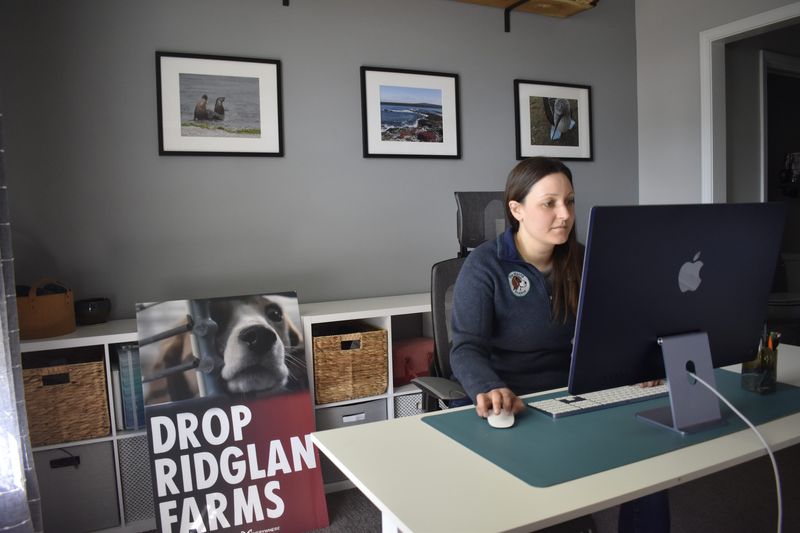
To Amy Van Aartsen, the executive director of the Marty Project, a Madison-based animal advocacy organization, the outcome was a “complete regulatory failure and a moral failure.”
Van Aartsen grew up in Middleton, close enough to Ridglan that she almost certainly biked past it as a teenager without knowing what was inside. She later worked as a researcher at the University of Wisconsin, where she helped develop non-animal testing methods.
Van Aartsen has cared for beagles her whole life. When she first read about Ridglan in 2021, she was sitting with her beagle, Maggie.
“It was all of her cousins,” Van Aartsen said. “It just hit me extra hard.”
Van Aartsen had hoped to see Ridglan Farms charged in court, and eventually shut down. But because of the settlement agreement, the violations that formed the basis of years of advocacy against Ridglan were now considered legally resolved.
“A lot of agencies are saying, ‘Well, that was already wrapped up. We can’t use that again,'” Van Aartsen said. “It’s like a whole other tidy rescue – but for Ridglan.”
Nearly a decade after the first break-in, activists returned
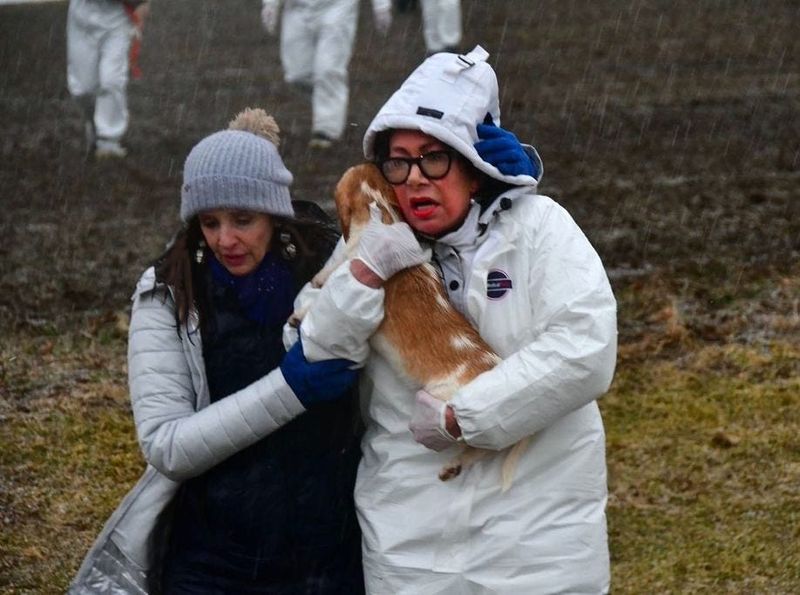
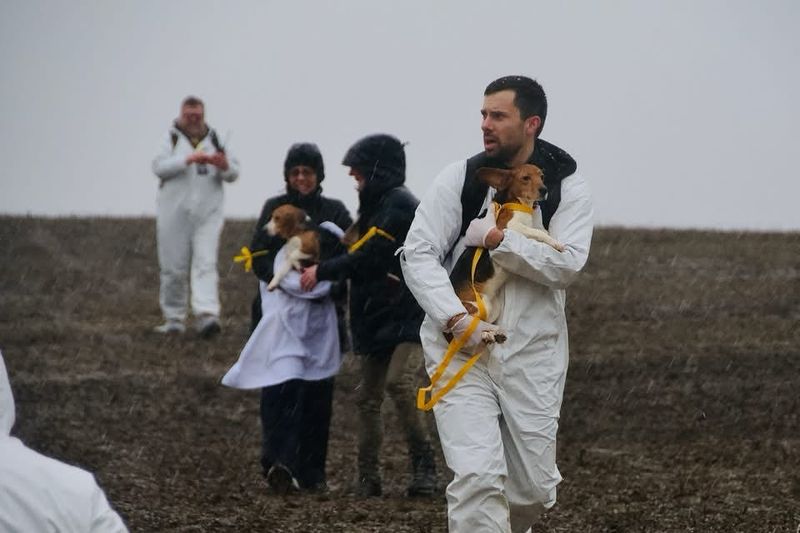
On a foggy, cold morning in March, just before 9 a.m., about 50 people in hazmat suits descended on Ridglan Farms.
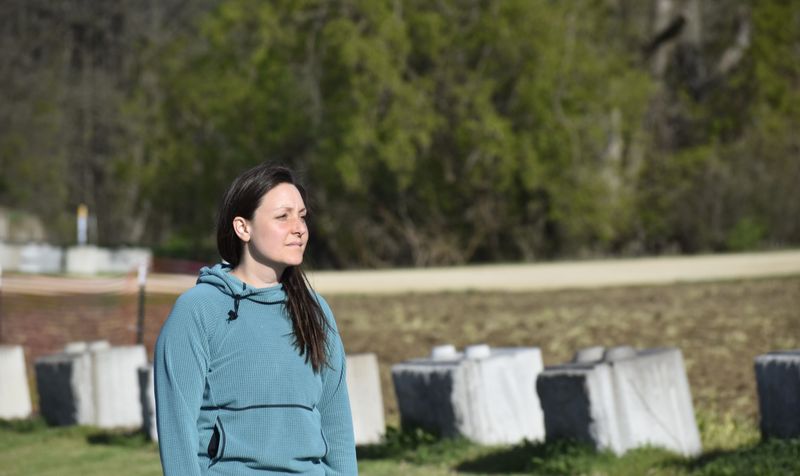
Castagnozzi, who has been following the Ridglan situation for nearly eight years, was among them.
“I guess it was under a moral and legal obligation to help these dogs,” Castagnozzi said. “It’s much like rescuing a dog from a hot car.”
On that day, Castagnozzi described approaching the buildings and hearing “a wall of screaming” from the beagles inside. She said the smell was overwhelming.
“The woman next to me threw up, and I had to help her,” she said. “And then we just kept going.”
With cameras rolling, members of the group – led by Hsiung, with support from local groups like Dane4Dogs and the Marty Project – broke open the facility’s doors and scooped up 23 beagles. The images of the operation went viral, garnering massive public support.
Weeks later, activists began publicly recruiting volunteers for a second operation, led again by Hsiung. This time, around 1,000 people showed up.
It did not go the way the first one had.
As people attempted to breach Ridglan’s fence, the Dane County Sheriff’s Office deployed tear gas, pepper balls and rubber bullets on the crowd. Videos provided by the coalition showed law enforcement spraying the crowd and deputies pushing people to the ground before arresting them.
No dogs were removed.
Prosecutors charged four people – including Hsiung – with burglary as a party to a crime, a felony carrying a maximum penalty of 12 years and six months in prison and a $25,000 fine.
Van Aartsen, who said she stayed on public property for both operations, said the rescue “never should have had to happen.”
“We tried really hard to follow the traditional routes – to go through the processes,” she said. “But at a certain point, it’s like: what else could we possibly try?”
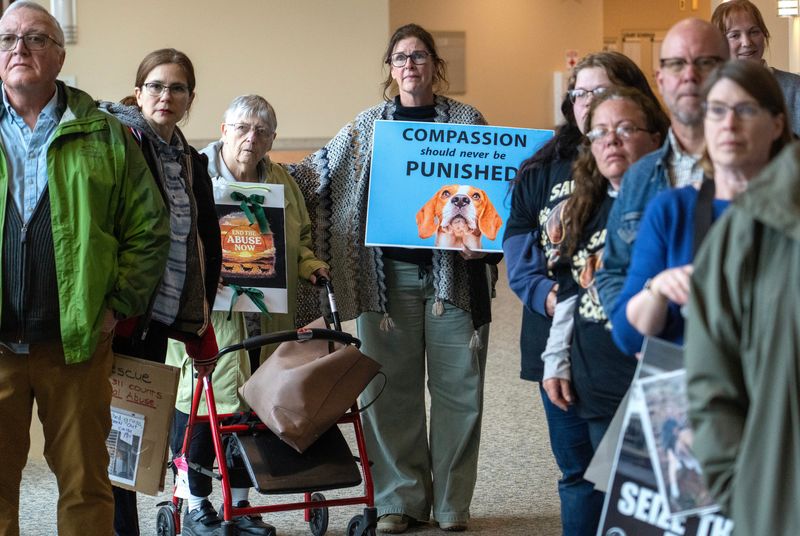
In the days that followed, activists spread across Dane County – protesting outside the jail, returning to the road outside Ridglan and rallying at the state Capitol in Madison – to demand action from Gov. Tony Evers and other officials.
Then, on April 29, they got word of a new development.
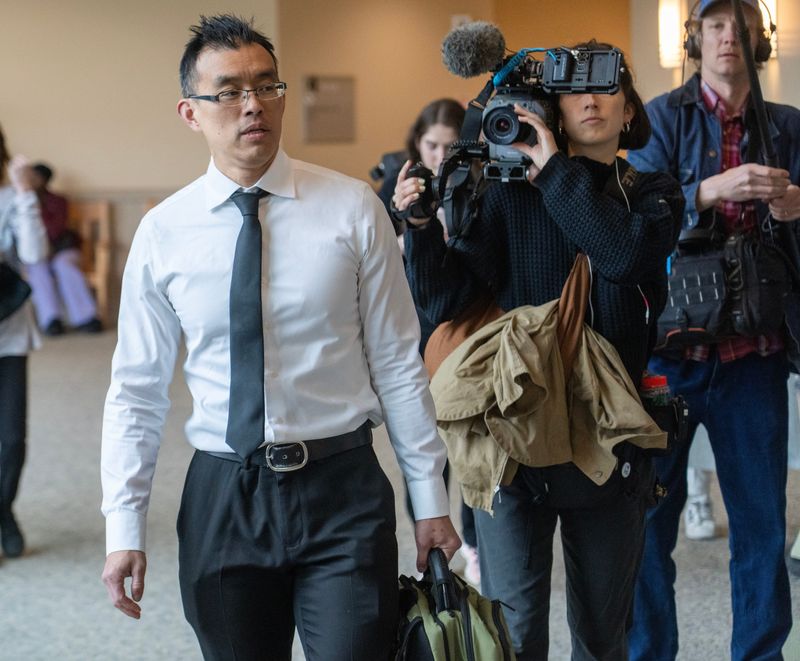
A reporter broke the news to Hsiung, who had just emerged from his first appearance in Dane County Court that afternoon: Ridglan Farms had agreed to sell 1,500 of its dogs, for an undisclosed amount, to two animal rescue organizations.
“If what I’ve heard from you is true, then I’ll be very happy,” Hsiung said, his voice cracking as supporters applauded behind him.
Could animal testing one day be a thing of the past?
It’s unclear what will happen next for Ridglan Farms – and for the future of animal testing.
As of 2022, the FDA no longer mandates animal testing before approving a drug for human trials, as long as scientifically valid alternative methods can satisfy the requirement.
The Trump administration has since pledged to go further, directing federal health agencies this year to phase out animal testing requirements.
Lauren Stein spent a decade in biomedical research before joining the National Anti-Vivisection Society, where she now directs science and research programs.
“We’re really no longer in a world where animal testing is the only option, and the federal government is also starting to catch up,” said Stein.
Alternatives include biochip technology that allows scientists to grow human cells in a lab to simulate how the body responds to drugs, Stein said, as well as artificial intelligence to predict whether a new compound might be toxic.
Naomi Charalambakis of Americans for Medical Progress, a nonprofit that supports the biomedical research industry, said those tools have real value, but still can’t capture everything a living system does.
Charalambakis said her organization isn’t arguing for animal studies indefinitely, and she supports replacing them wherever reliable alternatives exist.
“The goal should be doing science better,” Charalambakis said.
Despite their moral opposition to animal testing in general, the concerns activists brought to authorities had nothing to do with the research itself. They were about how the dogs were treated at the breeding facility.
The first 300 beagles left Ridglan on May 1, traveling by van to a facility in Marshall, Wisconsin, where they were let outside to roam a grassy field. Another 16 departed by plane the next day, bound for animal shelters in New York and Virginia.
Around one-third of the released beagles are to remain in Wisconsin. Many will eventually become available for adoption.
Animal rescue organizations say they are continuing to negotiate for the release of the roughly 500 dogs remaining at the facility.
As for the future of Ridglan Farms, a spokesperson said only that it “is in the midst of finalizing arrangements for the remaining dogs.” The company has said that its decision to sell the dogs was “not related to any specific event.”
“We hope they will continue to live happy lives in their new adopted homes,” the spokesperson said.
Ridglan Farms declined to answer further questions about its plans, citing safety concerns.
On a recent drive out to the property, small signs could still be seen dotted on trees along the road. They read: “Keep Out.”
Quinn Clark is a Public Investigator reporter for the Milwaukee Journal Sentinel. She can be emailed at QClark@gannett.com.
This article originally appeared on Milwaukee Journal Sentinel: Before the Ridglan beagle raids, there were years of complaints and no charges
Reporting by Quinn Clark, Milwaukee Journal Sentinel / Milwaukee Journal Sentinel
USA TODAY Network via Reuters Connect