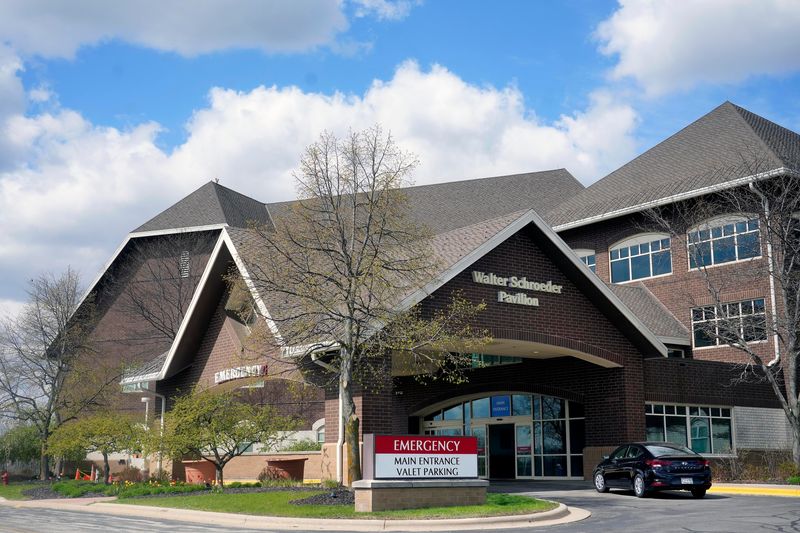
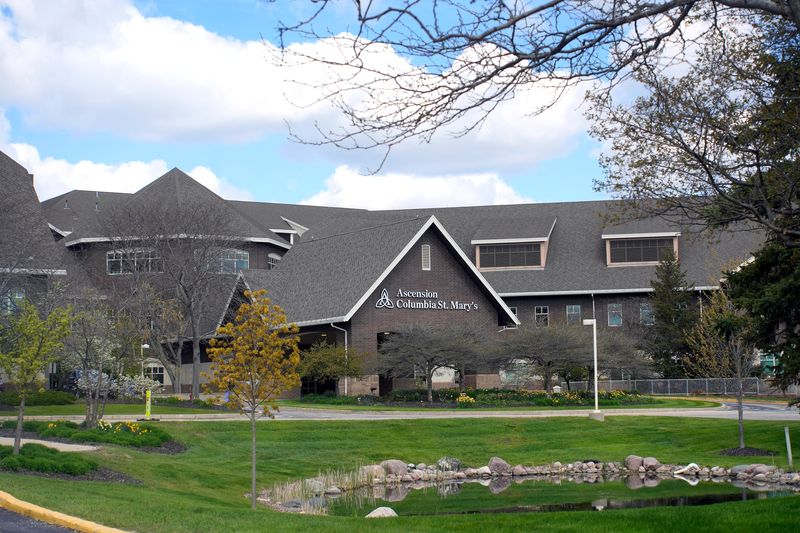
Ascension Wisconsin is no longer staffing some of its hospitals’ intensive care units with in-person critical care physicians, part of a telemedicine push in its smaller ICUs.
As of May 1, critical care physicians are no longer physically present in the ICUs of a few Ascension satellite hospitals, but are available via video call to help bedside nurses and on-site hospital medicine doctors, known as hospitalists, who are not specialized in critical care, according to two health care workers at Ascension Wisconsin who spoke on the condition of anonymity for fear of losing their jobs.

In a statement, Ascension said telehealth in the ICU is widely used across health care systems and that it would complement in-person care at some locations.
The details of Ascension’s plan were unclear, even among Ascension health workers who said days before the change went into effect they had received little information about how the changes in ICU coverage would be implemented and who would respond to the ICU in an emergency.
“If my mom was in the hospital in an ICU that didn’t have an ICU doctor present ever, that would worry me,” said an Ascension Wisconsin nurse who spoke to the Journal Sentinel on the condition of anonymity. “I want my patients to get what they need, when they need it.”
Ascension denied a request by the Milwaukee Journal Sentinel for an interview but in its statement, said it has protocols in place for emergency situations and that at every hospital, an on-site hospitalist attends to each ICU patient in-person.
“All patients are monitored closely by the onsite, comprehensive care team throughout the patient’s time in the ICU,” the statement, provided by spokesman Mo Moorman, said.
Ascension Wisconsin moves to tele-ICUs at smaller hospitals
The change in ICU coverage has sparked concerns among some Ascension health workers who worry that patients may not get the help they need in an emergency.
Hospitalists are not specialized in critical care and generally cannot perform the types of lifesaving procedures that critical care physicians, known as intensivists, perform in emergent situations. While emergency medicine providers are always on-site and trained in those procedures, some Ascension health workers were doubtful they would feel comfortable leaving their primary responsibilities in the emergency room to respond to the ICU if asked.
“We’ve been given no direction as far as how we’re going to handle emergent situations like intubations or [central] line placements,” the nurse said. “Some of our respiratory therapists have been trained to intubate but not all of them.”
Ascension did not respond to questions about whether it has made changes to its existing contracts with other specialists, such as emergency medicine physicians, to ensure they would respond to the ICU when needed. In its statement, Ascension said it has protocols in place for emergent situations that use in-house hospitalists, emergency medicine physicians and respiratory therapists.
“I don’t think that they’re going to be willing to leave the emergency department to place a [central] line,” the nurse said of ER physicians. “It’s not exactly a quick couple-minute procedure.”
Ascension did not say which hospitals were moving to a telemedicine model in the ICU. But health care workers at Ascension Wisconsin said the change occurred at some of Ascension’s smaller, satellite hospitals, including Ascension SE Wisconsin Hospital-Elmbrook in Brookfield, Ascension SE Wisconsin Hospital in Franklin and Columbia St. Mary’s Hospital-Ozaukee in Mequon.
At Elmbrook’s ICU, a nurse practitioner or physician assistant specialized in critical care may be on-site for several hours a day, but the rest of the time, critical care providers are only available virtually. At CSM-Ozaukee’s ICU, critical care providers are only available virtually.
The change comes following a contract dispute last summer, when Ascension Wisconsin nearly replaced the local physician groups that staffed its ICUs with a national, private equity-backed staffing firm called TeamHealth. That firm was planning to replace in-person critical care providers at multiple ICUs with telemedicine physicians or nurse practitioners, a plan that several physicians at Ascension decried as shortsighted cost-cutting that would put patients in harm’s way.
Ultimately, Ascension reversed course and stuck with the local physician groups, following reporting by the Journal Sentinel and backlash from health care workers at Ascension. One of those local groups, Midwest Critical Care, is now providing the telemedicine services that began May 1 at the smaller hospitals.
A small group of physicians, physician assistants and nurse practitioners, Midwest Critical Care will continue to provide in-person physicians at Ascension’s larger ICUs in southeast Wisconsin, including the flagship Ascension Columbia St. Mary’s Hospital in Milwaukee. The group now manages critical care services for all of Ascension’s ICUs in southeastern Wisconsin.
The changes come as Ascension, the St. Louis-based national health system and parent of Ascension Wisconsin, continues to climb out of a sustained period of operating losses – in some years in the billions of dollars – partly driven by post-pandemic inflation and a 2024 cyberattack that crippled its operations nationwide.
Telemedicine in the ICU on the rise since early 2000s
Many hospitals use telemedicine in the ICU in one way or another. ICU telemedicine has expanded since the early 2000s and can take many forms.
It may involve continuous, real-time monitoring of ICU patients at multiple hospitals by a remote team of ICU providers operating from a centralized hub. Or it may involve a more reactive model, with off-site critical care providers simply available for virtual consultations. Some hospitals use tele-ICUs only at night or on weekends when they normally wouldn’t have a critical care specialist on-site.
When ICU telemedicine is implemented well, it is possible for community hospitals to meet critical care standards even without having critical care physicians on-site, said Dr. Craig Lilly, an expert in ICU telemedicine and retired intensivist who previously led the tele-ICU program at UMass Memorial Medical Center. But in order for it to work, he said, there must be clear lines of responsibility, close monitoring of patients to identify potential problems early, and accountability to ensure patients get help within the required timeframes.
“You have to be able to deliver airway services and central line services in a very timely manner,” Lilly said. “When an airway intervention or an intravascular line is required to resuscitate the patient, those things need to happen before the patient goes down the tubes.”
That often requires restructuring contracts with emergency medicine physicians or other specialists to ensure they respond to the ICU when needed, an undertaking that requires highly skilled hospital administrators, he said.
“[The on-site team] should be concerned about being left in the lurch because that is likely to happen if the system isn’t well enough organized,” Lilly said.
Leapfrog, a nonprofit that reports hospital quality metrics, has an ICU physician staffing standard that requires “some on-site intensivist presence” in order for hospitals with 24/7 tele-ICUs to meet its standard. Under Leapfrog’s standard, when not in the ICU, an intensivist should reply to calls almost immediately, and another physician or trained clinician should be able to reach ICU patients within five minutes.
In its statement, Ascension said it was deliberate in its communications with medical staff about the ICU changes, but did not provide details. Midwest Critical Care clinicians managing the tele-ICU services are local, the statement said, and familiar with the hospitals and staff with whom they are working virtually.
The nurse with whom the Journal Sentinel spoke said there was little to no communication about any backup plans in the case of emergencies.
Ascension Wisconsin ICUs now using telemedicine used to have critical care specialists on-call at night and available to respond to the ICU in-person when needed.
“I don’t necessarily think we need 24/7 in-person coverage” in the ICU, the nurse said. “I think having the tele-ICU 24/7 so you can get someone on the iPad at night is a good idea. But I do think having someone to respond in-person when you need it would be ideal.”
The nurse worries that without an ICU provider ever physically present at some hospitals, patients will suffer delays in care.
A statement from Midwest Critical Care said the tele-ICU would provide immediate access to critical care specialists.
“At any moment, day or night, an intensivist can be connected with the onsite care team and have eyes on the patient, versus having to wait for an intensivist to drive to the hospital to see him or her,” the statement said.
Reporter Sarah Volpenhein can be reached at svolpenhei@usatodayco.com or 414-607-2159.
This article originally appeared on Milwaukee Journal Sentinel: Ascension Wisconsin moves to tele-ICUs at some hospitals, no ICU doctors on-site
Reporting by Sarah Volpenhein, Milwaukee Journal Sentinel / Milwaukee Journal Sentinel
USA TODAY Network via Reuters Connect