For decades, efforts have been underway to clean up the Great Lakes from legacy industrial pollution, including polychlorinated biphenyls, a class of more than 200 manmade chemicals often known as PCBs.
PCBs were designed to be virtually indestructible, but they were banned after scientists linked them to serious health and environmental risks.

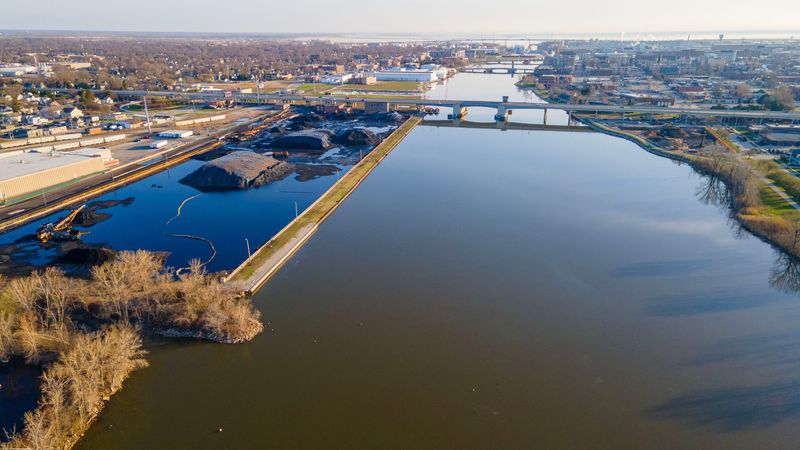
The PCB cleanup along the Lower Fox River and bay of Green Bay took about 17 years, beginning in 2004 and continuing until 2020. The nearly $1.3 billion effort removed roughly 6.5 million cubic yards of contaminated sediment from a 39‑mile stretch of river and is widely described as one of the largest PCB remediation projects in the world.
Here is the timeline of the PCB cleanup along the Lower Fox River.
1930s-1960s: PCBs are used widely in manufacturing
1930s: The Swann Chemical Company, based in Alabama, begins producing PCBs. In 1935, Monsanto buys Swann Chemical Company and becomes the sole manufacturer of PCBs in the U.S.
Mid-1950s: Paper mills along the Lower Fox River, then one of Wisconsin’s dominant industries, began using PCBs in newly invented carbonless copy paper and its recycled scraps.
Mid-1950s to 1970: The paper mills discharged wastewater with PCB‑laden fibers into the river, creating a massive pollution problem that would take decades to confront.
1970s: Early U.S. regulations on PCBs
1970: The U.S. Environmental Protection Agency is created by former President Richard Nixon following environmental reckonings in the Great Lakes region, like the Cuyahoga River fires and the first Earth Day.
1972: Congress passes the Clean Water Act, which regulates discharge of pollutants, like PCBs, into U.S. waterways.
1976: Congress passes the Toxic Substances and Control Act, which regulates the cleanup, storage and disposal of materials containing PCBs.
1977: Monsanto, the sole manufacturer of PCBs, stops producing the chemical. From the 1930s to 1977, the company produced about 1.4 billion pounds of PCBs.
1979: The EPA bans the commercial production of PCBs due to its toxicity to humans and persistence in the environment.
1980s-2000s: The EPA takes charge on cleanup
1980: Congress passes the Comprehensive Environmental Response, Compensation, and Liability Act, which is commonly known as Superfund. The law allows the EPA to identify the parties responsible for contaminating certain areas and make them either clean up the contamination or reimburse the cleanup costs.
1990s-today: Several communities sue Monsanto over illnesses and environmental damage linked to PCBs, opening a new front of litigation that would stretch for decades.
1998: The EPA proposes adding the Lower Fox River and Green Bay to the federal Superfund list, but the site is never formally listed. Instead, the EPA issues cleanup orders to responsible parties and requires them to investigate and remediate PCB contamination.
2004: The EPA, along with the Wisconsin Department of Natural Resources, begins the large‑scale remediation of PCB‑contaminated sediments along roughly 39 miles of the Lower Fox River, from Little Lake Buttes des Morts to the bay of Green Bay.
2010s-present: The Lower Fox River cleanup
2018: Bayer, a German pharmaceutical company, acquires Monsanto. Cities and other local governments across the U.S. continue to file lawsuits against Bayer over PCB contamination of rivers, stormwater systems and other public resources.
2020: After about 17 years of dredging, storing and removing 6.5 million cubic yards of PCB-contaminated sediment, Gov. Tony Evers announces the end to the nearly $1.3 billion cleanup, which was paid for entirely by the paper companies.
2022-2023: The EPA certifies the cleanup complete in October 2022. The state of Wisconsin issues its completion certification in early 2023. Long‑term monitoring is expected to continue for decades.
2024: The EPA and Wisconsin DNR release the latest progress report on the Lower Fox River and Green Bay cleanup site. The report shows that while the cleanup effort is yielding positive results, it will take upwards of 30 years before fish are safe to eat.
This article originally appeared on Milwaukee Journal Sentinel: 20 years, $1.3 billion. A timeline of the Lower Fox River PCB cleanup
Reporting by Caitlin Looby and Tamia Fowlkes, Milwaukee Journal Sentinel / Milwaukee Journal Sentinel
USA TODAY Network via Reuters Connect