When John Adams and Thomas Jefferson thumbed their noses at England’s King George III and set off a chain of events that reshaped the Old and New Worlds, life in Green Bay remained largely unchanged.
The oldest White settlement in Wisconsin, Green Bay in 1776 was far removed from the events of the American Revolution. When the nation was founded 250 years ago, the area that is now Green Bay was still the wilderness, inhabited by a few French-Canadians and many Native Americans.

In fact, it wasn’t until the end of the War of 1812 that the United States government imposed itself on Wisconsin’s premier fur-trading hub, 33 years after the Treaty of Paris gave British possessions south of Canada to the new country.
Between the end of the Revolution in 1783 and when Fort Howard was built in 1816, Green Bay remained in practice a British-held French settlement in a Native American land. British commercial interests didn’t retreat until the Americans showed up to build their fort.
Jean Nicolet arrives in 1634
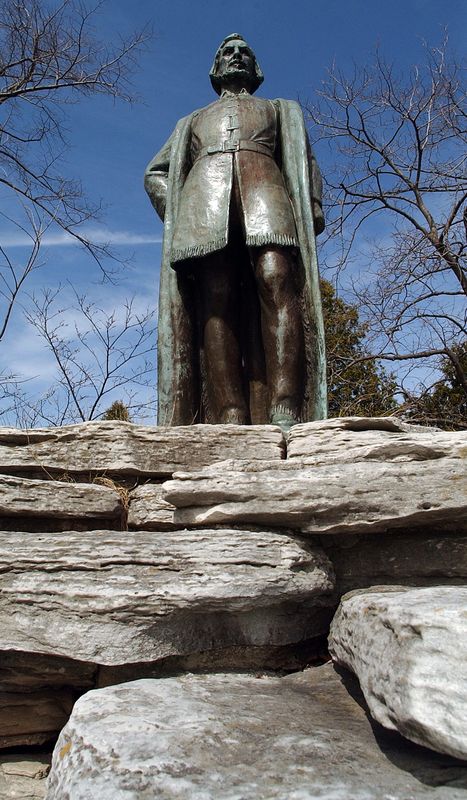
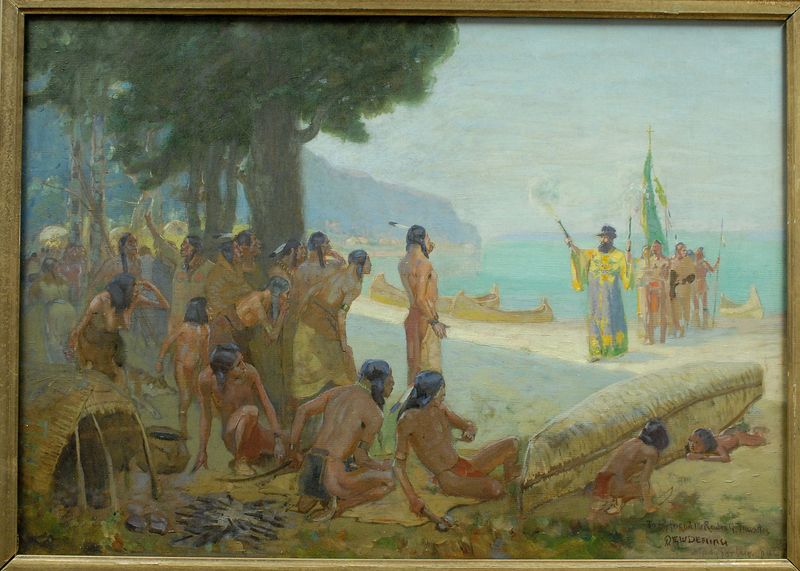
The region already was home to several Native American tribes, the Menominee and Ho-Chunk foremost among them, when in 1634 French explorer Jean Nicolet made contact with the Ho Chunk tribe at Red Banks, in what is now the Town of Scott. Nicolet soon was followed by a handful of French-Canadian fur traders, who called the area La Baye.
The Menominee, who lived in the Green Bay area for many thousands of years before Nicolet arrived, and occupied 10 million acres in Wisconsin and upper Michigan, were not surprised by the appearance of the strangers from the east.
“We could foretell the future in the dreams that we had,” David Grignon, Menominee tribal historic preservation officer, said in a PBS Wisconsin interview. “One of the dreams was that down in the Green Bay area, there would be a boat. Soon after, this boat did come, and in this boat was Jean Nicolet. He was the first European.”
The French were on the losing end of the Seven Years War, known as the French and Indian War in America. After 1763, France ceded its North American possessions to the British, who called the bay and the nearby settlement Green Bay. The population, however, remained largely French, Indian or a combination of the two, called Métis.
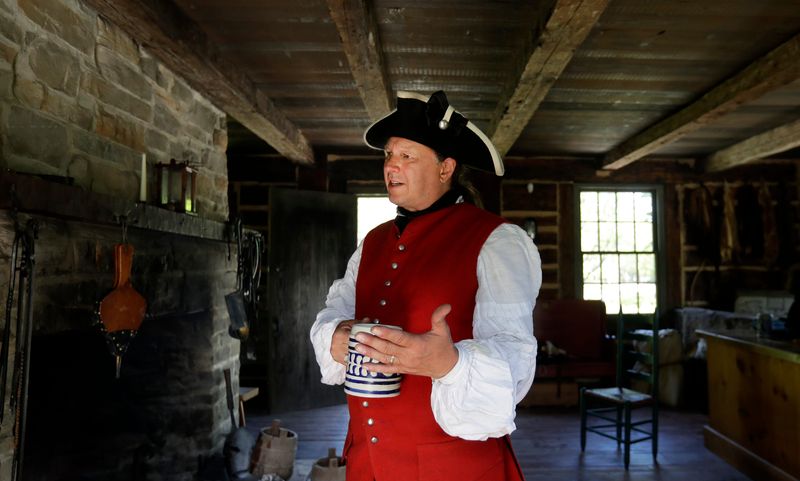
The French “really immersed themselves in that culture,” said Lula Keating, an historical interpreter at Heritage Hill State Historical Park in Allouez. “They knew the importance of living with the Native Americans. They learned the language. The French married into a tribe. That gave them an interpreter, someone who knew the land, someone who knew where the best hunting land was, someone who knew how to plant the soil and how to really live in the area.”
‘Beginning of the settlement’
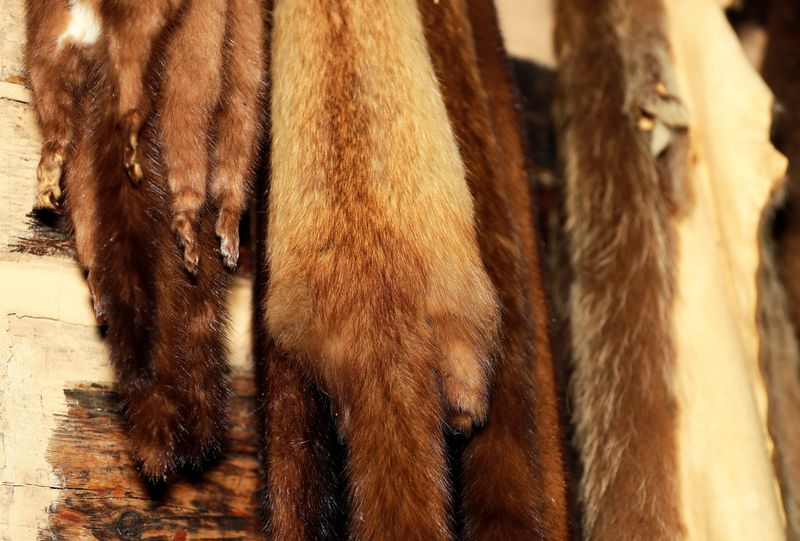
In 1765, Charles de Langlade, who was himself Métis, established a trading post along the Fox River (where Johnson Bank now sits on South Washington Street), which offered predominantly Native American hunters an alternative to taking their pelts by canoe to Mackinac at the northern tip of lower Michigan. Other traders were here as well. Paddling a canoe full of pelts nearly 300 miles was a trip many hunters were willing to forego. Fur trader convoys of canoes, some carrying up to 3.5 tons, could make the trip in four or five days.
“We always consider Charles de Langlade’s trading post to be the beginning of the settlement,” said Mary Jane Herber, local history and genealogy and special collections manager for Brown County Library.
Even as the area changed hands politically, the commerce of Green Bay, the fur trade, continued unabated.
“The French were still very much here, doing all that work, trading with the Native Americans, being that one-on-one person and transporting all those furs up to Mackinac to have a rendezvous so they can have more supplies here,” Keating said. “Most of the [hunting and trapping] was done by the Native Americans. Especially in winter months, when the fur was thicker and more valuable.”
The French and Native Americans had accepted British rule and were not gung ho about the Declaration of Independence, Heber said. “That was 1,200 miles away.”
In fact, Langlade twice led contingents of Métis and Native Americans from some of the 11 tribes that lived in the area east to fight on the side of the British, as he had done to fight against them in the French and Indian War.
Swampy Green Bay
The French had established a fort on the west side of the Fox River, to be succeeded by the British in 1761 and the Americans in 1816. Much of the west side nearest the Fox River was a slough, or swampy wetland, which still bedevils residents whose homes were built on the poorly filled-in land.
Herber said downtown Green Bay on the east side was swampy, too, so some of the earliest homes were in what is now Allouez or near the fort.
“East side, the land was higher (mostly in Allouez to De Pere). You can see what’s coming up and down the river when you’re at a higher point. Downtown Green Bay was basically all swamp, even on the east side,” Herber said.
The area was forested, but increasingly less so as trees were felled for cabins and for fires, winter and summer.
Trygvie Jensen, president of the board of directors at Heritage Hill, said the area got the name La Baie des Puants, “the bay of stinking water,” because of the rotting vegetation in the marshes. “It probably did have an offensive or oppressive smell to it in the summer time,” he said.
Snapshot from 1776
There might have been up to 60 non-Native Americans in Green Bay in 1776, Jensen said, although Herber said there could have been as many as 200. It is known that at least three families were here in 1776, and by 1779 there were seven. By the latter date, five families located west of the Fox River and two on the east side.
British presence was never large, although they controlled the fur trade in the area until the Americans came to do the same.
The Great Lakes and associated rivers were the interstate highways of the time.
“The majority of the population in Quebec could move through this area all by water, whereas the British were having to figure out how to do that. You didn’t see too many English in canoes,” Herber said.
The early fur trader cabins were rudimentary. They consisted of a trading post in the front part of the cabin, a storage area in back, a living area and a garden outside. “They’re going to be log. They’re going to be dirt floors. They’re going to be small,” Heber said.
Grignon said becoming dependent on goods from the fur traders did the Menominee no favors. “They took a hard toll on our people. Changed our economy and way of life, because we were hunters and gatherers,” he said for the PBS documentary. “We only took what we needed.”
Trade was done on a barter system. There was no money. Everything was measured against the value of beaver pelts.
That said, the fur trade was a global industry. Trade goods from all over the world came to Montreal, where furs where shipped from Mackinaw. Trade goods from France. silks from the orient, tobacco from Brazil and more could end up on the fur traders’ shelves.
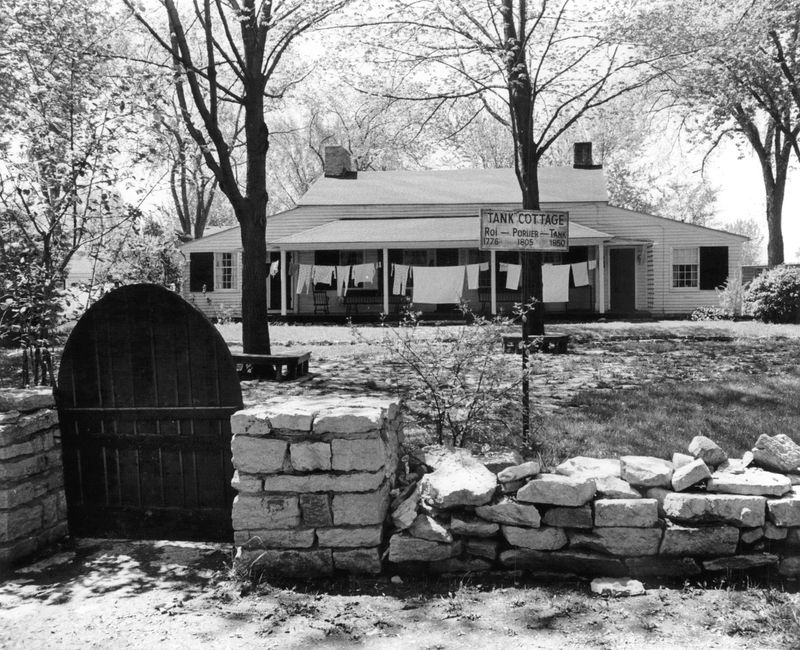
One of those settlers on the west side of the Fox River was Joseph Roi, who built a cottage, now known as Tank Cottage, that is the oldest structure in the state. When it was built is something of a question. Jensen is sure it was in or around 1776, while Herber believes it was around 1803.
“We knew the Rois were here [in 1776]. They had to build something,” Jensen said. “We can’t be 100% sure [when it was built], but it is the oldest structure in Wisconsin.”
The cottage, much expanded over the centuries, now is a feature at Heritage Hill.
After the Americans arrived, the Menominee were convinced to sell the land around Green Bay, much of which had already been claimed by the French settlers. The tribe relocated to a reservation northwest of Green Bay, only to be replaced beginning in 1822 by the Oneida, who were forced west from New York.
Contact Richard Ryman at rryman@usatodayco.com. Follow him on X at @RichRymanPG and on Instagram at @rrymanPG.
This article originally appeared on Green Bay Press-Gazette: 1776 Green Bay was deep in wilderness, far removed from the revolution
Reporting by Richard Ryman, Green Bay Press-Gazette / Green Bay Press-Gazette
USA TODAY Network via Reuters Connect
By Richard Ryman, Green Bay Press-Gazette | USA TODAY Network