The Houston Texans’ offseason workouts have come to a close, meaning the next time we’ll see the 12-win franchise take the field, it’ll be for the start of training camp next month.
Houston will have rookies report on July 21 for a bonus level of reps before veterans report the following week. Given that the AFC South contender has nearly all of its defensive starters back, plus a surge of offensive consistency on the field, mental reps could be more important than physical ones.

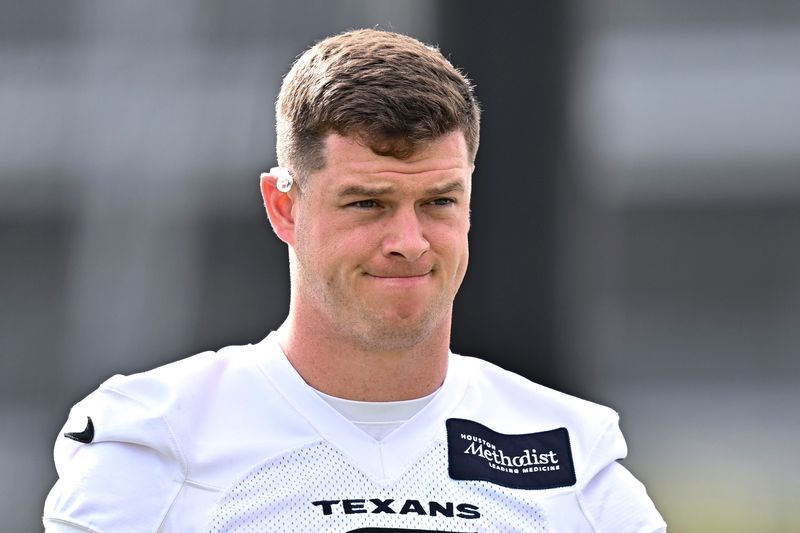
In DeMeco Ryans’ fourth season, it’s all about advancing. How far? Well, that will come down to the play of Pro Bowl quarterback C.J. Stroud. Fans remember the seven-interception postseason that cost the Texans a spot in the AFC title game, which likely would have propelled them to their first-ever Super Bowl appearance. If he delivers, the sky is far from Houston’s limit.
If he doesn’t and the rest of the roster is ready to win now, Houston does have options that could lead to a change at the helm for the NFL’s most important position. It’s not like the Texans didn’t give every opportunity for the offense to improve this offseason.
During the offseason, there were plenty of storylines surrounding on-field workouts and the ongoing stadium saga that has dominated the headlines. With that in mind, here are our biggest winners and losers for the Texans entering the dead period of the offseason.
Winner: Fans complaining about the offensive line
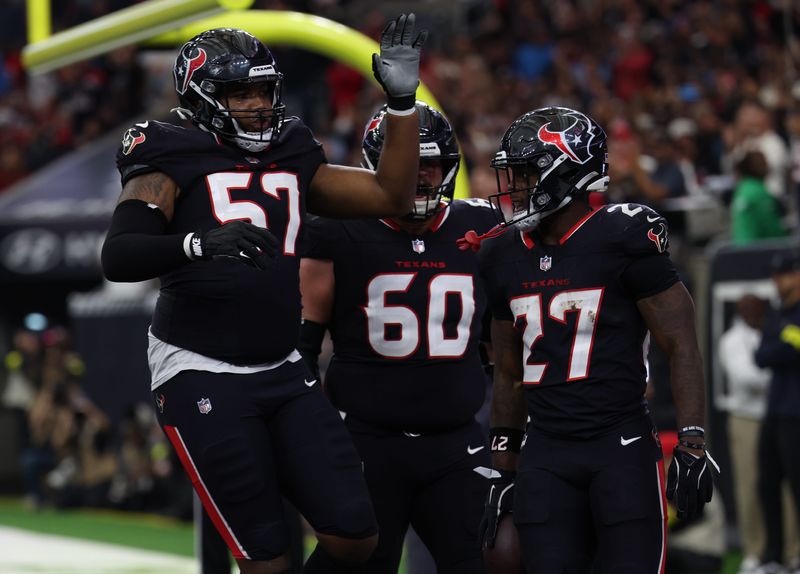
Did the offensive line improve last season with Cole Popovich running the show? Without question. Was it a unit built to win deep in the postseason and keep Stroud upright? Absolutley not.
Houston went from allowing the most QB pressures to just inside the top 10. Aireontae Ersery was arguably the most improved player and Ed Ingram was a diamond in the rough. It’s why those two will be back running the show at left tackle and right guard, respectively, while everyone else was replaced.
Both Braden Smith and Wyatt Teller are proven run-blockers with a mean streak to their play style. The new duo has constantly been ranked among the toughest linemen in the league and known for their unyielding ability to play through the whistle. Think of them as bouncers who aren’t afraid to throw someone through a window if they get too close to the prized possession, in this case, Stroud.
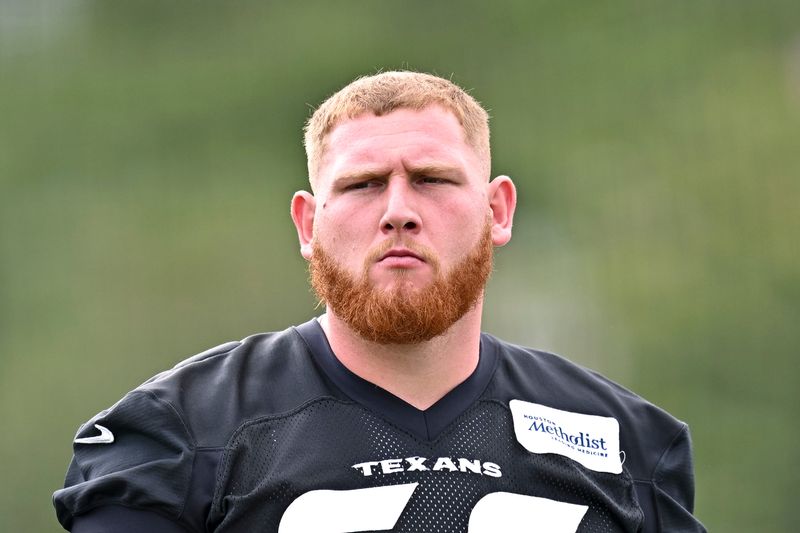
But the depth of the Texans’ line should be much improved. Evan Brown comes with years of experience playing multiple interior line positions between the New York Giants and Arizona Cardinals. The same goes for fourth-round pick Febechi Nwaiwu, a proven guard and center who started over three dozen games with Oklahoma over the past three years.
The addition of Keylan Rutledge is the prized jewel, however. For years, Texans fans have begged for a center prospect after passing on Tyler Linderbaum to local product Kenyon Green. While Rutledge only saw center reps in practice, his play style, physical toughness and ability to pile drive defenders out of the way and into the the tuft makes him an ideal option that could blossom into an All-Pro caliber linemen.
Houston’s offensive line won’t be its strength going into the year, but it could be a reliable unit by the time December rolls around. Whoever thought those words would be said off NRG Drive?
Losers: TE Brevin Jordan and Cade Stover
With the additions of two new tight ends, there’s going to be an odd man out among the fan favorites. Second-round pick Marlin Klein is making the team in 2026. Even though he’s a work in progress and might take a full season to earn quality reps, the Texans didn’t draft a tight end with a top 60 pick to cut him after training camp.
The same goes for newcomer Foster Moreau, a blocking-first tight end option with upside in the passing game. Last season, the Texans relied on Blake Fisher as the “extra blocker reporting as eligible,” and it backfired instantaneously. Given that Houston wants to be a run-heavy offense and Moreau already has a good understanding of second-year offensive coordinator Nick Caley’s offense, he’s proably right up there with Dalton Schultz for being off the chopping block.
So, Jordan and Stover will be battling it out for a spot on the squad. Both have dealt with their fair share of injuries over the past two years, but the latter at least has played more than two games in over 20 months of action. However, Jordan was more polished as a blocker and may have the second-best hands at the position behind Schultz.
The Texans more than likely will keep four tight ends, with the final option being more of an H-back. Three spots are locked up, so either Jordan or Stover is getting traded or cut entering September.
Winner: The No. 1 defense
How much better can the No. 1 defense get? No, really, can you say anything negative about the Texans’ defense at this point? Last season, Houston allowed the fewest amount of yards (277.2 yards per contest) and let up .2 fewer points per game than Seattle to finish second (17.4-17.2).
So, what did general manager Nick Caserio do? How about finding a long-term running mate for the secondary with the addition of Reed Blankenship? The only downside of the league’s new “No Fly Zone” was the position that was expected to be filled by former Eagles starter C.J. Gardner-Johnson. Following his release three games into the year, Houston went with a myriad of options, who either struggled to play consistently or landed on the injured reserve.
Consider that problem gone with the arrival of Blankenship, who went from being an undrafted practice squad player to team captain in Philadelphia within four seasons. He also recorded eight interceptions, which would have given Houston the turnover differential the past two seasons if he had suited up with the AFC South team.
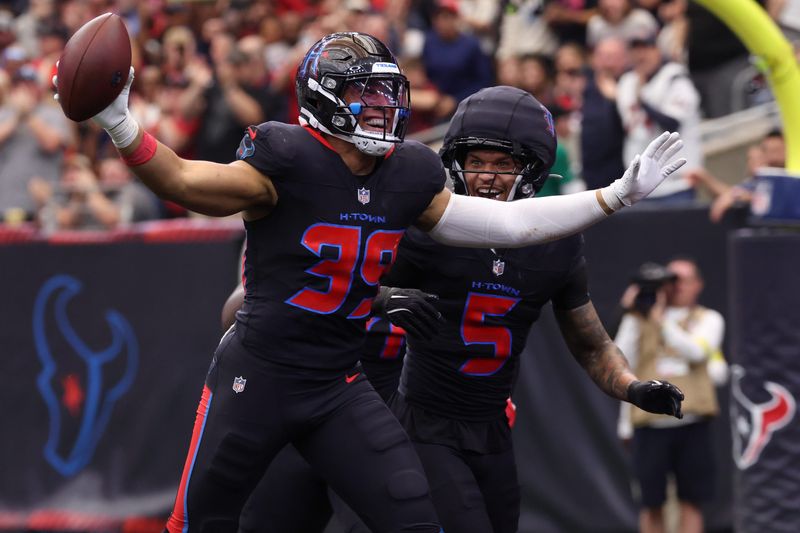
Depth-wise, it’s hard to argue with the moves. Logan Hall from Tampa Bay and Dominque Robinson from Chicago are ideal replacements for Dencio Autry and Derek Barnett on the defensive line. Drafting Ohio State’s Kayden McDonald could make the Texans’ defensive interior the league’s most intimidating unit, especially if Tommy Togiai reaches a new gear. Plus, Houston’s secondary only got deeper with the selection of fifth-round safety Kamari Ramsey, plus the return of Jaylin Smith and Jaylen Reed.
Where’s the fault in Houston’s already No. 1-ranked defense now with five starters back? Really, where?
Loser: OL Jake Andrews
Not only did the Texans draft Rutledge with the intent of making him a center, but they also brought in veteran do-it-all lineman Evan Brown. That’s not good news for Andrews, who started out of necessity more than anything last season at center in the Texans’ offense.
Andrews did an admirable job in the 17 starts last season, but he was at times the weak link on the line. Given that Houston is looking to leave no stone unturned in the future for upgrades. If you’re among the stars, anyone seems to be replaceable in Houston and barring a strong offseason, Andrews’ time in a starting role could be over by Week 1.
Winner: Defensive extensions
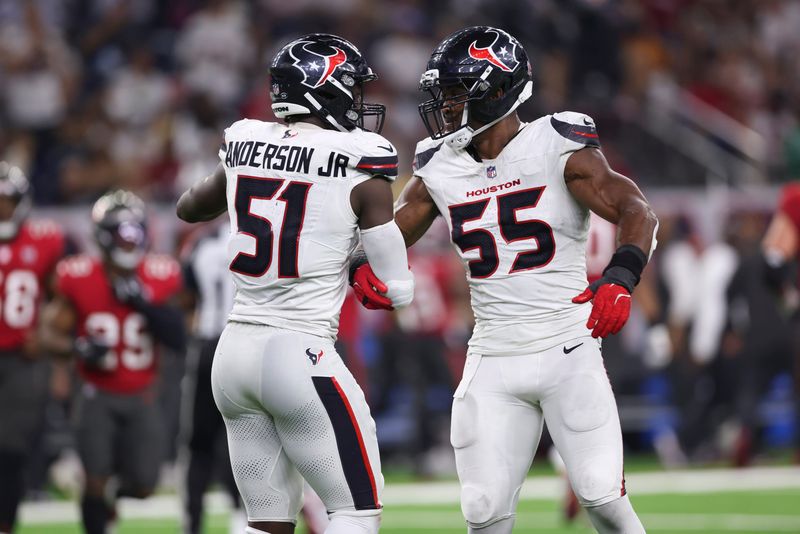
If you were a part of the No. 1 defense last year and helped Houston reach 12 wins for the first time in over a decade, chances are Caserio made sure to compensate you before the start of the calendar season properly. All-Pro defensive end Will Anderson Jr. shattered the record books after signing a new three-year deal worth $150 million, making him the highest-paid non-QB in the league for 2026. He earned every penny of the contract following his three-sack performance over the New England Patriots in the divisional round, plus his 12 sacks and 38 QB hits in the regular season.
Danielle Hunter, who was entering the final year of his contract, netted 15 sacks, which ranked for the second straight year inside the top five of pass rushers. His reward for just missing out on All-Pro status? A one-year extension worth $40 million, which was added to his already $35.6 million salary for 2026.
And the leader of the defense, Azeez Al-Shaair, looked like an All-Pro while winning against every interior lineman and a do-it-all linebacker. He transformed into a human highlight reel and the most important open-field tackler for Houston, so the team added three more years to his $54 million contract, keeping him locked up through 2030.
Plus players like linebacker E.J. Speed and defensive tackle Sheldon Rankins also got new deals, keeping them around through 2028.
The Texans still need to save money for Stroud’s potential contract. Plus, knowing Ryans, watching a player like Pro Bowl cornerback Kamari Lassiter and Bullock walk just doesn’t seem to be in the cards, especially given their relationship with the head coach.
Loser: LB Henry To’oTo’o
To’oTo’o will start once again opposite Al-Shaair; that’s not up for debate. What is a question now is his future with the franchise. Of all the starters up for a contract extension, To’oTo’o was the lone name who wasn’t given a new deal. Despite recording 95 tackles and four pass breakups, the former fifth-round pick has always been a No. 2 option. Given that Houston drafted two linebackers and re-upped a deal with Speed, it seems like To’oTo’o should not be playing for an extension this year, but rather a new deal elsewhere.
Winner: Run Game
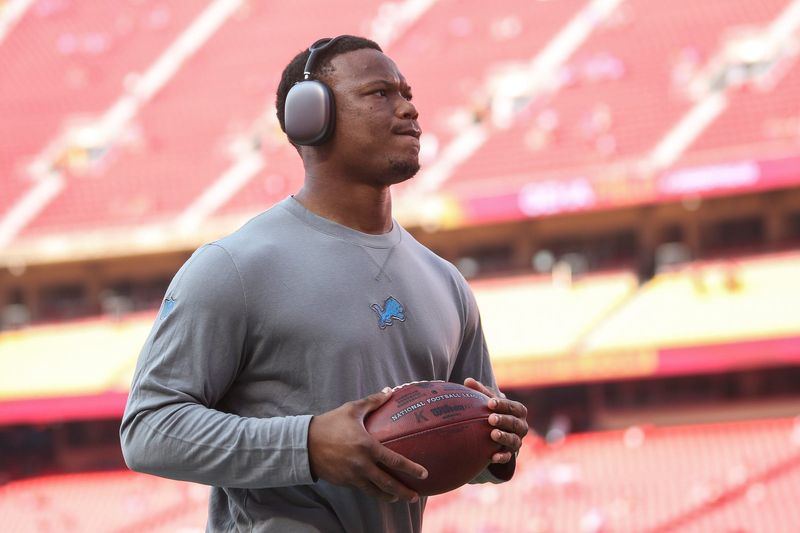
Houston turned to rookie Woody Marks out of need rather than skill. That’s not to say he can’t be a sufficient runner, but the Texans did average less than 4.0 yards per play for the second straight year. Enter David Montgomery, who, despite being a 29-year-old No. 2 back with the Lions, still has the chops of being a legit 1,000-yard runner behind a sturdy offensive line, another group that was tweaked this offseason.
A combination of Montgomery and Marks might not make headwaves, but it will be more potent than a duo of an aging Nick Chubb and rookie best known for being a pass-catching back in college.
This article originally appeared on Texans Wire: Winners and losers from Houston Texans offseason
Reporting by Cole Thompson, Texans Wire / Texans Wire
USA TODAY Network via Reuters Connect
By Cole Thompson, Texans Wire | USA TODAY Network