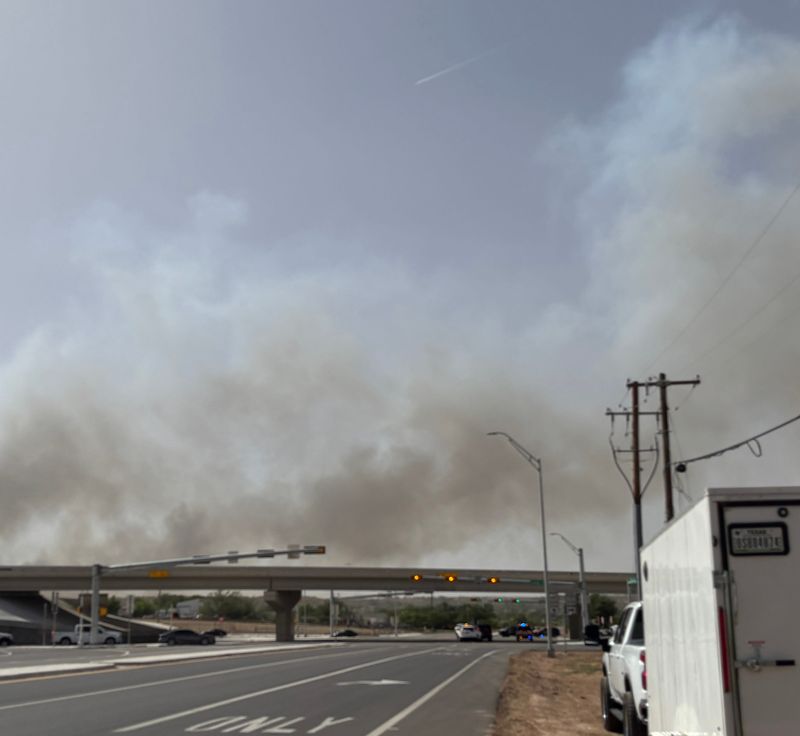
Local and state officials are continuing to investigate the Stinky Fire that apparently originated in Amarillo’s city landfill before spreading into nearby neighborhoods and damaging or destroying dozens of homes.
It was a blaze that was fueled by strong winds and hot/dry conditions and posed the added challenges that come with a fire in a landfill – including dangerous chemicals and a variety of fuel sources.

Ultimately, the fire destroyed at least 53 homes, damaged at least 77 others and burned more than 2,300 acres and has prompted an ongoing community discussion about accountability and lessons moving forward.
As city leaders and the Texas Commission on Environmental Quality continue to investigate conditions at the city’s landfill and firefighting efforts, here’s a quick look at the challenges the fire posed.
Landfill fires pose different threats, challenges
Unfortunately, landfills can contain dangerous combustile materials such as chemicals or lithium batteries, which are not permitted, but somehow get into the landfills through lack of knowledge or lack of responsibility of people who dump them.
They can escalate into chemical blazes called thermal runaways, releasing extreme heat up to 2,000 degrees Farenheit and oxygen, which causes a chain reaction spreading to other cells in the landfill.
The fires are nearly impossible to extinguish with standard methods and can burn for days, according to information listed on the National Fire Prevention Association website.
Individual battery cells are tightly packed together, and when one cell ignites, the temperature spikes rapidly, causing adjacent cells to explode in a cascading sequence. Because they generate oxygen, they can burn without outside air and can reignite hours or days after initially being put out, thus the dangerous situation that resulted last weekend and through part of the week.
The landfill fire was first reported on Sunday, May 17, when it was closed. The fire broke its containment Monday, May 18, and it took several days to get the wildfire fully contained.
Landfill fires can emit dense smoke and highly toxic gases such as hydrogen fluoride, which can pose health risks. Failing battery packs can discharge individual burning cells as far as 60 feet, causing secondary fires.
Such batteries should be disposed of at certified recycling centers, which can be found by visiting the City of Amarillo website or using the database at Call2Recycle.
To put out landfill fires, a common practice is to smother the burning waste by capping it with soil and using heavy machinery combined with foam suppressants like TRF+ to stop the reaction.
It can require massive amounts of water to fully extinguish such a fire. According to authorities, landfill fires often start deep within the waste, which makes them difficult to access and allows them to smolder for extended periods.
If someone is dealing with pure lithium metal, applying water will trigger a violent chemical reaction.
An investigation by the Texas Commission on Environmental Quality remains ongoing, and city officials are digging through details about the landfill fire and response.
This article originally appeared on Amarillo Globe-News: What is the difference between a landfill fire and a grass fire?
Reporting by Nell Williams, Amarillo Globe-News / Amarillo Globe-News
USA TODAY Network via Reuters Connect