Summer officially starts June 21, and forecasters say California is heading into a season defined by persistent heat, elevated wildfire danger, and the potential for sudden swings to flooding in parts of the state.
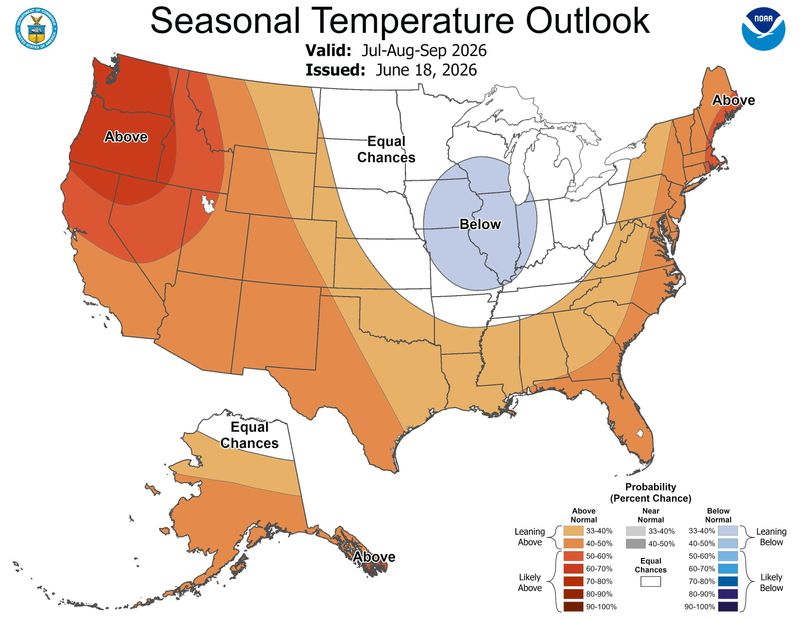
A new three‑month outlook from NOAA’s Climate Prediction Center shows temperatures are likely to run above historical averages across much of the U.S. through July, August, and September — a trend that includes most of California.

“What we’re seeing … is that for the majority of the country, the trend has been warmer,” National Weather Service meteorologist Scott Handel said, pointing to a continued pattern of heat dominating the summer forecast.
For California, that heat signal collides with ongoing drought stress in parts of the state and a monsoon-influenced precipitation outlook that could bring both relief and new hazards.
California summer outlook: Heat dominates, but monsoon moisture could bring whiplash
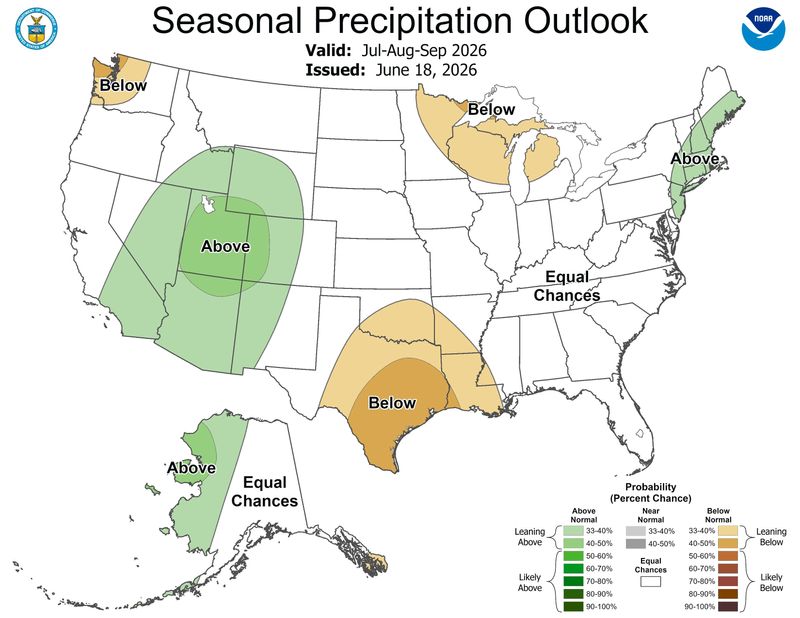
While much of the country is expected to see near-normal precipitation, Southern California and parts of the Southwest stand out with higher odds of above-average rainfall this summer.
Meteorologists say that the boost is tied to monsoonal moisture and the possibility of one to two eastern Pacific tropical systems feeding into the region later in the season. That could help ease drought and briefly tamp down wildfire conditions — but it also raises the risk of flash flooding, debris flows, and difficult firefighting conditions.
The broader concern: California could experience a familiar but dangerous pattern — long stretches of intense heat drying vegetation, followed by bursts of moisture that quickly shift the threat from fire to flooding.
What Californians should watch heading into summer
The takeaway: California’s summer won’t just be hot — it will be dynamic, with rapidly shifting hazards that could impact everything from air quality to travel, agriculture and emergency response.
California regional breakdown: What to expect across the state
Southern California (Los Angeles, Inland Empire, San Diego, deserts)
This is one of the few areas nationally expected to see a meaningful uptick in summer rainfall — but it won’t come evenly distributed. Expect long dry stretches punctuated by sudden storms.
Central Coast & Central Valley (Bakersfield, Fresno, Sacramento Valley)
With limited moisture in the forecast, fire agencies will likely remain on elevated alert through summer, particularly during wind events.
Bay Area & Northern Coast
Marine layer influence may blunt extreme heat near the shoreline, but inland areas could still see notable heat spikes.
Northern California & Sierra Nevada
Even without major shifts in rainfall, lightning during dry storms remains a key ignition threat in forested areas.
Fire risk builds — with a twist later in the season
The combination of heat and drying vegetation is expected to elevate wildfire risk across much of California, particularly early in the summer.
While NOAA’s outlook doesn’t show drier-than-normal conditions dramatically statewide, temperatures alone can significantly dry out fuels and increase fire behavior.
There’s also a timing concern:
This evolving pattern mirrors what meteorologists describe as a “flip risk” — where a region pivots quickly from wildfire danger to flood threat.
From drought to downpours: Why flooding is still a concern
Even in a warmer-than-average summer, increased moisture in Southern California and the broader Southwest could create short-term hazards.
AccuWeather meteorologists warn that as monsoon moisture ramps up in late July and August, the same areas facing wildfire risk could see episodes of heavy rainfall.
That’s particularly dangerous in California’s burn zones, where vegetation loss reduces the ground’s ability to absorb water. The result: higher risk of mudslides, debris flows and flash flooding.
“The Southwest can see a big target … going from very dry, very hot, with a wildfire risk to all of a sudden having episodes of flooding,” meteorologist Chad Merrill said.
This article originally appeared on Palm Springs Desert Sun: Summer starts Sunday, June 21. Here’s California’s weather forecast
Reporting by Swasti Singhai and James Ward, USA TODAY NETWORK / Palm Springs Desert Sun
USA TODAY Network via Reuters Connect
By Swasti Singhai and James Ward, USA TODAY NETWORK | USA TODAY Network