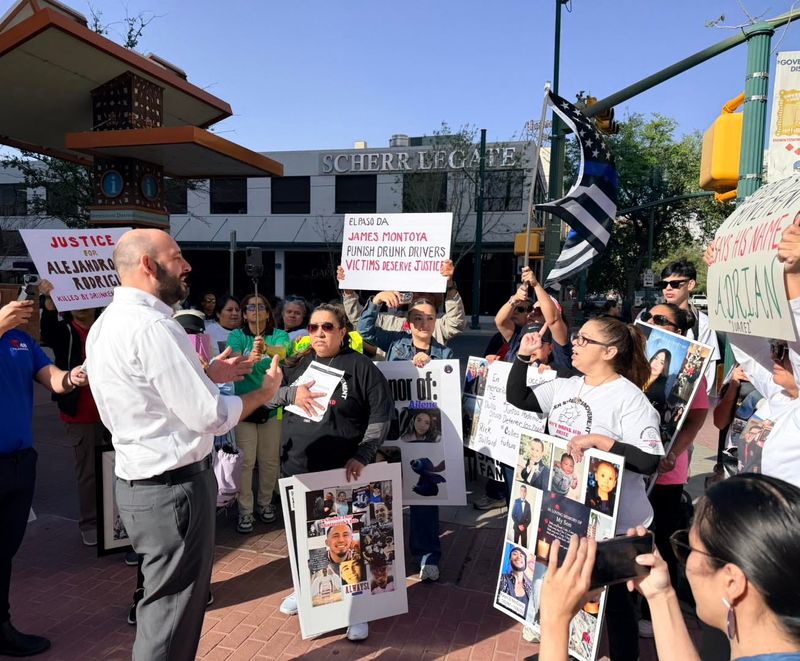
Protesters gathered outside the Downtown courthouse for an explanation for why drunken drivers are getting lenient sentences in El Paso County.
Their protest signs targeted El Paso District Attorney James Montoya.

“We don’t need more bars,” a Sober Streets Movement organization protester yelled, holding up a poster with the photo of a loved one killed by a drunken driver. “We need justice. We need to end DWI. We don’t need more victims.”
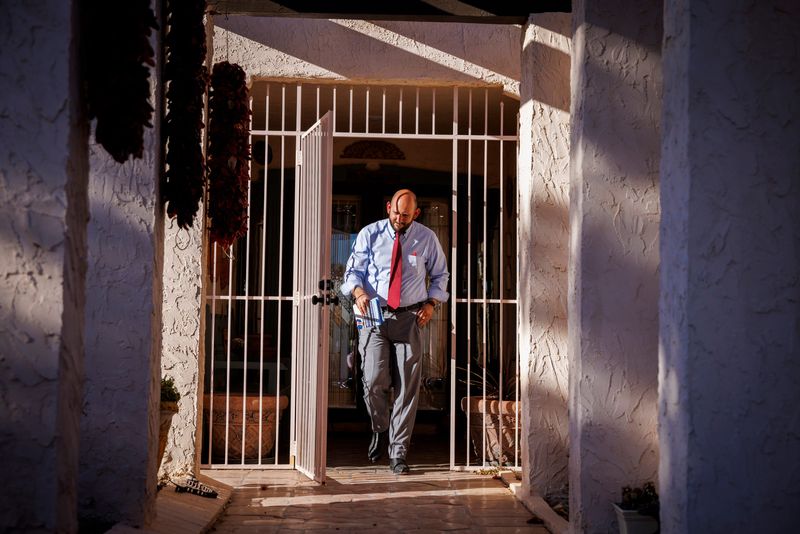
Montoya heard about the protest, walked outside the courthouse and began hearing out the protesters.
A sign reading “El Paso DA James Montoya punish drunk drivers. We need justice,” was held high as Montoya addressed the crowd. He spent an hour with the Sober Streets Movement protesters.
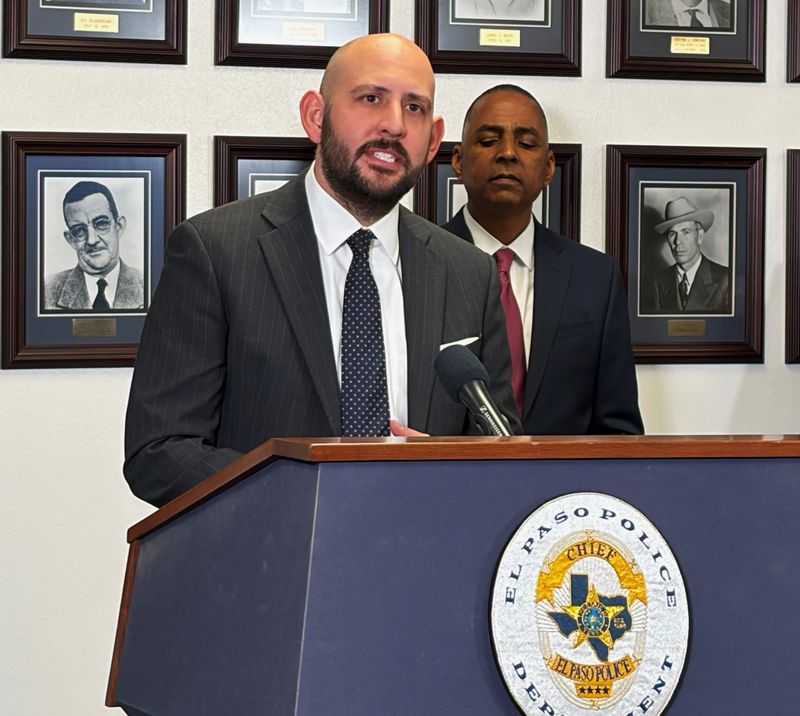
“We had an honest conversation — about their concerns, how these cases are prosecuted, and where change is needed,” Montoya said. “This is a shared fight. Their pain is real, their frustration is justified, and their voices deserve to be heard.”
This is an example of Montoya trying to keep one of his biggest campaign promises — always being available to the El Paso community. A year in office, Montoya is still working to restore the troubled reputation of the 34th Judicial District, which covers El Paso, Hudspeth and Culberson counties.
Montoya was elected to office, replacing a governor-appointed district attorney in Bill Hicks and the disastrous tenure of Yvonne Rosales, who resigned amid allegations of misconduct and incompetence.
Since taking office in January 2025, Montoya has completed two of his biggest campaign promises — finally ending the 2019 El Paso Walmart mass shooting case and rebuilding a more professional, competent staff of nearly 90 prosecutors.
Montoya is still under fire from public defenders who say there is a massive backlog of cases that leaves El Pasoans locked up in jail and in legal limbo. He is still trying to shape his reputation as the top law enforcement official in El Paso and West Texas.
“I am proud of my staff,” Montoya said. “They are a staff of dedicated public servants. We are moving these cases in a timely manner, while making sure justice is served.”
El Paso DA says backlog essentially eliminated
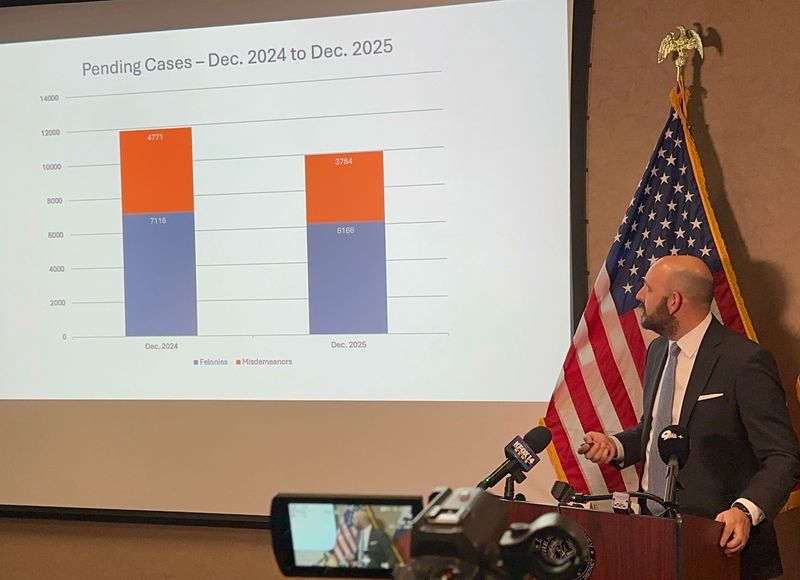
A growing backlog of cases, reportedly exceeding 10,000, waiting for action has plagued three district attorney administrations.
The backlog stems from the COVID-19 pandemic and staffing cuts by Rosales. Montoya said a large number of the cuts were in the district attorney’s office’s intake section. Those prosecutors provide a critical review of the merits of the cases and whether to press criminal charges or dismiss them.
“In 2025, when I took office in January our records indicate that we had over 3,200 cases that were awaiting action for us to decide internally, are we gonna accept it, decline it, return it,” Montoya explained. “This past January, it’s less than 2,000 right now. It’s approximately 1,700 cases that internally we have to take action on in our office.”
The 1,700 cases are what the district attorney currently considers the backlog. Less than 100 of those cases are from 2024 or beyond, Montoya said.
The district attorney’s office receives between 25,000 to 30,000 cases a year from city, county and state law enforcement agencies.
In his first year in office, Montoya’s team of about 80 prosecutors has disposed of 1,973 felony and misdemeanor cases that it inherited from previous district attorneys.
Public Defender: ‘No different than where we were at a year ago’
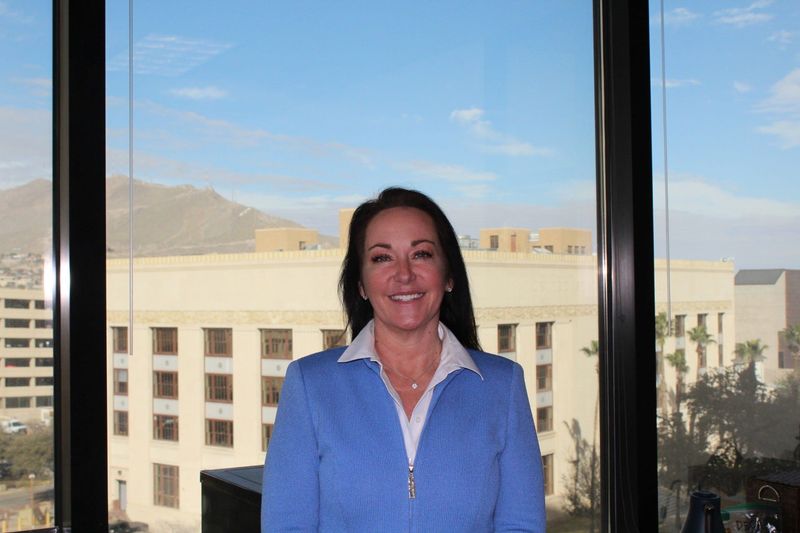
The backlog caused thousands of cases to remain inactive for years, with defendants either jailed without being convicted or on strict bond conditions. Something El Paso Public Defender Kelli Childress said is still happening in large numbers.
“Unfortunately, the numbers I’ve seen don’t reflect what was reported by the DA’s office,” Childress said. “We’re definitely not seeing a reduction in the backlog on public defender cases. One year ago, when James Montoya had just taken office, we had 1,015 cases that were unindicted that were misdemeanor and felony that were part of that backlog.
“One year, 365 days later, we’re at 970. So the reduction was 45 cases in the course of a year, which is really disappointing because for us to have a thousand people whose cases haven’t even been screened by the DA when this time last year we had a thousand people.”
The public defender’s office handles between 40 to 45% of all criminal cases filed in El Paso County. The other 65% of cases are handled by private defense attorneys or attorneys appointed by judges to represent clients. As the public defender’s office is the one entity that handles the majority of cases, Childress’ lawyers would be the ones who are directly impacted by any reduction in the number of cases. Childress only spoke about the cases in her office.
“Really, in the bigger picture, where we’re at today is no different than where we were at a year ago,” Childress said. “As far as the total number of pending cases, that has come down slightly, but definitely not by the big numbers that were reported.”
Childress said a person charged with a felony waits an average of about 118 days from their arrest until the formal filing, or about five months. It’s about four months for a misdemeanor, she added.
“What that means is that’s the DA’s office calls this screening and they call these uncharged cases, but that’s not technically true,” Childress said. “These people are arrested and they are charged with a crime, and they are put in jail, and they are forced to post bond and comply with conditions of bond in order to be at liberty.
“It’s kind of like playing word games to say they’re not charged just because there hasn’t been a formal filing. Once you’re brought in front of a judge and a bond is set, you’re charged.”
As cases remain pending in the intake system, Childress and her staff can do little to defend their clients.
“I can’t file a motion. I can’t look at discovery (evidence),” Childress said. “There’s nothing I can do in the case because they won’t give us a judge until the DA makes a formal filing. When it takes them (prosecutors) five months just to look at a case and say, ‘yes, I want to prosecute this,’ that causes a real hardship on people, because we can’t be gathering evidence in our favor for five months.”
Under the Hicks administration, the number of backlog cases started to decrease, Childress said.
“I believe at one point the backlog got as high as about 3,500 cases (involving the public defender’s office),” Childress said. “Then Mr. Hicks took it down significantly. So it was probably double that for the whole system.”
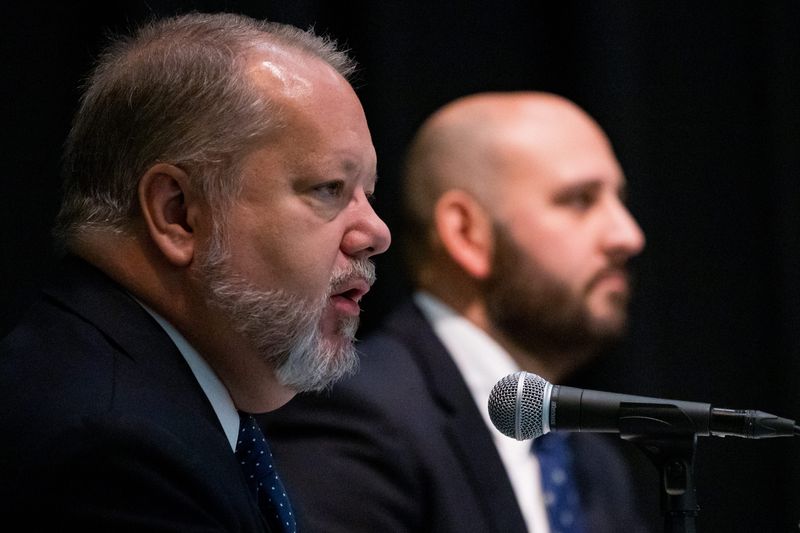
Like Childress, Hicks views the backlog as beginning when a defendant is arrested and continuing until the case has an outcome. When Hicks took office, he and his staff were left with a massive backlog, cases that had not even been looked at by prosecutors under the Rosales administration. Hicks said the backlog during his tenure resulted from waiting on judges to hear the cases.
“During my two years, we added to those backlogs because we were filing cases at a higher rate than normal, and the courts were dispensing cases at a lower rate than normal,” Hicks said. “So that created an enhanced backlog. Now, he (Montoya) claims to have eliminated the backlog. That’s a very difficult thing to say because if you go court by court, every court has its own backlog of cases.”
Hicks added that he does not see how a district attorney can claim the backlog has been eliminated as cases move from the review process to the court system, where they await an outcome.
“I don’t know that saying we’ve eliminated the backlog is really a valid statement,” Hicks said. “I don’t know that the district attorney’s office can really do that because that focus really comes down on the individual courts and certain judges who are not particularly good at managing their docket versus other judges who are extremely good at managing their docket.”
El Paso DA says public defender looking at different numbers
The way the district attorney’s office compiles its numbers is different than how the public defender’s office does, Montoya said.
“We open cases at different times than the public defenders,” Montoya said. “They might open a case when someone gets booked into the jail. We don’t open a case until a law enforcement agency sends us their case for prosecution. So we’re opening cases at potentially different times.”
Childress countered that a case is opened when a defendant is arrested. Once a defendant is arrested and appears before a judge, that person is charged with a crime.
Police file criminal complaints to justify making an arrest, which a judge reviews to determine whether there is probable cause to hold defendants in jail or release them on bond.
“No one is entitled to a public defender unless they are charged with a crime,” Childress said. “If I have opened a file, it’s because a judge has heard a case where my client has been charged and then appoints me. The fact that a prosecutor decides not to open a file until several months later is not okay. Accused people and crime victims both are entitled to speedy justice.”
Montoya said he could not speak on Childress’ number since he hadn’t seen them. He focused on what his office is seeing.
“I can tell you that when we took office, that number was over 3,200; we’re now 1,700,” Montoya said. “We’re working as diligently and quickly as we can. And of that 1,700, this is the other really important part, because like I said, cases are always coming in, decisions are being made. They’re either being declined and the case is over, or they’re being filed, and then they move into the court system.”
The decisions are coming months after defendants have been jailed or living under bond conditions for crimes they have yet to be convicted of, Childress said.
“The cases in the backlog are charged cases,” Childress said. “They are not declined, they are ‘dismissed,’ after the ripple effect of an arrest has already happened, like losing housing, being confined to a curfew, drug testing, even losing custody of kids.”
Montoya insists that the number of people sitting in jail awaiting their cases to be heard has decreased during his time in office.
Montoya’s goal in 2026 is to continue completing the intake process for each case as the district attorney’s office receives them, he said.
“We want to be charging cases as quickly as we can,” Montoya said. “A crime happens in 2026, we want to charge it in 2026.”
Childress offered a blunt rebuttal, arguing that prosecutors since the 1990s have been able to screen and charge a case within “minutes.”
“I’m troubled that their goal is that if a crime happens in 2026 they ‘want to charge it in 2026,’” Childress said. “After an arrest, an officer would page the on-call attorney, review the facts, and by the end of the call, a decision was made: either bring the person to a judge or cut them loose.
“Literally in minutes. Not days, not months. Not ‘within the same year.’”
Aaron Martinez covers the criminal justice system for the El Paso Times. He may be reached at amartinez1@elpasotimes.com.
Here is a breakdown of statistics provided by the District Attorney’s Office since 2019:
This article originally appeared on El Paso Times: ‘We are moving these cases:’ El Paso DA on tackling case backlog
Reporting by Aaron Martinez, El Paso Times / El Paso Times
USA TODAY Network via Reuters Connect