Doves are widely recognized representatives of peace, love, freedom, reconciliation and divine presence.
Ancient, symbological evidence utilizing doves as divine symbols has been discovered throughout many parts of Europe, the Mediterranean, the Near East and other world regions, including representations of doves carved upon temples, statues and other structures.

Some small, clay, house shrines found in Cypress contain miniature dovecotes that allowed these symbolic birds to reside within the shrines and residences of their owners.
Doves as messengers are mentioned in various Great Flood epics and doves were also earthly representatives of various Mediterranean and near eastern mother goddesses as-well-as representative of the very spirit of God in Judeo-Christian religion.
Doves continue their symbolic representations of peace, love and harmony as integral components of flags, emblems and mottos of several well-known organizations. Examples include the United Nations, World Peace Council and Roots and Shoots.
During summer, the Nobel Peace Center releases a dove, known as a peace dove, at noon to symbolize hope. In a similar custom, doves are often released during wedding ceremonies, memorials and other special events to symbolize peace, eternal love and peaceful transitions.
Doves of the Rolling Plains
At least five different dove species may be found in our Rolling Plains region. Three large species are the native mourning dove and white-winged dove and the introduced Eurasian collared dove. Two smaller species, the common ground dove and Inca dove, are more common inhabitants of the southern and southwestern Rolling Plains.
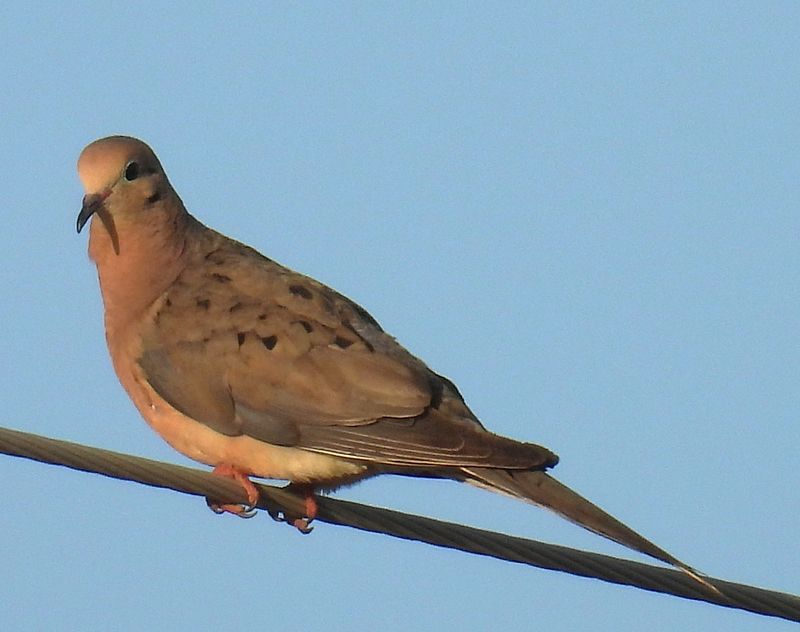
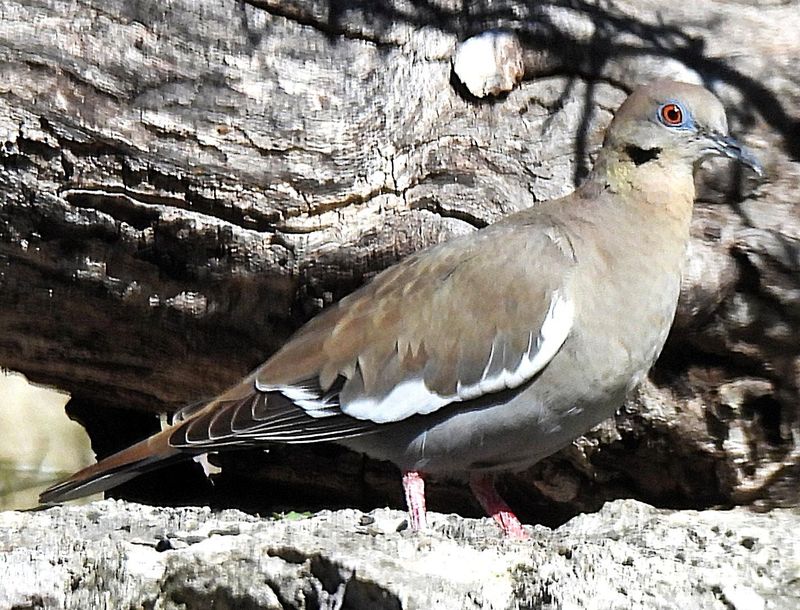
Mourning doves are probably the most abundant doves in our region; however, over the last few decades, white-winged doves have steadily increased their range and numbers northward. In some localities, such as urban areas, they may occasionally outnumber mourning doves. Both species occur in woodlands and mesquite pasturelands, grasslands and fields, riparian edge habitats near water and more arid habitats throughout our region.
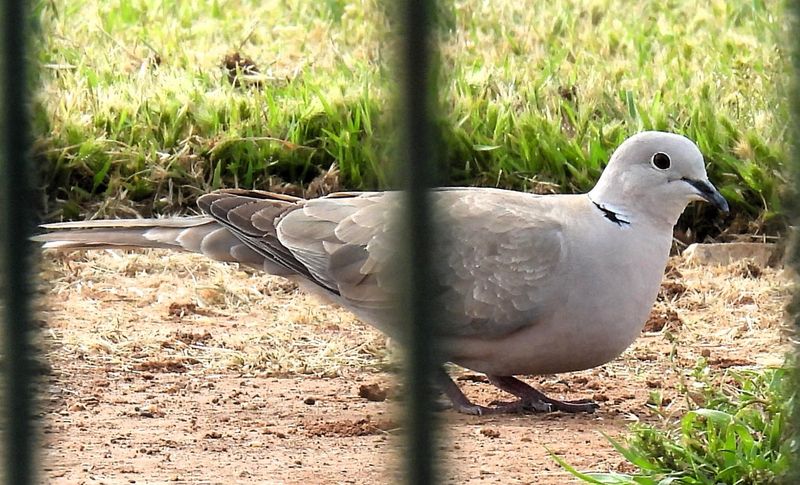
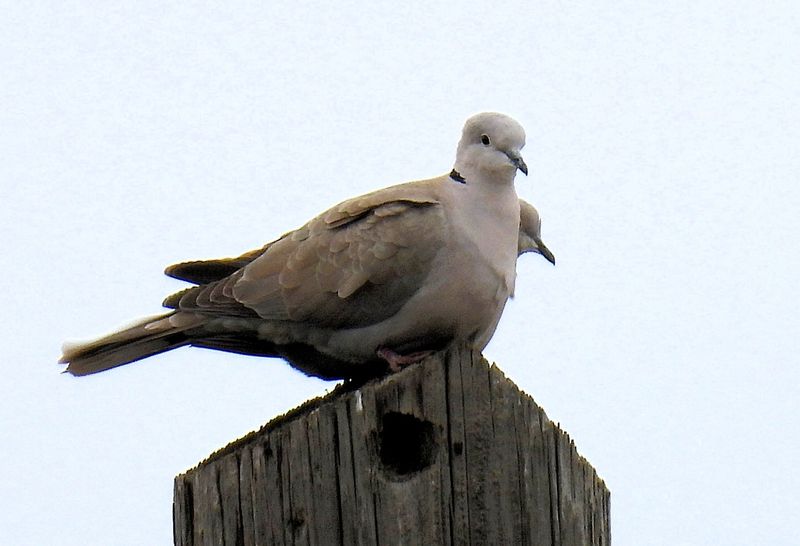
Eurasian collared doves were introduced into the Bahamas and spread to Florida by the 1970’s. These exotic birds were first reported in Texas in 1995 and were so successful their range had expanded to Randall County of northwestern Texas by 1996! Although most common in urban localities, Eurasian collared doves exploit other habitats and localities and co-occur in mourning and white-winged dove habitats.
Common ground doves are usually found in edge habitats along rivers and streams, farmlands, forest and woodland fringes and secluded rural roads. Common ground doves have declined in number within eastern portions of their range but are still sporadically reported throughout our region.
Inca doves expanded their southern range in the 1990s but presently seem to be declining within northern portions of their range. Inca doves favor parks and other urban and suburban habitats, but they may also be sighted in rural locations with available water, such as farmyards and along streams and rivers.
All the doves are primarily granivorous or seed eaters and forage upon the ground; however, upon occasion, doves may supplement their diets with berries, small fruits and insects.
Distinguishing doves from each other
Although mourning, white-winged and Eurasian collared doves are all similar sized — lengths ranging from 11–13 inches — and tend to have pale brown to gray-brown body coloration, other characteristics enable ready identification of these three doves.
White-winged doves are named for large, white patches on their wings which are prominent in flight and also observed as narrow, white bands when the birds are perched or holding their wings folded against the body. White-winged doves have shorter, more rounded tails than mourning doves, and the terminal edge of the white-winged dove’s tail is rimmed by white-tipped feathers.
Mourning doves lack the white wing patches but have dark spots on the wings which white-winged doves lack. Mourning doves’ tails are longer and tapered, and the lateral edges are tipped with white. Both white-winged and mourning doves have narrow, blue eye rings.
The body and wings of Eurasian collared doves are uniform in color and lack white wing patches or dark spots on the wings. Eurasian collared doves have long, broad, rounded tails with white edged tips most easily seen during flight. The most distinctive characteristic of Eurasian collared doves is the narrow, dark band, outlined with white, extending around the bird’s nape.
Dove calls
Calls of these three doves also differ. The white-winged dove’s call has been described as a cooing or hooting pattern of “hhhHEPEP – pou – pooooo” that is reminiscent of the phrase, “Who cooks for you?”
The mourning dove’s soulful song has been described as a calling of “ooAHH – coooo – coo – coo.” But the Eurasian collared dove’s song is a steady, repeated, three-syllable hooting described as “coo – COOO – cup.” Mourning and white-winged dove wings emit distinctive whistling noises whenever the birds take flight, but Eurasian collared doves’ wings do not whistle.
Common ground doves and Inca doves are noticeably smaller species — lengths averaging 6.5 and 8.25 inches, respectively — and both have dark-edged body feathers imparting a distinctive, scaly appearance lacking in other area doves.
Inca dove bodies appear completely scaled; whereas, the common ground dove scale pattern is most pronounced upon the head and breast. These tiny doves have reddish-brown primary feathers that are displayed whenever the birds take flight.
Common ground doves have short, rounded tails with small, white-tipped terminal corners, whereas, Inca doves have longer, white-edged, tapered tails. The bill of the common ground dove has a reddish base, but the Inca dove has a uniformly dark bill.
The song of the Inca dove is a forceful, cooing “POO – pup” (reminiscent of “no hope.” However, common ground doves utter a slow, repetitive coo of “hoooip – hooip – hooip.” Wings of both species rattle upon takeoff; however, common ground dove wing rattles are fainter.
In addition to ancient and modern reverence accorded to doves, annual sport hunting of mourning and white-winged doves in Texas and Oklahoma generates millions of dollars.
These swift, agile flyers confer enjoyment in many ways and are worthy, valuable residents of our region!
Jim Goetze is a retired professor of biology and former chairperson of the Natural Sciences Department of Laredo College with an avid interest in all aspects of the natural world. He can be contacted at gonorthtxnature@gmail.com.
This article originally appeared on Abilene Reporter-News: These birds of peace and love are swift, agile flyers | Opinion
Reporting by Jim Goetze, Abilene Reporter-News / Abilene Reporter-News
USA TODAY Network via Reuters Connect