Editor’s Note: Jack Becker is the editor of Caprock Chronicles and is a Librarian Emeritus from Texas Tech University. He can be reached at jack.becker@ttu.edu. Today’s article about Farwell’s 1926 mass murder case is the first of a two-part series by frequent contributor Chuck Lanehart, Lubbock attorney and award-winning history writer. This article is based on the 2022 University of North Texas Press book, “Man with the Killer Smile: The Life and Crimes of a Serial Mass Murderer,” by Mitchel P. Roth, who provided photos from the book for this article.

The small town of Farwell, in the sparsely populated South Plains county of Parmer, seems an unlikely spot for any sort of serious crime, much less one of the biggest mass murders in Texas history. The perpetrator readily admitted he murdered multiple relatives, and he is believed to have killed more kinfolk than any other murderer in U.S. history.
But his horrific crimes seem largely forgotten.
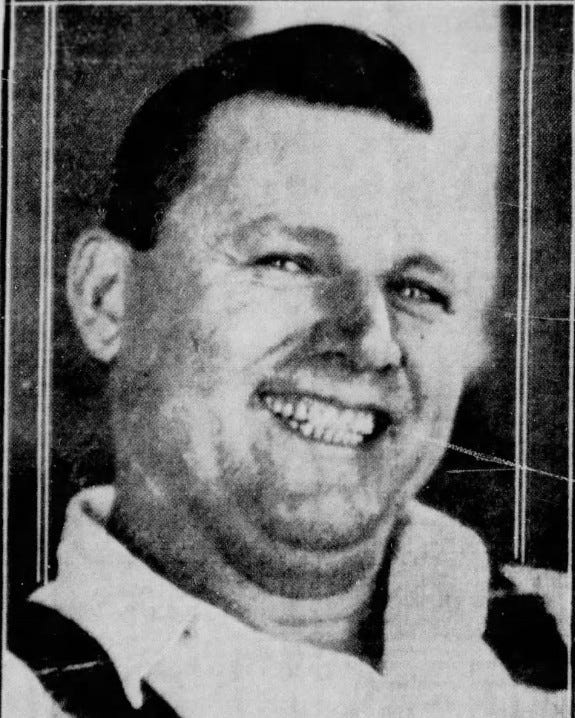
George Jefferson Hassell was born in Smithville, Texas in 1888, the youngest of seven children. The boy was known as “Jeffie” and began chewing tobacco at age six, eventually learning to “expectorate with a marksman’s skill.” He claimed he lost his virginity at age eight with a fifteen-year-old girl, perhaps the beginning of his troubles with women.
Hassell left the family farm and worked sporadically in a variety of labor-intensive jobs: tenant farmer, oilfield roustabout and railroad worker. Meanwhile, he developed a weakness for alcohol and had several scrapes with the law. At age 19, he was convicted of forgery and sent to the Texas state penitentiary. Prison records described him as 5 feet 7 inches tall, 180 pounds, fair complexion, grey or blue eyes, light or chestnut hair, with several scars on his body. Though poorly educated, he could read and write.
Following his two-year prison stint, Hassell enlisted in the Army under an alias and promptly deserted. He settled in Taylor County, and in 1909, he married a local woman, Minnie Laughlin. Of his three wives, she alone survived Hassell’s homicidal violence. In 1910, Minnie gave birth to a son, but the marriage soon fell apart, and she fled with the child. Their son later recalled his mother was fearful Hassell would kill them both. She was probably right.
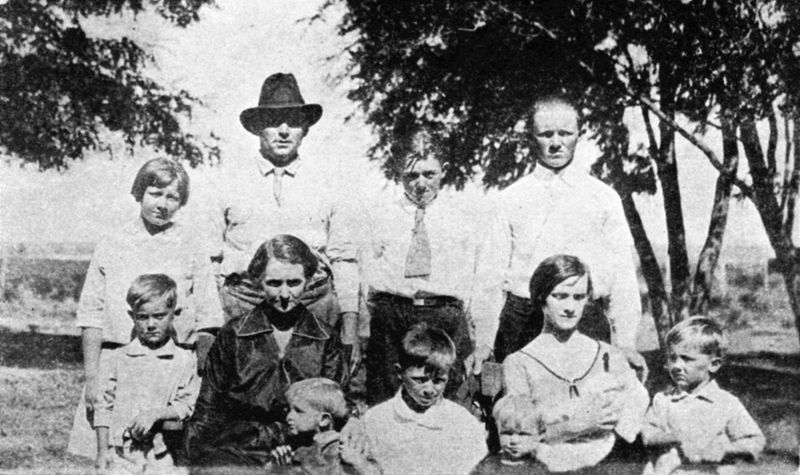
In the early 1920s, Hassell’s older brother Tom, his wife Susan and their children were living in Oklahoma. Hassell would often visit his brother’s farm family, delighting his nieces and nephews with gifts of candy and ice cream. But Tom died in a mysterious accident in 1924, leaving seven children and a pregnant widow at home. Their oldest child, Nora, had left home and was married.
Within months of Tom’s death, Susan married Hassell, and in December of 1925, the family moved to Texas. They rented a farm near Farwell, not far from the New Mexico border.
Neighbors who knew him described Hassell as “friendly and outgoing, with an awkward kind of charm.” But others said he was “always irritable and impatient” and often “quarrelsome with his family,” with a fondness for bootleg whiskey.
In the fall of 1926, neighbors noticed something unusual happening in the family backyard. A couple of the Hassell sons were digging a large pit, at least ten to fifteen feet square, perhaps four or five feet deep. Hassell claimed the project was the beginning of a storm cellar.
At about the same time, it became obvious that 13-year-old Maudie was pregnant. Hassell’s sexual abuse of Maudie and another niece became clear, and extreme tension developed between Hassell and Susan. On Dec. 2, 1926, Hassell sucked down most of a pint of whiskey, then joined his wife and two-year-old nephew Sammie in bed. When Susan noticed booze on his breath and complained, he “saw a hammer on the floor.” He hit Susan twice in the face with the hammer. Sammie “commenced hollering and putting up a noise, and I just reached over and choked him,” Hassell later confessed. The child died of suffocation from a stocking.
Hassell then methodically made his way through the house, killing each of the remaining children: Nannie Martha, age 4; Johnnie, 6; David, 7; Russell 11; Maudie, 13; and Virgil, 15. The younger victims died by strangulation and/or razor wounds, the older boys died of axe blows and shotgun blasts, and Maudie died of hammer blows and strangulation. He spent the rest of the night burying his victims in the backyard pit, then returned to the house to clean up the mess.
One relative remained. Alton, age 21, was away working with a threshing crew. He returned home on Dec. 4. On the early morning of Dec. 6, Hassell entered Alton’s room, killed his sleeping nephew with a shotgun and buried his body in the backyard pit with his mother and seven siblings.
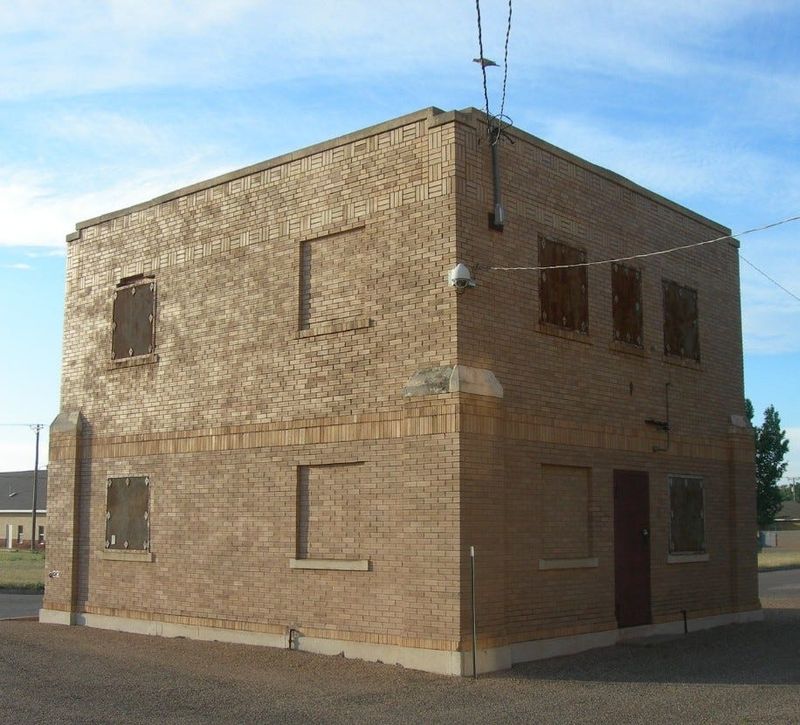
Hassell remained on the farm, and on Dec. 22, he auctioned the family livestock, farm implements and furniture. He told anyone who asked about his family they had moved to Oklahoma. But neighbors were suspicious, and Sheriff James Henry Martin began an investigation. On Christmas Eve, authorities discovered the death pit and exhumed the bodies of Hassell’s nine victims.
Hassell was arrested and placed in the Parmer County Jail. Late Christmas night, a deputy heard the prisoner moan, “I did it. I did it.”
It was the beginning of one of the most detailed and disturbing confessions in Texas — and California — history.
Part two of this series will be published Sunday, Oct. 20, in the Lubbock AJ.
This article originally appeared on Lubbock Avalanche-Journal: The Forgotten Farwell Family Massacre of 1926 Part One: “I Saw a Hammer on the Floor”
Reporting by By Chuck Lanehart, special for the Avalanche-Journal / Lubbock Avalanche-Journal
USA TODAY Network via Reuters Connect