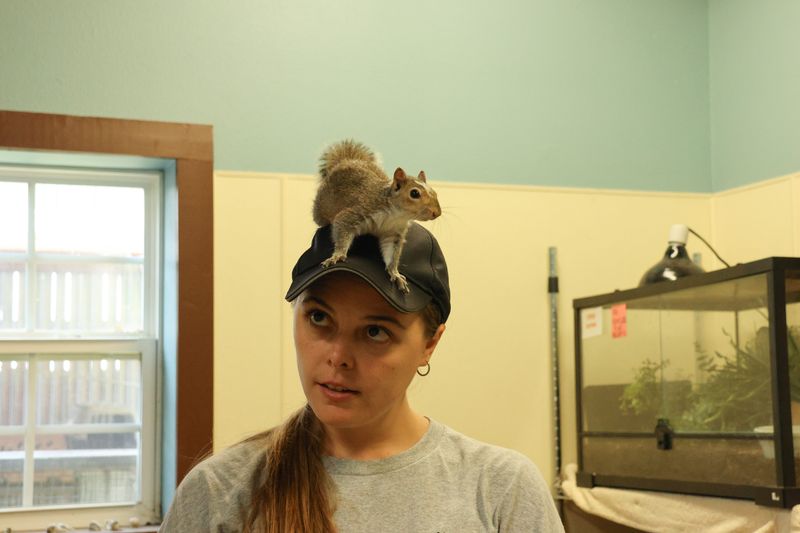
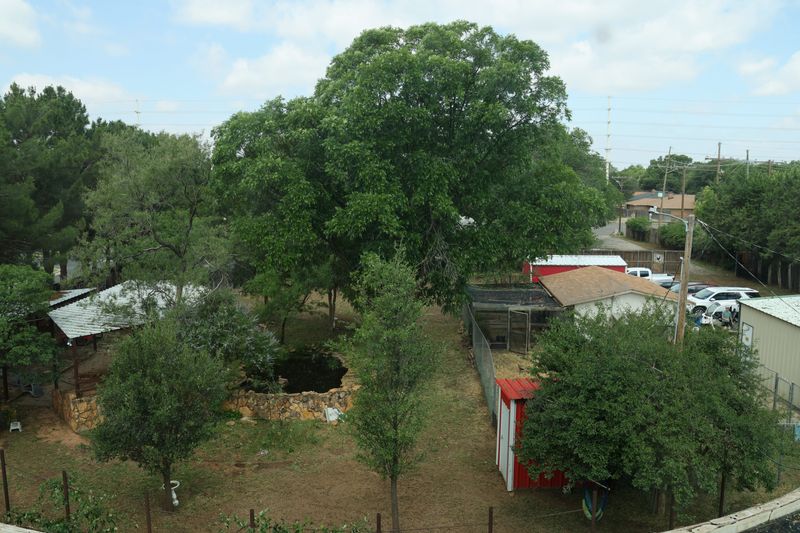
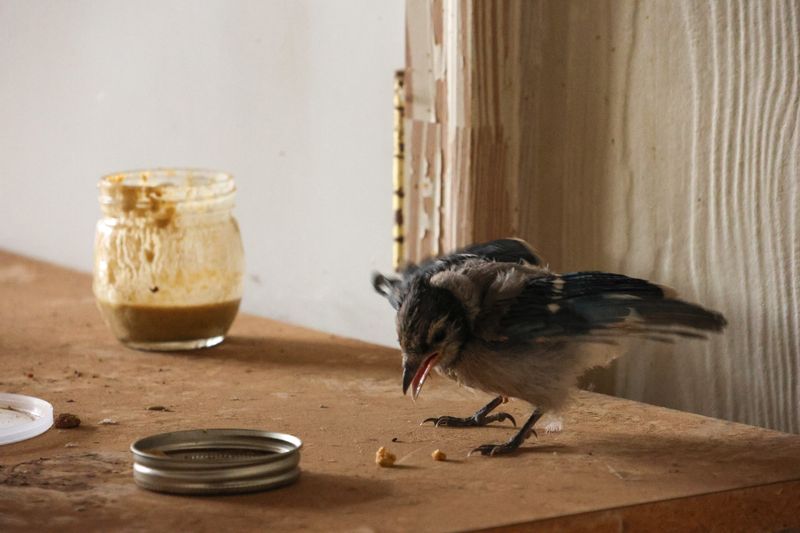
Nestled in a residential area surrounded by trees, a red barn is bustling with activity. An ambassador raven named Vincent devours vanilla wafers. Volunteers feed baby birds and opossums. A squirrel leaps from her perch and lands on the facility’s director, Sarah Hollers.
Hollers is the executive director of the South Plains Wildlife Rehabilitation Center, 3308 95th St. in south Lubbock. The squirrel, named Sandy Cheeks, is one of thousands of animals that have been helped in the 36-year history of SPWRC.

“We focus on birds, birds of prey, hawks, owls,” Hollers said. “It’s what we’re built for. We are here for the sick, injured, displaced by storms, or things blown out of the nest.”
Larger injured wildlife, like foxes and racoons, have been brought to SPWRC. When those animals are brought, the center usually transports them to Wild West Wildlife Rehabilitation Center, 2901 N. Soncy Road, in Amarillo.
“We know birds, they know mammals,” Hollers said. “Eventually, if we get enough funding and resources, we can expand, have a property south of town where we’d have room for mammals. But at this time, we don’t.”
The center takes in thousands of birds in a year, from raptors to robins. The most common animals the center receives are doves, songbirds, robins and grackles. In the spring, they take in “tons” of baby squirrels and opossums.
If a baby animal is brought in, it will start its journey in an incubator, move to a cage, and if it is successfully rehabilitated, it will be released.
“We want everyone to know we exist, because that’s more wildlife that we are able to save and rehabilitate,” Hollers said. “This place has so much potential if we just get people to know about us, get more people.”
Some of these birds are not able to be released and, in the past, became part of Ambassador Row. These birds include Titan, the Great Horned Owl and mascot of Miller Elementary School.
Other ambassador animals include:
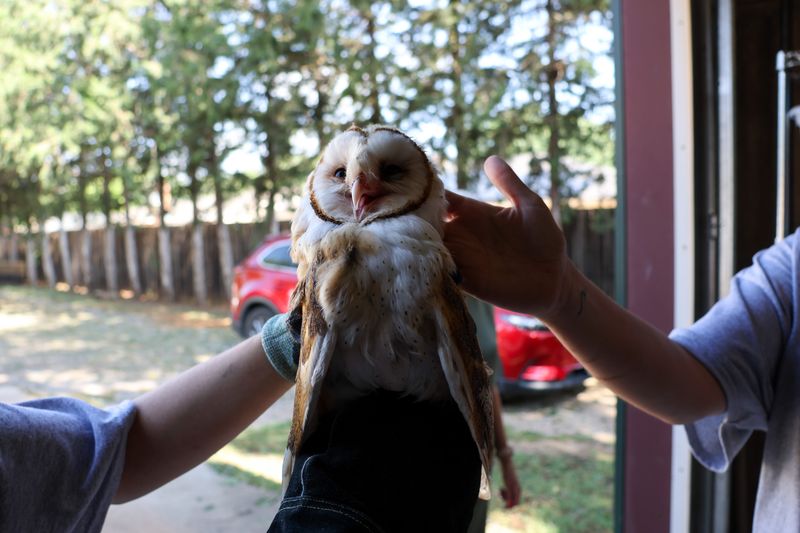
The center is also the lifelong home of snakes, Sandy Cheeks the Gray Squirrel, Dobby the Opossum, and Tonka the tortoise. Generations of Barn Owls call the red barn home and return to nest there every year.
This article continues after the gallery.
All animals under the center’s care receive enrichment, which can vary by animal. For instance, the ravens are given treat puzzles.
“The birds get lots of walks, changing their habitats, and new toys,” Hollers said. “Vincent loves feathers and cookies. We hide stuff for the ravens, so they have to puzzle treats out.”
The center’s staff and volunteers ensure the animals receive care, and keep the facilities running. However, Hollers said they need more help.
“We need communication, people spreading our mission, telling people to donate,” Hollers said. “There are so many things around here that need to be fixed, but at the same time, animals come first. As we get resources and donations, we will update the facility and do what we can.”
South Plains Wildlife Rehabilitation Center has a website, spwrc.org, where people can go to donate, book events, or sign up to volunteer. People can also sign up to be a release point for rehabilitated animals.
Hollers has her eyes on the future for SPWRC. Along with updating facilities, she hopes to build an education center, rehab hospital and a 24/7 drop-off location.
“In two to five years, this place is going to be all different,” Hollers said. “I do have big plans. I have nothing to lose, so I just shoot for the stars and see what happens. That’s all we can do.”
Her push for recognition has already yielded a stronger social media presence and a summer camp for students. Rebranding efforts are in the works, with new merchandise and signs coming soon.
The center can be found on Facebook, Instagram, TikTok and YouTube.
How should people interact with wildlife? Here are some tips from SPWRC
Hollers previously worked as a City of Austin official, helping people learn how to coexist with wildlife. Instead of trapping wildlife, such as young foxes, Hollers encouraged people to reach out to the center and ask for advice.
“There are ways to coexist with each animal if you’re having issues in your yard,” Hollers said. “I want people to call me. There are specific things I did for two years. If you let me help you, those (healthy) foxes and raccoons are going to be gone within a couple of days.”
Hollers also recommended that before people pick up a possibly injured animal, they call the center. If the animal needs to be moved, wear gloves.
Other animal-specific advice Hollers gave included:
The center can be called, texted and FaceTimed at 806-799-2142. Through this number, center staff can identify the animal and advise if it needs to be brought in.
One of the issues Hollers is concerned with is ducks. People buy non-native ducklings from major retailers, like Tractor Supply, due to social media fanfare over pet ducks.
“What happens is, they go buy ducks, they take them home, they decide they don’t want them, then they go dump these ducks, who cannot physically fly, out in the middle of nowhere,” Hollers said. “These ducks breed and mate with native ducks, so we have Mallard mutts all over Lubbock that cannot physically fly, because they’re not bred to fly.”
The center is not for pets, such as cats and dogs. Hollers noted that the drop-off area is recorded, and when cats and dogs are dumped, city of Lubbock animal control is called.
Alana Edgin writes about business for the Lubbock Avalanche-Journal. Got a news tip? Contact her via email at aedgin@lubbockonline.com.
This article originally appeared on Lubbock Avalanche-Journal: South Plains Wildlife Rehab Center talks rescues, advice, need for volunteers
Reporting by Alana Edgin, Lubbock Avalanche-Journal / Lubbock Avalanche-Journal
USA TODAY Network via Reuters Connect