

It’s the season in Texas and Southwestern Oklahoma when kings and lords return.
These little rulers are welcomed within woodlands, riparian areas, pastures, yards, parks, gardens and other rural and urban locations. Although their common and scientific names allude to a royal, or perhaps rascally, nature, these seasonal community members work hard and, in most folks’ opinion, earn their keep.

Members of this kingly family — Family Tyrannidae — include eastern and western kingbirds and ash-throated and great crested flycatchers.
Hitting royal notes
Kingbirds’ common name likely refers to these birds’ pugnacious defense strategies employed around their nesting sites and claimed territory and/or small kingdoms. Although not particularly melodious, the shrill twitters and buzzing “tzee” notes of the eastern kingbird are distinctive.
But western kingbirds utter sharp “kip” notes and a song described as a high, squeaky “pidik-pik- pidik-PEEKado.” The birds’ call notes and songs announce that royalty is present. If intruders dare encroach upon their territory — be they cats, dogs, large hawks and other birds or even humans — the kingbirds will fly and dive threateningly around the interlopers and may even strike the intruders with feet and claws!
Kingbirds, pop-up crowns and royal feasting
Our area kingbirds occasionally back up their royalty claims by displaying small “crowns” of red-to-orange-colored feathers on top of their heads. Both male and female kingbirds have these crowns but usually only display them when highly agitated or excited.
Kingbirds possess relatively wide, flattened bills and feed upon a variety of insects, including flies, wasps, ants, grasshoppers, true bugs, beetles and bees. Other occasional prey items include small reptiles and, surprisingly, hummingbirds.
Eastern kingbirds have been blamed for harming bee populations; however, researchers have demonstrated that the birds have a minor impact upon bee populations. While residing in their southern wintering grounds, many kingbirds also feed upon various fruits.
Tyrannid birds perch until a likely prey item flies near, and then the birds fly out in a maneuver referred to as hawking or sallying and capture their prey in midair. Kingbirds usually wait upon prominent, exposed perches whereas other flycatchers often rest and wait upon inconspicuous perches.
The kingly family
Kingbirds are usually monogamous for a breeding season and construct cup-shaped nests situated on tree branches and other objects. Both parents participate in feeding their young, altricial chicks and removing fecal sacs and waste materials from the nest. Parents are highly aggressive toward potential predators and will effectively mob and chase predators, often much larger than themselves, away from the nest.
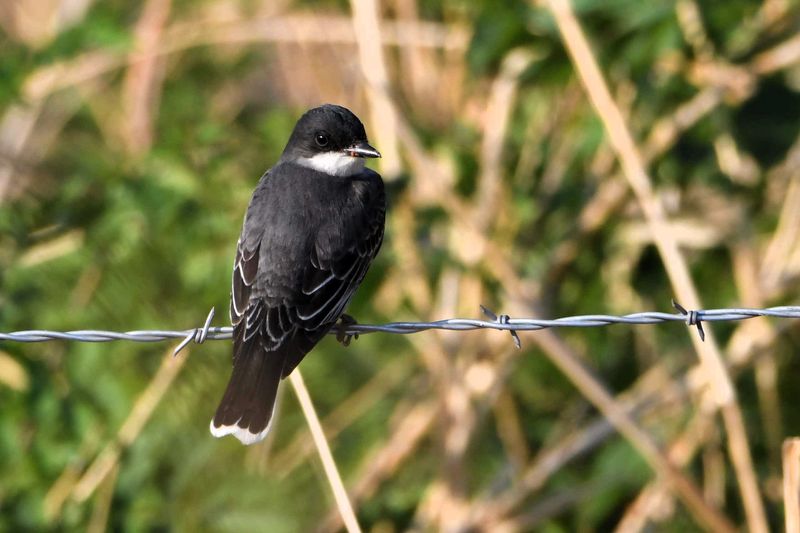
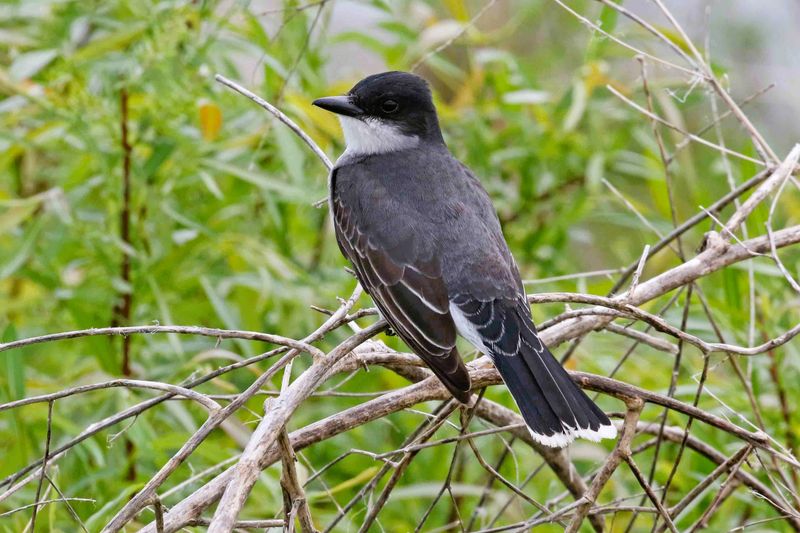
The eastern kingbird is designated as the type genus and species of its family and this is reflected in its scientific name: Tyrannus tyrannus. The eastern kingbird’s body length averages 8–9 inches, and its head is black with a dark gray back, tail and wings. The tail is white tipped, and the belly and throat are white with a slight splash of gray on the eastern kingbird’s breast.
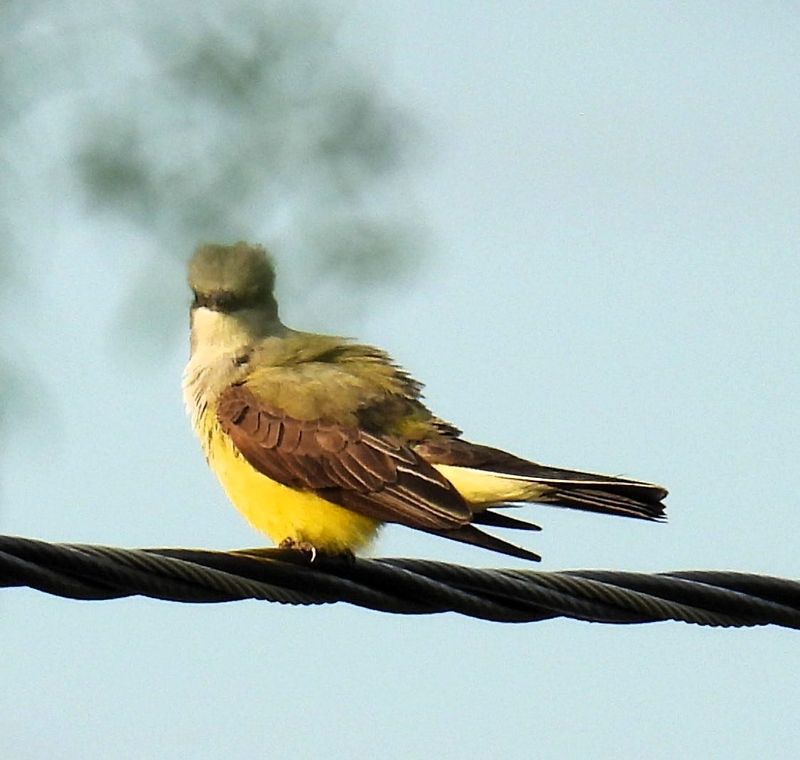
Although similar in size to the eastern kingbird, the western kingbird’s plumage pattern markedly contrasts with its eastern relative. The western kingbirds’ head, back, wings and tail are primarily a slate to dark gray color mix and the western kingbird has a slight, dark eye mask. The western kingbird’s tail is laterally edged in white, but its belly is yellow.
Flycatchers are kings of the flies
The generic name of ash-throated and great crested flycatchers, Myiarchus, also translates to royalty among avians. The genus name derives from two Greek words, muia and arkhos, that translate as fly ruler or chief: “king of the flies.”
This appellation is appropriate because flycatcher diet items primarily are flies, and other insects usually captured on the wing. Similar to kingbirds, most flycatchers consume a few other types of prey items and fruits on a seasonal basis.
Instead of constructing cup-shaped tree nests, these flycatchers prefer to nest in tree cavities and abandoned woodpecker holes/nest sites.
Improvising a bird castle
However, sometimes the local flycatcher nesting population exceeds the number of available, ideal nest sites and, in these instances, nesting partners improvise with what is available within their environment.
Parent birds will fill large cavities with nesting materials, including such items as shed snake skins, to form smaller nesting chambers and will seek out nesting boxes and other suitable objects and locations for nest construction.
What flycatchers sound like
The great crested flycatcher is known to produce more than 12 different vocalizations including a raucous “wheep!” and more whistled “whit-whit-whit-whit.”
The common call of the ash-throated flycatcher has been described as a “bik!” and/or a “ki-brrnk-brr.” Songs of tyrannid avians seem to be innate and don’t vary as-much-as other songbirds, but closely related tyrannid species call notes and songs are different.
Interestingly, other songbirds often respond to different avian species’ calls, but many tyrant flycatchers and kingbirds ignore calls of other birds and closely related species and only respond to vocalizations of their species.
A royal wardrobe in feathers
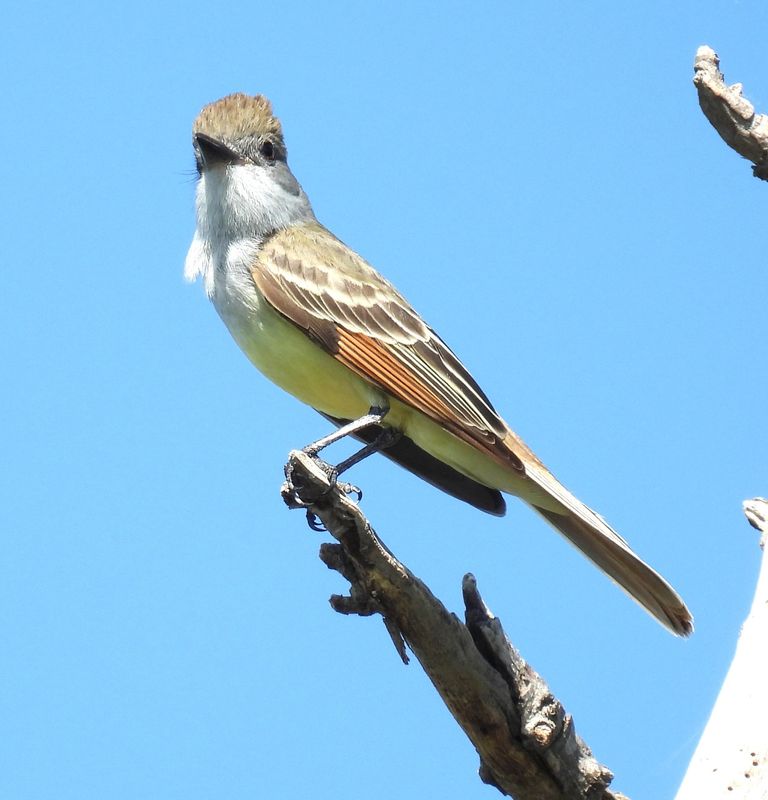
The ash-throated flycatcher is most common in the western portions of our region and has a whitish throat with a darker, gray breast and a pale, yellow belly. Its head, dorsum and much of the wings and tail are a brownish-gray color. Wings and tail have distinctive rusty colored edging and ash-throated flycatchers have slightly peaked head crests.
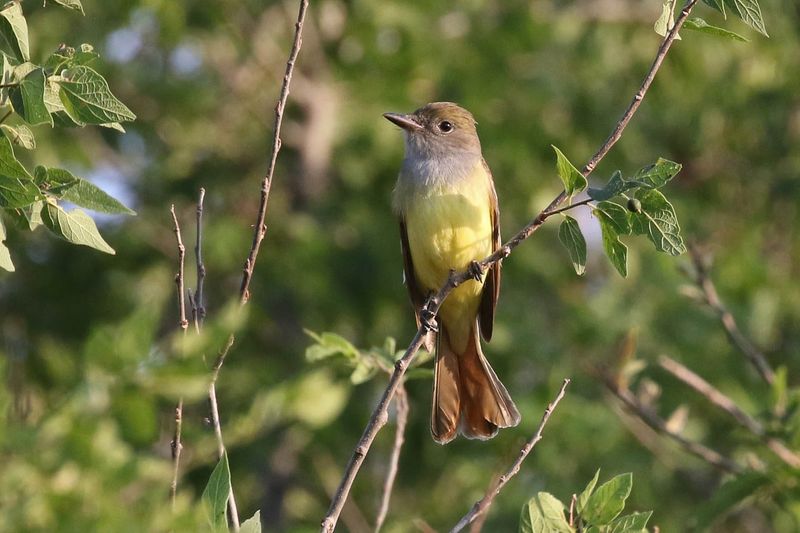
The great crested flycatcher is an eastern relative with an overlapping range within our region. The great crested flycatcher’s face, throat and breast are dark gray and great crested flycatchers possess a more rufous tail, a paler based bill than other crested flycatchers and more extensive, brighter yellow belly plumage.
Avoid incurring royal wrath
Enjoy these little kings and lords during spring and summer while they nest within our region, but, don’t approach their domains too closely or you may get scolded, mobbed and harassed by some royal parents!
Jim Goetze is a retired professor of biology and former chairperson of the Natural Sciences Department of Laredo College with an avid interest in all aspects of the natural world. He can be contacted at gonorthtxnature@gmail.com.
This article originally appeared on Abilene Reporter-News: Royalty is among us in these feisty little lords of flies | Opinion
Reporting by Jim Goetze, Abilene Reporter-News / Abilene Reporter-News
USA TODAY Network via Reuters Connect
By Jim Goetze, Abilene Reporter-News | USA TODAY Network
