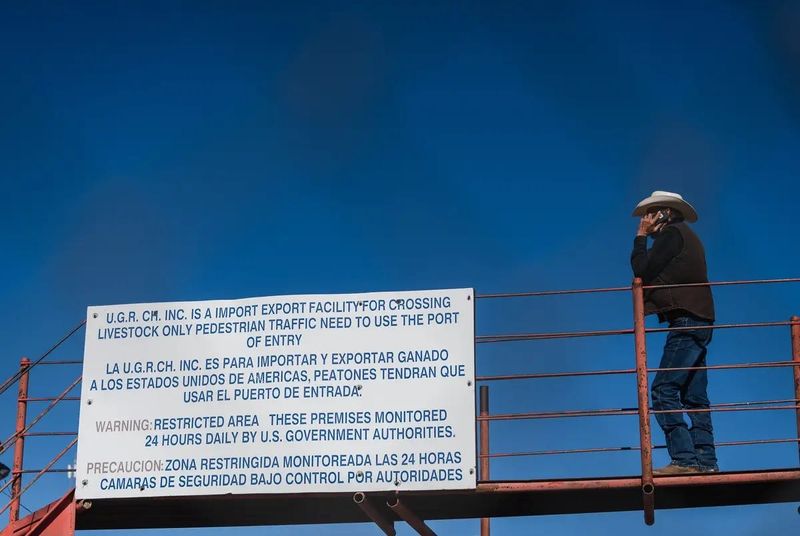
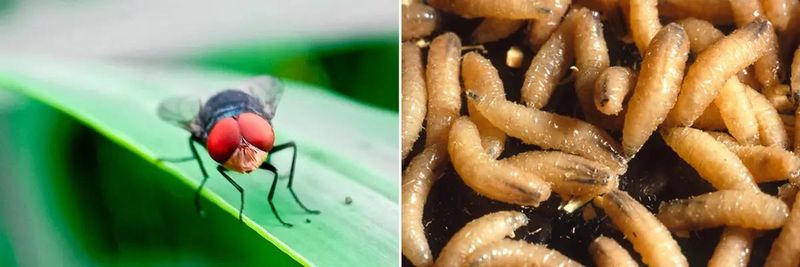
For the first time in nearly a month, the United States will open the U.S.-Mexico border for livestock passage following worries about an infestation of insects.
On Monday the U.S. Department of Agriculture announced the phased reopening of southern ports for livestock trade starting as early as Monday, July 7.

U.S. Secretary of Agriculture Brooke L. Rollins announced “risk-based port re-openings for cattle, bison, and equines from Mexico” following extensive collaboration between USDA Animal and Plant Health Inspection Service experts and their counterparts in Mexico to increase New World Screwworm surveillance, detection, and eradication efforts.
The federal inspection service said in late June on its website “the New World screwworm fly larvae, or maggots more specifically, that burrow into the flesh of a living animal and can cause serious, often deadly damage to the animal.”
The pest often infests livestock, pets, wildlife, occasionally birds, and in rare cases, people, the service also noted.
What ports of entry will be reopened and when?
The scheduled timeline of ports of entry to allow livestock include:
After each reopening, the USDA confirmed it will evaluate to ensure no adverse effects arise.
“At USDA we are focused on fighting the New World Screwworm’s advancement in Mexico,” Rollins said. “We have made good progress with our counterparts in Mexico to increase vital pest surveillance efforts and have boosted sterile fly dispersal efforts. These quick actions by the Trump Administration have improved the conditions to allow the phased reopening of select ports on the southern border.”
Rollins explained the federal department will continue increased vigilance against the pest to ensure it “will not harm American ranchers.”
How is the New World Screwworm being eradicated?
USDA officials also noted they are working with Mexico’s National Department of Health, Food Safety and Food Quality on outreach, education, and training efforts to raise awareness and put producers on high alert about the insect, along with utilizing their well-functioning central laboratory for diagnosing cases.
While the USDA did not specify how many head of cattle and other livestock were infected with the screwworm, it did explain there were different protocols in place for the various types of livestock crossing the southern border.
Mexico also will begin renovation of its sterile fruit fly facility in Metapa this week, the USDA noted, with renovation expected to be completed by July 2026. This will allow for the production of between 60-100 million sterile NWS flies each week needed to re-establish the screwworm barrier at the Darien Gap in Panama, where much of the Central American livestock enters.
The screwworm is prevalent in Cuba, Haiti, the Dominican Republic, and countries in South America, with cases spreading north to Costa Rica, Nicaragua, Honduras, Guatemala, Belize, El Salvador and Mexico.
Although USDA eradicated the insect from the United States in 1966 using sterile insect technique, there is a constant risk of re-introduction into the United States, the USDA confirmed.
Kristian Jaime is the Top Story Reporter for the El Paso Times and is reachable at Kjaime@elpasotimes.com.
This article originally appeared on El Paso Times: Livestock trade with Mexico to resume after screwworm health scare
Reporting by Kristian Jaime, El Paso Times / El Paso Times
USA TODAY Network via Reuters Connect