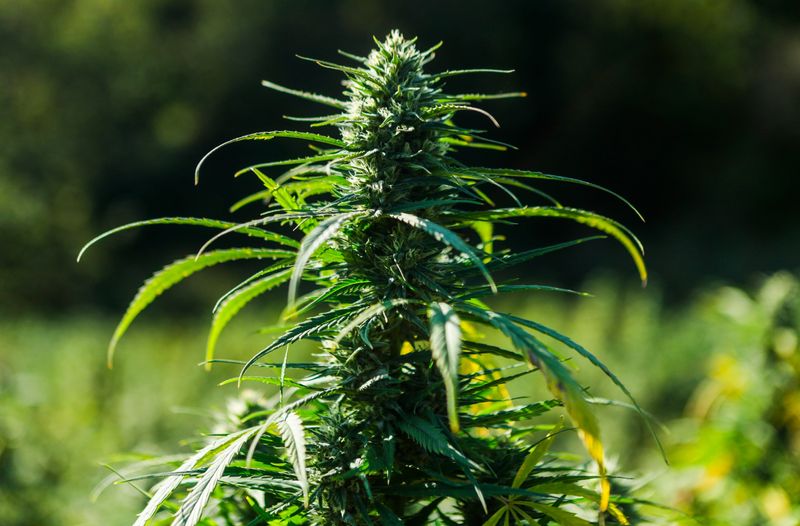
A crackdown on smokable hemp products in Texas has hit pause — at least for now — adding to confusion over what’s legal when it comes to cannabis and THC.
For years, vape and smoke shops across the state have sold hemp-derived alternatives to traditional cannabis, which remains largely illegal in Texas. Those products include delta-8, delta-10 and THCA. (Delta-9 THC is the primary intoxicating compound in cannabis and is illegal above 0.3% under state law.)

The push to restrict those products has been years in the making. It dates to October 2021, when the Texas Department of State Health Services updated its website to clarify that delta-8 THC — widely believed by some to be legal under the 2018 federal Farm Bill — is considered a controlled substance in Texas.
Since then, state leaders, including Attorney General Ken Paxton, have pushed to rein in hemp-derived THC products — including those that exist in legal gray areas — through a proposed total ban. Lawmakers debated the issue across multiple sessions but failed to reach a consensus in 2025 on whether to ban or regulate them.
State health agencies ultimately moved forward with new rules instead, targeting smokable hemp products such as THCA flower. Those rules took effect March 31 and would have effectively banned many products by changing how THC is measured.
Within days, the Texas Hemp Business Council, along with the Hemp Industry Farmers of America and Texas hemp manufacturers and retailers, filed a lawsuit in Travis County District Court challenging the new rules. A Travis County judge then temporarily blocked enforcement of those rules, allowing THCA products to remain on shelves while the case moves forward.
Here’s what to know.
Is weed ever legal in Texas?
Traditional cannabis is illegal in Texas for recreational use under state and federal law. The state does have a limited medical marijuana program, but access is restricted.
At the same time, hemp-derived products have created a legal gray area since the 2018 Farm Bill legalized hemp for agricultural commodities, like fiber and food products — such as hemp seed and oil. In practice, however, farmers and retailers quickly began to develop and distribute what lawmakers call “intoxicating hemp” products.
Products like delta-8 and THCA flower can create effects strikingly similar to those of delta-9 THC — the main intoxicating compound in cannabis, often called weed — which is illegal in Texas.
The key difference is how they’re made and how they behave.
Delta-8 is a modified form of THC found in small amounts in hemp and usually converted from other cannabinoids. It can produce intoxicating or hallucinogenic effects, but it is not the same compound as delta-9 THC.
Meanwhile, THCA is sold as raw hemp flower and isn’t intoxicating on its own. But when it’s heated — like by smoking or vaping — it turns into delta-9 THC, the same compound found in cannabis. Think of it like baking a brownie: all raw ingredients can be mixed, but they don’t become a brownie until heat transforms them into the final product.
That conversion — turning THCA flower into illegal cannabis when it’s used as intended — is why regulators have targeted it, even though it is sold as hemp under current law.
What’s next with the THCA flower crackdown?
While in limbo, a court is expected to decide whether to allow a statewide ban on products currently sold as hemp-derived THCA flower and related items to proceed, according to Houston Public Radio.
The case is part of a broader series of debates, lawsuits and regulatory actions over how Texas should handle hemp-derived THC products and whether they should remain legal, be restricted or be banned altogether.
How to get a medical marijuana prescription in Texas
Texas allows medical use of low-THC cannabis through the state’s Compassionate Use Program. It is not a traditional “medical marijuana card” system, according to the state government website. Instead, qualified doctors enter prescriptions directly into a state registry.
Under the program, patients may be prescribed low-THC cannabis made from Cannabis sativa L. The product must contain no more than 0.5% THC by weight.
It cannot be smoked. It is limited to oral use, such as oils, tinctures or capsules, depending on what a physician prescribes.
By law, the program is limited to patients diagnosed with:
There is no age limit. Patients under 18 may need a legal guardian involved in the process.
To access the program, a patient must:
If approved, the physician enters the prescription into the Compassionate Use Registry of Texas. Once a prescription is entered into CURT, the patient or guardian can go to a licensed dispensary to have it filled.
They will need to provide:
Brandi D. Addison covers weather across the United States as the Weather Connect Reporter for the USA TODAY Network. She can be reached at baddison@gannett.com. Find her on Facebook here.
This article originally appeared on El Paso Times: Is it legal to have weed in Texas? See latest on THC flower crackdown
Reporting by Brandi D. Addison, USA TODAY NETWORK / El Paso Times
USA TODAY Network via Reuters Connect