

Charles Darwin described competitive interactions as one factor of natural selection and evolution, and present-day biologists usually emphasize this tenant whenever explaining basic, evolutionary concepts.
I would also opine that many, if not the majority, of our western societal interactions are built upon competition and “getting ahead of others” attitudes which seem to permeate academic, athletic, business, entertainment and other pursuits.

However, nature also has a different strategy that often works as well as — or even better than — competition.
Mutual admiration societies and such
This opposing strategy is cooperation. One of the best examples of cooperation between species is so widespread that it’s often taken for granted. This cooperative system is the beneficial relationship between many flowering plants and their insect or other animal pollinators. All partners engaged in these pollination cooperatives receive positive rewards through their interactions.
Many examples of cooperation seem one-sided or are not as peaceful as plants and pollinators. For example, pods of baleen whales or other cetaceans circle and produce bubble nets to concentrate krill and fish so that pod members can collectively obtain greater quantities of food.
Other well-known cooperative examples involve predators associating in packs, for instance, wolves and African wild dogs, in prides like lions and in pairs, for example, as coyotes and foxes do to subdue larger prey with reduced chances of serious injury to the predators.
Bird + cow = co-op
Other good examples of cooperation in our region occur between birds and livestock. Two such cooperative birds are the western cattle egret and the brown-headed cowbird.
The cattle egret is native to Africa and spread to parts of South America in the latter 1800’s. These birds were unknown, or at least unreported, in Texas until 1955. But since the first reported sighting in Nueces County have extended their range to include most of Texas, Oklahoma and the southeastern United States.
Brown-headed cowbirds originally resided in greatest numbers within the North American Plains regions. Brown-headed cowbirds also adapted well to human settlement and are presently distributed throughout the United States and most of Canada.
Egret life and looks
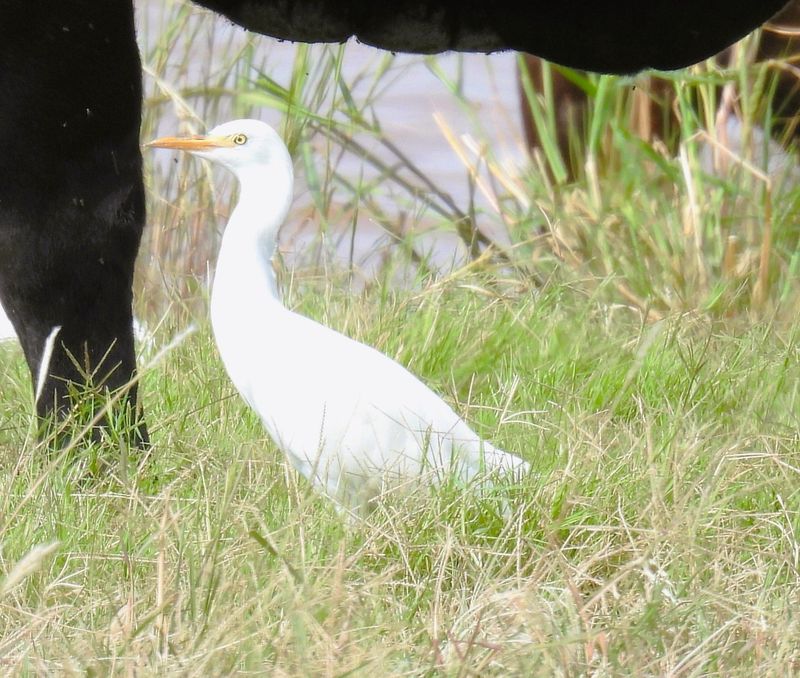
Cattle egrets are short and stocky with average body lengths of approximately 20 inches compared to other herons and egrets. They have yellow, relatively short bills. The birds are bright white and have dark legs during nonbreeding periods and yellow-to-pinkish colored legs during the spring breeding season.
Adults develop buffy patches on the head, throat, upper breast and back during breeding season. Male cattle egrets often establish territories in or near other heron species’ rookeries, trees, shrubs, or island habitats on or near permanent water bodies.
Flocks of cattle egrets are most easily observed flying to upland foraging areas — and partners — during early morning hours and returning to their evening roosting grounds in late afternoon. Cattle egrets have simple, croaking calls while on their breeding grounds and are generally silent elsewhere.
Cowbird characteristics
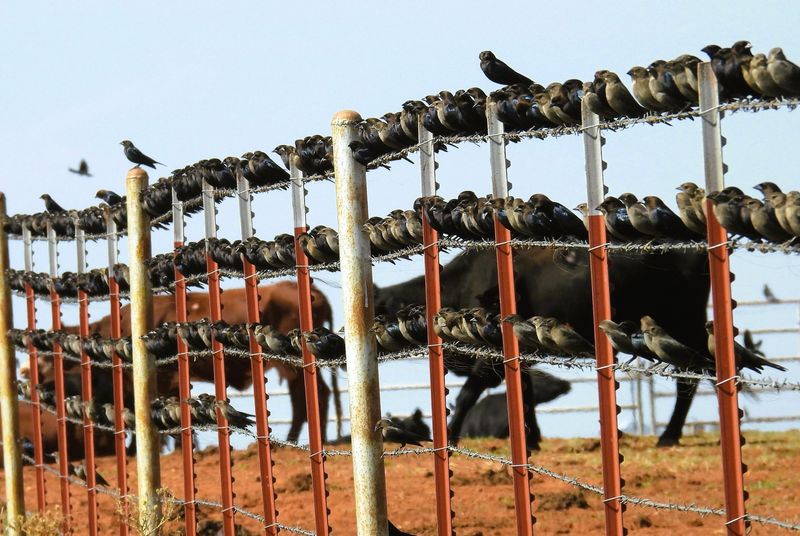
Bills are stout and sharply-pointed, and the cowbird’s eyes and legs are black and brown, respectively. Perhaps the most striking cowbird characteristic is their tendency to aggregate in huge flocks, often numbering hundreds of individuals.
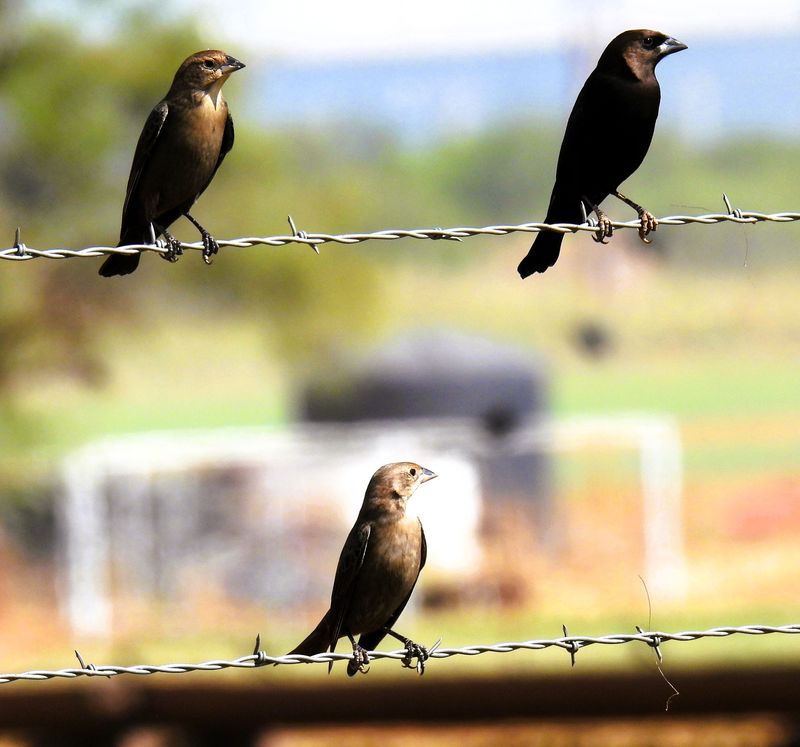
Brown-headed cowbirds are average-sized at approximately 7.5 inches total body length. They are nondescript, perching birds with gray-to-tan-colored females and males possessing somewhat iridescent black body plumage and dark, coffee-colored, brown heads.
Cowbirds also associate with other birds such as common and great-tailed grackles, European starlings and other avians. The calls emanating from large, brown-headed cowbird flocks remind me of gurgling, bubbly sounds of flowing streams or so-called “babbling brooks.”
Adaptability
Western cattle egrets and brown-headed cowbirds originally formed cooperative relationships with native wildlife. For example, cattle egrets followed large, African grazing species such as zebras, elephants, rhinos, antelope, wildebeest and others.
But brown-headed cowbirds primarily followed bison herds and other plains and prairie grazers of North America. However, since the cattle egret’s introduction into North America and the demise of brown-headed cowbird’s symbiotic, historic bison herds, both birds adapted to cooperative relationships with cattle and horses.
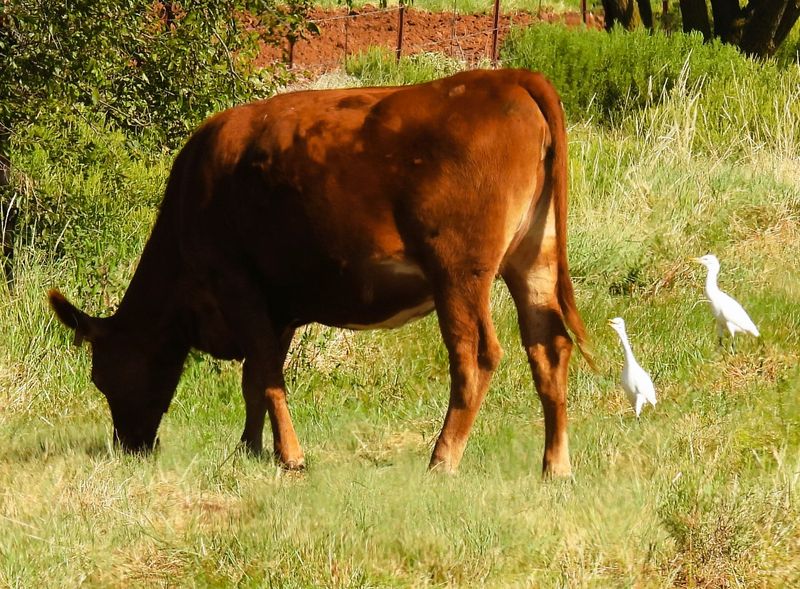
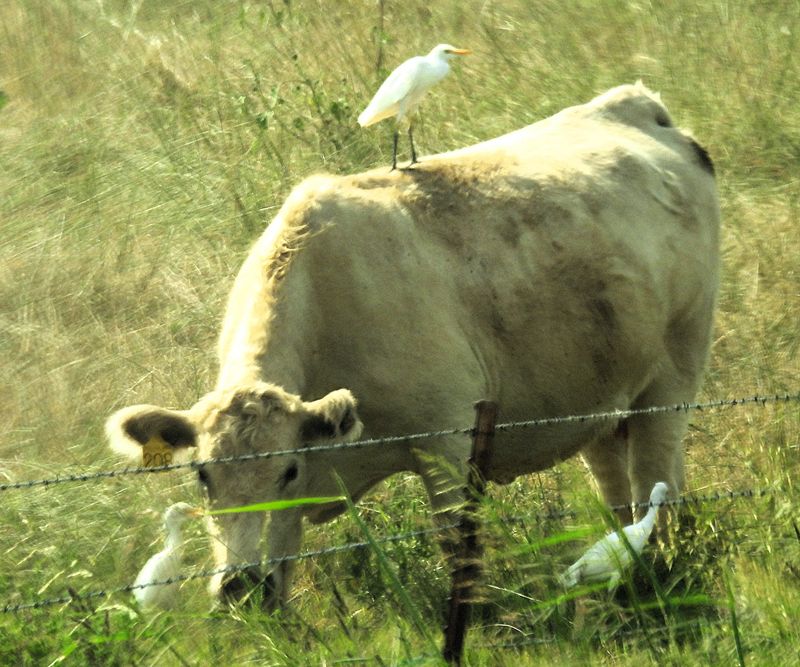
The cattle egret’s livestock associations are primarily mutualistic and partners benefit from the association. Cattle egrets find greater numbers of insects, small mammals, lizards, snakes and other prey items while following or hitching rides on the backs of cattle and horses than the birds would obtain through individual foraging.
These birds do their part
Cattle egrets benefit livestock by catching flies on and around livestock and occasionally removing ticks from the bovids and equids. Cattle egrets even prey upon venomous animals, such as small rattlesnakes and thus provide extra protection to their livestock associates.
The birds also follow farm equipment through fields to obtain prey items in the equipment’s wake. I often admired and was sometimes annoyed by flocks of cattle egrets flying and walking around our tractors and chisel or disk plows and chasing down prey items in the midst of dust clouds, noise and literal chances of getting plowed under!
One-sided relationships
Brown-headed cowbirds have largely commensal relationships in which one species benefits and the others are unaffected with livestock and a parasitic relationship in which one species benefits and the other species is harmed with other birds.
Cowbirds also closely follow livestock and catch insects disturbed by the large animals’ movements and feed upon seeds that the cattle and horses have revealed or shaken loose from plants. Although brown-headed cowbirds occasionally perch upon livestock, there are few reports of them removing ticks and other ectoparasites from their partners.
Cowbirds lay an egg in another bird’s nest, and the host birds hatch and fledge their own chicks as well as the cowbird chick. This nest-parasite behavior likely evolved from necessity because brown-headed cowbirds originally followed migrating bison herds instead of more sedentary, domesticated livestock.
Large flocks of brown-headed cowbirds often occur near feedlots, cattle yards, stables and other locations and facilities where livestock are concentrated and numerous.
Getting along with others
Cattle egrets and brown-headed cowbirds illustrate the benefits of cooperation between species and adaptation to environmental changes. Consequently, the birds have greatly increased their original ranges.
Considering these and other examples, it’s clear that in many instances cooperation often surpasses competition!
Jim Goetze is a retired professor of biology and former chairperson of the Natural Sciences Department of Laredo College with an avid interest in all aspects of the natural world. He can be contacted at gonorthtxnature@gmail.com.
This article originally appeared on San Angelo Standard-Times: Livestock-loving birds, cases for cooperation instead of competition | Opinion
Reporting by Jim Goetze, San Angelo Standard-Times / San Angelo Standard-Times
USA TODAY Network via Reuters Connect
By Jim Goetze, San Angelo Standard-Times | USA TODAY Network
