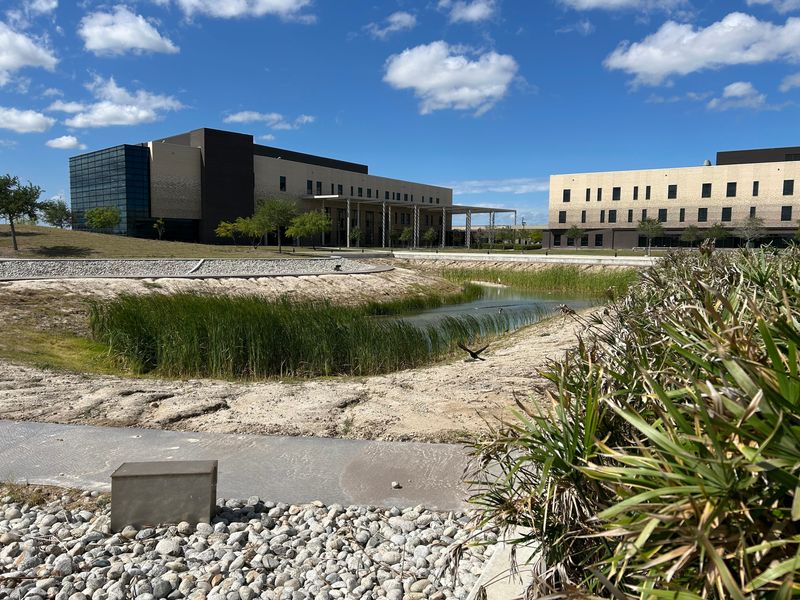
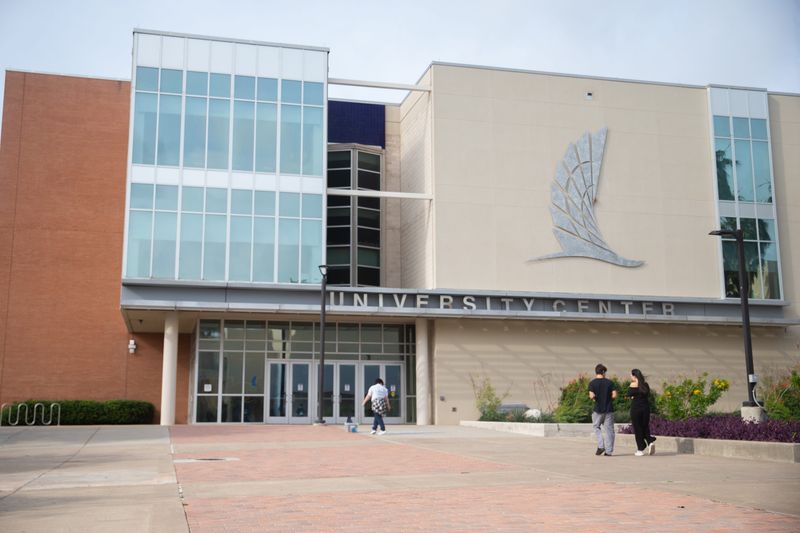
As the city of Corpus Christi eyes a potential water emergency, Texas A&M University-Corpus Christi and Del Mar College are looking into ways to reduce usage and decrease reliance on the city’s freshwater supply.
Solutions at Del Mar College range from an effort to connect the Oso Creek campus to an effluent water line with the aim of using reclaimed water for irrigation and air conditioning chillers — a project that is already in the works — to exploring the possibility of a water well at the Windward campus. This second idea has only recently emerged.

A&M-Corpus Christi has already implemented some water-saving methods, including an effluent water system for irrigating athletic fields, and it has hired an engineering consultant to assess potential groundwater supply options, according to an April 9 email sent to students.
A&M-Corpus Christi
Efforts already completed to reduce water use include adjustments to toilets, sinks and showerheads throughout the campus and in housing units, the email said.
The university is continuing to identify and implement other conservation measures, including recalibrating automatic sensor faucets across campus.
The engineering consultant, Freese and Nichols Inc., is assessing the feasibility of developing groundwater as a public water supply, treatment required for brackish groundwater, possible risks and costs, the email said.
The firm is exploring other alternative water sources, including atmospheric harvesting, use of reclaimed water from the Oso Wastewater Treatment Plant and use of campus effluent.
University leaders have met and will continue to meet with a range of city and state officials to address the crisis, the email said.
Del Mar College
The Del Mar College Board of Regents discussed water reduction efforts on April 7. College staff met with representatives from the city’s Office of Emergency Management on March 30.
President Mark Escamilla said that staff will be returning to the board in future meetings for updates and approvals related to the measures discussed.
“This is the beginning of a broad conversation, and an ongoing conversation,” Escamilla said. “Droughts, unfortunately, will recur.”
Connecting Oso Creek to receive reclaimed water from Corpus Christi Water would cost about $1.5 million, Escamilla said.
However, reclaimed water would likely be cheaper, particularly if water rates increase as a result of the city’s efforts to invest in new water sources, regent David Loeb said.
The college already has low-flow fixtures and automatic detection faucets installed in most restrooms. It carefully monitors HVAC systems to optimize chilled water use and identifies and repairs leaks, according to the presentation to the board.
The college restricts exterior power-washing and does not allow irrigation, per city requirements. The college has embarked on “xeriscaping,” including removing grass and focusing on drought-tolerant plants.
Looking forward, the college is working with Corpus Christi Water to extend an effluent water line to the Oso Creek campus. Effluent water would be used for air conditioning system needs and for irrigation.
But beyond that, the college is also considering other options. In addition to investigating water well potential at the Windward campus, the college has renewed discussions of acquiring effluent for this campus, though it’s unclear whether groundwater would be suitable or what the city’s capacity for sharing reclaimed water would be for that campus.
“We’re just starting to explore,” Tammy McDonald, vice president of administration and human resources, told the Caller-Times. “We just put everything on the table.”
The college is looking at “every option that could be available,” McDonald said.
In the event of a water emergency, college staff proposed placing limitations or restrictions on campus events, adjusting thermostat temperatures to reduce chilled water usage and modifying operational schedules.
For critical emergency needs, the college could also bring in water tankers.
Other ideas include capturing and reusing condensation from air handler units and other options involving reclaimed water.
“We have the capability to make changes to free up water for other users who maybe are not capable of making the changes,” Loeb said. “We need to do the responsible thing and go forward.”
This article originally appeared on Corpus Christi Caller Times: Higher ed leaders in Corpus Christi consider how to reduce water usage
Reporting by Olivia Garrett, Corpus Christi Caller Times / Corpus Christi Caller Times
USA TODAY Network via Reuters Connect