

From pulling heavy plows across farmers’ fields to transporting goods and supplies across rugged terrain, donkeys have played a pivotal role in the cultivation of the U.S since their early introduction by Spanish explorers in the 1500s.
Although these resilient animals helped carry early America on their backs through its delicate developmental years, the modern donkey now faces a growing threat of slaughter with the increasing demand for ejiao, a gelatin made from donkey hides used in cosmetics and medicine.

Former media executive Ron King was scrolling on TikTok one day when he saw a video about unwanted donkeys at a kill pen auction destined for this same fate.
“I wasn’t an animal person. I don’t watch animal videos on my phone. I had never met a donkey. I wasn’t a horse person,” said King. “So I don’t know why I got this video. But it stopped me in my tracks.”
At the time, King was living in California after leaving an impressive career in media. He had spent 20 years working in magazines in roles such as senior vice president of Time Inc. and publisher of Southern Living.
“It was a rough year, and I started thinking about what I wanted my next chapter to be and what joy means to me. And during that process, I realized that for me, having an impact is a joyful thing,” said King. “I did some research, and I was like, ‘All right, well, I want to have an impact, and no one’s really helping the donkeys, so I’m going to help them.'”
After drawing up business plans and securing financing, King prepared to open his own donkey rescue without ever even meeting a donkey.
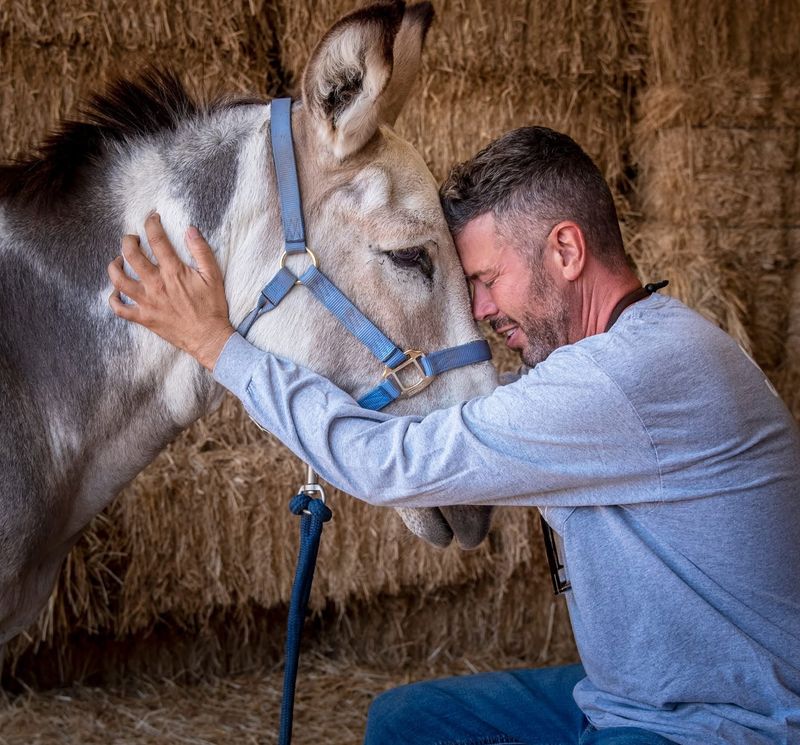
“I was like, ‘Crap, what if I don’t like them?'” said King. “So I got three donkeys, Goose, Pickles and Shadow. I met them on Dec. 5, 2020, and I fell madly in love.”
Just a short month later, in partnership with philanthropist Phil Selway, King successfully opened Oscar’s Place, a donkey rescue and adoption center, based in Hopland, California.
“That first year, we only had one barn and one pasture and 20 donkeys,” said King. “Now we’re five and a half years in, and we now have three locations.”
Oscar’s Place is a nonprofit donkey adoption and sanctuary, rescuing donkeys from slaughterhouses and owner surrenders, aiming to rehome those deemed fit and provide sanctuary for others.
“I rescue my donkeys from an auction in Bowie, Texas, because that’s where the Mexican slaughterhouse goes to buy donkeys,” said King. “I go to that one in particular because I’m outbidding the slaughterhouse where if I went to an auction in California, I would just be outbidding people who want donkeys.”
King himself is no stranger to Texas. As a kid, he went to elementary school in Fort Worth while his father attended seminary. King’s great-grandparents resided in Abilene. He can still recall spending evenings there with his great-grandma watching trains pass through town.
“We’d go to the A&W Root Beer. They were still on roller skates at the time, and they’d roller skate out with our frosty mugs, and then we’d go park at the train track and watch the train go by,” said King. “Then we would turn in our mugs, and we’d go back home. So I do have a very sweet memory of Abilene in my head.”
Oscar’s Place and King also starred in the ABC series “Donkey King,” which started airing at the beginning of 2026 and follows King and the Oscar’s Place team’s journey rescuing and rehabilitating donkeys.
“It’s really authentic and moving. We show death, birth. We show it all,” said King. “We had cameras on us 18 hours a day, but you do just get used to it. And you spend a lot of time with them, and they’re such a great production crew. And they become very good friends. It was quite an experience, and we’re in the middle of planning season 2 right now.”
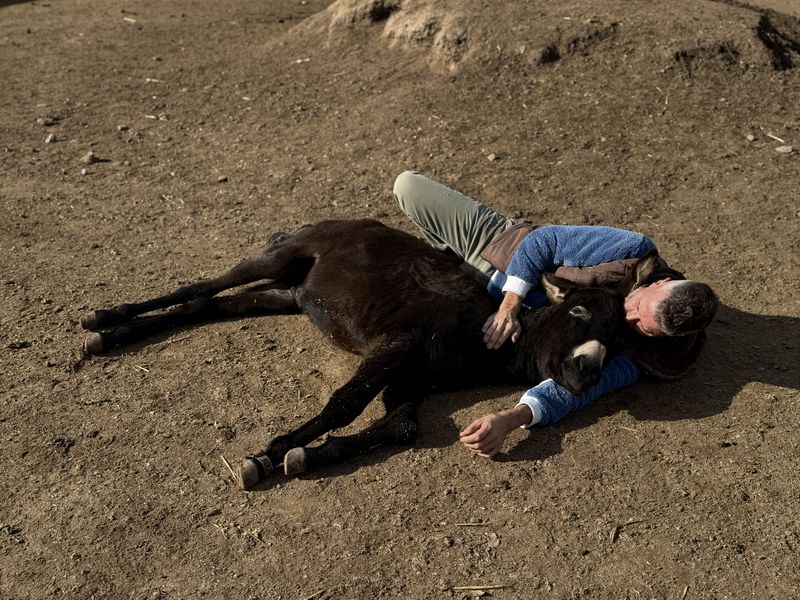
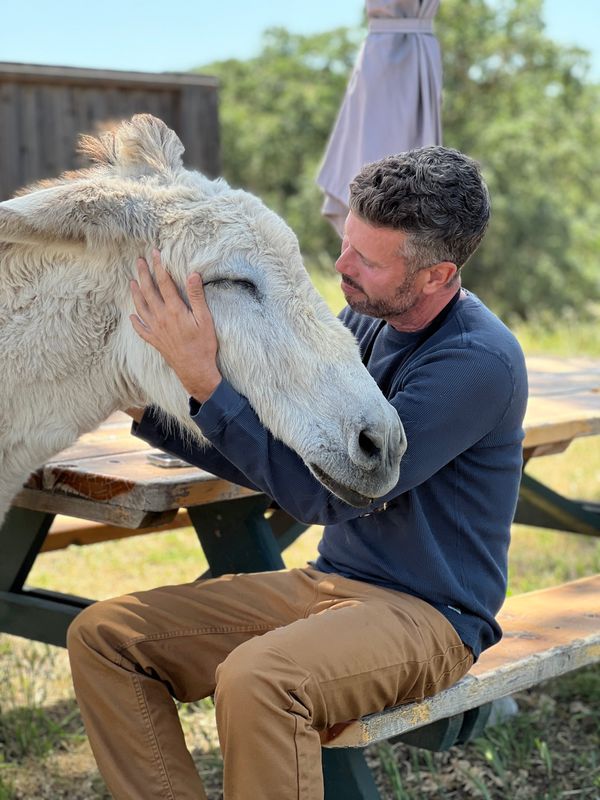
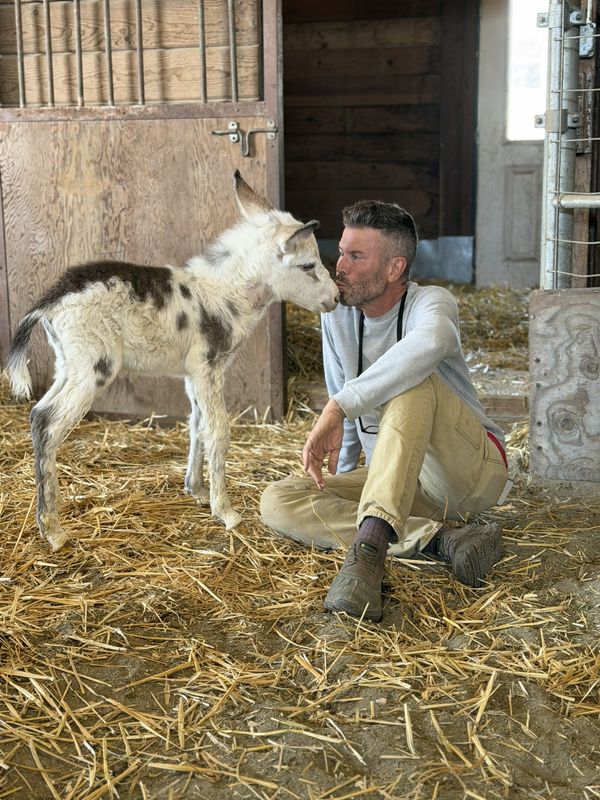
By sharing his experiences, King hopes to change the public’s often misconceived views of donkeys and highlight the caring and gentle creatures he has fallen in love with.
“It has definitely helped change people’s perceptions about donkeys,” said King. “It has helped elevate the donkey profile. And it has helped find people who want to support Oscar’s place.”
As of July, King has helped rescue almost 500 donkeys with 191 donkeys adopted into forever homes, and he’s just getting started.
“About a year ago, I started the process of what does it would look like to own something closer to Bowie,” said King. “And it started with a place where donkeys could rest. But then I realized through all of my exploration that these donkeys aren’t tired. They’re sick. And so what I need is a medical facility.”
After searching for compatible properties, King stumbled upon the perfect place, recently closing on the location.
“The hospital will open on Sept. 5, and we’ll do our first rescue on Sept. 6,” said King. “It’s going to be the first and only donkey hospital in the United States, and it’s going to be right there in Texas.”
The new hospital will be located on a 40-acre property in Collinsville, reducing the travel time from the Bowie slaughterhouse from 32 hours to only one.
“Before, when we would rescue a donkey, it would be 36 to 48 hours before that donkey saw our vet. Now it’ll be two,” said King.
Having the hospital in such close proximity to the slaughterhouse also allows King to perform a nasal swab on donkeys the day before the auction and run a PCR test to detect any viruses a donkey might have before it is purchased.
“Then the next day, when we actually buy them, we already know what’s wrong with them, and we won’t put healthy donkeys on the trailer with sick donkeys,” said King. “We just get all of our sick donkeys there first. And then because it’s only an hour away, we then go back and get our healthy donkeys.”
The new hospital is slated to feature a variety of modern medical equipment and technology to aid in the rehabilitation of sick and injured donkeys, including isolation wards, critical care units, oxygen delivery systems and temperature-controlled lung disease management.
According to King, the most common health issues the Oscar’s Places team encounters during donkey rescues are respiratory illnesses. Commonly found illnesses include two different types of pneumonia, the flu, equine herpes and asinine herpes.
King also added that donkeys often have two or three respiratory illnesses when rescued.
The new hospital will be run by Dr. Kate Schoenhals, who is the on-site veterinarian at Oscar’s Place.
“It’s going to be night and day how much better we are for donkeys, and we will prevent death and probably prevent quite a bit of illness if we can get on top of it ahead of time,” said King.
King also hopes to improve the overall standard of veterinary care for donkeys through the new hospital, noting there is very limited data available on donkey health.
“There’s no research on donkeys,” said King.
So the hospital will work with the University of California, Davis and hopefully Texas A&M and Cornell universities to establish medical norms for donkeys and elevate the donkey medical field, he said.
King also said the hospital plans to include veterinary intern, residency and extern programs to spark interest in donkey veterinary care.
“If we can get veterinarians at the beginning of their careers to love donkeys, then that’s systemic change for decades,” said King. “Right now, when a donkey goes into a hospital, everyone hides because nobody wants to help it, and we want people to raise their hand and say, ‘Oh, I’ll take care of the donkey.’ And Oscar’s Place can help make that happen.”
This article originally appeared on Abilene Reporter-News: ‘Donkey King’ to open first U.S. donkey hospital in Texas | Exclusive
Reporting by Lauren Dossey, Abilene Reporter-News / Abilene Reporter-News
USA TODAY Network via Reuters Connect
By Lauren Dossey, Abilene Reporter-News | USA TODAY Network
