(This story was updated to add new information.)
The city of Corpus Christi is under review for a bond ratings downgrade — in part, due to a vote halting the proposed Inner Harbor desalination plant, according to a prominent credit ratings agency.

In a news release issued the evening of Sept. 10, Moody’s Ratings cited its reasoning for a downgrade review as “unexpected acceleration of water depletion risk.”
The statement lists among those factors the continued drought, along with “significant demand from new and existing water-intensive industrial operations, and the uncertainty introduced to the city’s general credit quality with the recent cancellation of a long-term effort to enhance its water supply without an adequate replacement.”
“The city’s water stress negatively impacts its environmental, social, and governance risks which are drivers of this action,” Moody’s states in its news release.
The announcement — specific to the city’s utilities system — came a little more than week after the City Council voted 6-3 to end the contract with the company designing the estimated $1.2 billion Inner Harbor desalination plant.
The planned facility was proposed to generate as much as 30 million gallons of treated water per day.
The city’s financial adviser, Victor Quiroga, told the City Council on Sept. 9 that Corpus Christi’s ratings were likely imperiled following the Inner Harbor vote, coupled with tense discussions on setting new rates for water and wastewater services for the upcoming year.
Should the city’s bond rating drop, it would generally mean higher interest rates when bonds are issued, officials said — which would directly affect borrowing and financing for long-term wastewater and water infrastructure projects.
Ultimately, higher interest rates mean less money to invest in those projects, City Manager Peter Zanoni told the Caller-Times.
What led to the downgrade review
Quiroga told the City Council on Sept. 9 that representatives from credit rating agencies had viewed the online broadcast of the Sept. 2 City Council meeting — the meeting in which the contract for the Inner Harbor project was terminated — and seen the subsequent headlines.
Ratings agencies take into account not a single action of the council, but trends over the course of years, he said.
There has been a perceived reluctance to adjust rates, Quiroga added — that is, ensuring that there is enough revenue to cover operating expenses and capital investment.
Among other factors are long-term planning and management of reserves and debt, he said.
There had already been a “negative outlook” designation as of last year, Quiroga told the council — meaning that the rating agencies would consider downgrading ratings, should trends go unchanged.
The city’s current credit rating is AA-, he said, three steps down from the highest rating.
The council adopted new — and higher — wastewater and water rates in its Sept. 9 meeting, a week after the preliminary vote was scheduled.
In the prior Sept. 2 meeting, several council members had balked at staff-recommended rate increases and had requested options be brought to the Sept. 9 meeting showing various lower-end rate hikes and the corresponding potential cuts to services, personnel and equipment ranging from the hundreds of thousands to millions of dollars.
The utilities rates that were ultimately approved under a split council vote were those that had been initially proposed by the staff: increasing the average residential water bill by about $4.78, taking the monthly cost from about $37.29 to $42.07; and raising monthly wastewater charges for average residential accounts by about $4.20, bringing the monthly charge from about $59.32 to $63.52.
What the news may mean
City Councilman Roland Barrera said on Sept. 11 that the possibility of being downgraded raises concerns, adding that he believes some council members have been what he described as skeptical of debt.
“(What) we forget is that this is an asset that produces revenue for the city to be able to maintain,” he said. “And if we’re not going to invest in that, then obviously whoever we borrow the funds from will have some concerns about our ability to pay them back.”
Barrera believes that curtailment is an eventual, but likely imminent, reality, he has said.
Curtailment is essentially a forced reduction in water consumption for all customers.
For industrial operations, economic impacts would be significant — in part, because of jobs, but also because that would mean less revenue from payments in lieu of taxes, he added.
“I think that that doesn’t paint a very good outlook for the future of our community,” Barrera said.
Some debt must be incurred to accomplish major projects, said City Councilman Gil Hernandez — but because it directly impacts utilities rates, he believes debt should be spread out to the degree that it can be.
Although the Moody’s statement lists only concerns related to water supply, Hernandez pushed back on the idea that desalination would be the main reason for the downgrade review.
There are also questions about other factors, he said, such as the city’s above-average leverage ratio — what Hernandez described as the volume of debt and the expected amount of time it would be repaid.
“If you look at it — just the numbers — we would not be in the sweet spot based on the numbers our system is in,” Henandez said. “If they tried to blame this solely on this desal thing, that would be false.”
Will the city be downgraded?
Moody’s announcement of a downgrade review didn’t come as a surprise, Zanoni said. Ratings agencies had noticed not only a perceived reluctance to raise utilities rates, but also the drawdowns of fund balances while pursuing an aggressive capital improvement program, he said.
City officials are scheduled to meet with Moody’s representatives Sept. 15, Zanoni said, and the ratings agency will likely make a decision on whether to downgrade the city’s ratings within the next few weeks.
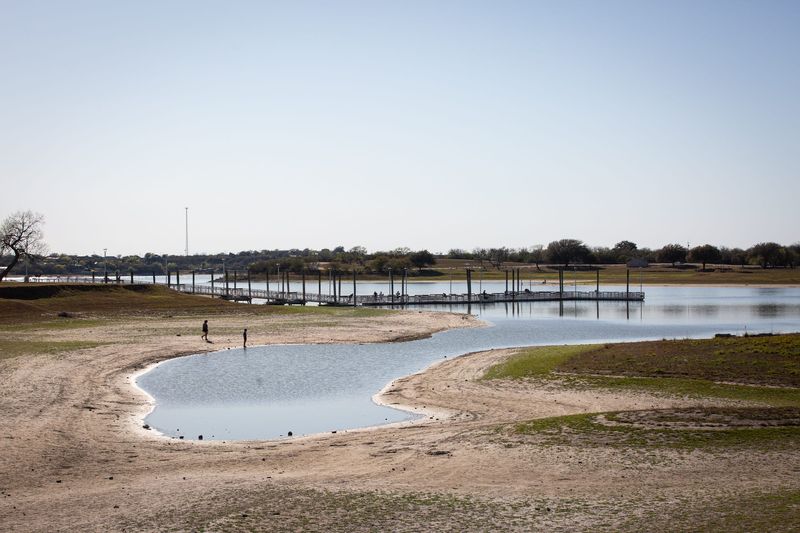
In the statement issued by Moody’s Ratings, representatives wrote that during the review period the company would “evaluate the city’s ability and/or feasibility of its plan to secure sufficient water sources to meet demand,” should the combined capacities of Lake Corpus Christi and Choke Canyon Reservoir be “fully depleted” in the upcoming years.
“We will also evaluate the long-term implications of the city’s water supply vulnerabilities, including potential impacts upon its economic, financial and leverage profiles,” the news release states.
It’s possible that two other ratings firms may also consider a downgrade review, Zanoni said.
Water supply
Although officials say items like utilities rate-setting play a role in in the city’s “score,” Moody’s statement focused on water supply and did not mention utilities rates.
“We’re going to show Moody’s on Monday that, yes, the City Council didn’t approve the seawater (desalination) project, but we have many other projects we’re working on that should provide better water stability,” Zanoni said.
Several are in consideration or currently in the works — among those the city’s own wellfield in ongoing development along the Nueces River, as well as pursuit of a groundwater initiative in San Patricio County and a water reuse proposal.
Also on the list for further discussion are purchasing treated brackish groundwater from the South Texas Water Authority and potential purchase of desalinated water from the Nueces River Authority, which plans to construct a plant on Harbor Island.
While the Nueces River wells are in ongoing development, final contracts have not been signed on any of the other projects.
The majority of the projects, with the exception of the city’s Nueces River wells, either do not have permits or are in process of seeking finalized permits.
A potential downgrade in the city’s bond ratings would not be irreversible, Zanoni said.
“Right now, the downgrade based on that Moody’s letter seems to be primarily based on the lack of water security through the discontinuing of that project that the city has worked on for 10 years,” Zanoni said. “But if the rating agencies see … more water security demonstrated through projects coming online, that will help change their opinion and we could probably get upgraded again.”
This article originally appeared on Corpus Christi Caller Times: Corpus Christi city bond ratings to undergo downgrade review after Inner Harbor desal vote
Reporting by Kirsten Crow, Corpus Christi Caller Times / Corpus Christi Caller Times
USA TODAY Network via Reuters Connect