At the Tuesday, July 14 Amarillo City Council meeting, a debate ensued about an audit committee’s role, and whether or not to have a forensic audit to include CIP projects, sewer and water and ARPA monies received.
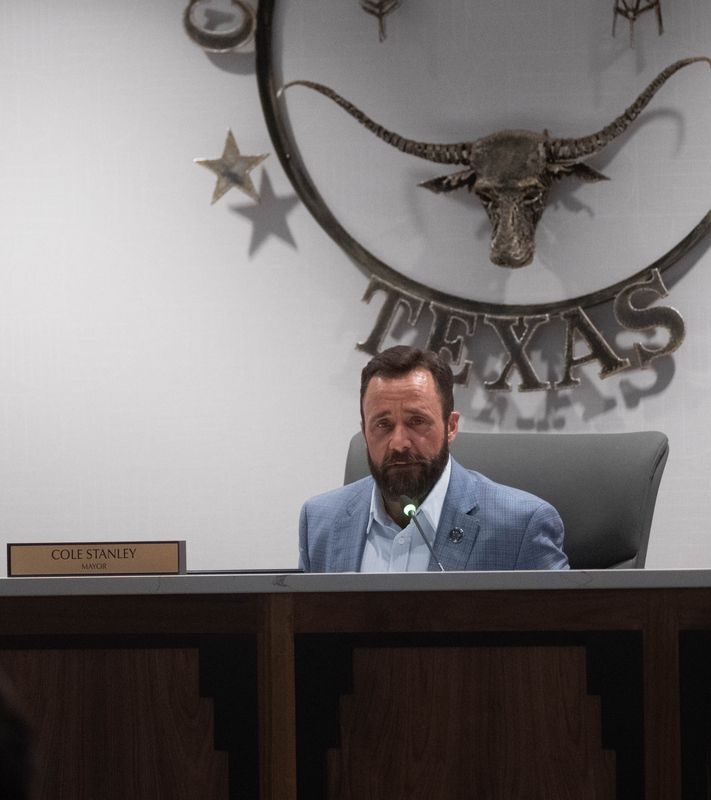
The at-times contentious discussion started with Mayor Cole Stanley discussing the roles and responsibilities of the Council Audit Committee. Stanley said he had worked with Councilmember Don Tipps on the committee for two years, and now Councilmember David Prescott has joined. Dean Frigo, who is chair for the Amarillo Hospital District Board, is also on the committee, along with city staff.

“For the past few years, we’ve ran a budget … this previous year’s budget, we couldn’t even tell you the actuals until just a few weeks ago,” he said. “The audit committee, in my opinion, is meeting once a year as a rubber stamp just to get a document that’s typically 250 pages. They have zero time to really look it over. They’re supposed to digest it and then make a recommendation that I don’t know that we’ve even really heard. … It’s just been procedural.”
The mayor proposed that Amarillo City Internal Auditor Uneill Gerber be added to the committee, and felt it would be beneficial to be able to reach out to Gerber and ask him about documents or information and provide him with more direction and feedback. Stanley said the internal auditor and the audit committee could help make sure the paperwork is in order and the bills are paid on time and other changing factors, just like a controller does in a construction business while a project is going up in a field.
The mayor said that if they had an audit committee that met more than once a year — meeting on a timely schedule and tasked with being more up to date and analytical — then the information could help the council better know where they were on a budget.
Helping with biggest struggle the mayor and city manager are facing
The proposal Stanley offered was to help define the committee’s tasks and scope the work for a forensic audit.
He said they could task the committee to go and find three highly reputable firms that perform forensic audits, and let each firm interview the council and the city manager. Then the committee could come forward with their recommendation to the council, so that it didn’t look like it just came out of the city manager’s or mayor’s office.
Stanley said that they just ran a $570 million budget this year, and it could be more in the future.
“That’s an enormous organization to have an audit committee that meets once a year, and then you’ve got an internal auditor that doesn’t have a place where he can report,” Stanley said.
“My biggest problem is no secret,” Stanley said. “I don’t have a good, up to date, open set of books … that’s been my struggle — and that struggle becoming my city manager’s struggle, like I hate that, because he struggles with the same thing — of we don’t know where we’re at — we don’t know where this went, we don’t have that document, that’s not up to date today.”
Council members call for more often meetings, debate committee’s purpose
After Stanley asked for thoughts from the other council members, Tipps said he also felt like the community would be better served by a committee that met more often, possibly quarterly, so they could see where they were and if they were on budget or not. He agreed that when they meet once a year and are faced with a thick, 500- to 600-page book, there was a tendancy to ask a few questions and then rubber stamp it and move on.
Councilmember Les Simpson asked when the audit committee was established and what its current purpose is. Path responded with the resolution when it was created in 2016 as an advisory committee to the council.
Simpson then said he didn’t recall getting any advice from the committee and wondered why they need to have it. Tipps said as it is, it hasn’t been beneficial, but it was still good to have the committee to handle some of the budgetary items and give a report to the council. Simpson said, “but what I hear is that the proposal is to turn it from advisory to directional, providing direction.”
Stanley added that in serving on the audit committee, he had never advised the council. And as committee members, people assumed they knew and were asking him if everything was good financially. He said that whether they expanded the committee, or discontinued it, there were concerns that still need to be addressed.
Stanley said the committee could give and take recommendations. He added of the struggle with the auditor that CLA had nowhere else to go but to him and staff, and an audit committee could have handled most of that. “I think we could have bite sized some of those issues as we walked through,” Stanley explained.
‘A dry run of the audit’
City Manager Grayson Path weighed in by saying, “My observation has been of the audit committee, is they meet, when the independent auditor has completed their task, which is put the audit together, my observation has been they do the audit committee before the city council meeting to do a dry run of the audit, kind of present details, go through the information, get a little more detailed with questions and kind of prepare the auditor for a presentation to the city council.”
Simpson said that he felt like the city council should be giving the direction, not a committee, and that the five members of council were elected to oversee the city’s finances. He said he didn’t want to advocate an important responsibility over financial oversight to just two council members or a subcommittee.
Stanley said that he believed an audit committee would serve in an advisory role that while the city council was still in full control of appropriations and further explained that if the committee could look at ways to improve what they are doing and could make recommendations, it could help.
Simpson agreed but said that if it required them to change something, it needs to go through proper channels with all five of them on the council agreeing to a change to implement something.
Stanley said that he would never show up at a business setting a week before the group was going to approve an audit and accept it and say, “let me ask a few high-level questions here, I’ve got an hour with you before you fly out.” He suggested they do it quarterly or semi-annually meetings at least and have enough confidence in the committee that they could task it with scoping out the work for the forensic audit.
Path interjected that he didn’t know if the audit committee could do all the tasks mentioned, because they were budget versus audit, but if city council wanted to proceed with a forensic audit, it could make sense that the council tasks the audit committee to vet qualified auditors and bring them to the council’s recommendation within the limited scope they have. He also said the internal auditor could be a liaison to the committee as well.
Prescott, who has only been to one committee meeting, said it would be good to define its goals and responsibilities. He also felt it would better serve the community to meet every two months and report back to the council. “I think there’s a lot of wisdom in having this group look for the auditors, for forensic audit … as we go forward,” he said.
Councilmember Reid added that a lot of other boards and committees advise the council, and they take the background work they’ve done very seriously. “A committee like this, I think is extremely important because of, one of the things when we talk about transparency to the citizens, is that one we know what we’re talking about, that the numbers that are presented to us publicly that we vote on and make decisions on are true and accurate.” He said didn’t feel like it took any authority or responsibilities away from what the council did.
Stanley said that he thought it would provide a platform for all of them to reach out and ask for advice, and Path said Gerber’s team could provide more guidance.
Reccommendation for committee’s role sought
Simpson then said the committee should stay in an advisory capacity.
Stanley agreed that was a good clarification and said the audit committee could serve as a way of tracking progress on various areas. Path said the auditor and audit department could work more closely with committee on getting updates.
“I feel like there is an obligation to give oversight and then we need to utilize more businesslike practices. So frequency would be something where I’m comfortable with once a quarter, but if it takes a once a month meeting, I think we have a meeting when it’s needed,” Stanley said.
Simpson asked they they be specific on the committee’s boundaries what they’re providing advice on, along with defining their purpose.
The mayor then simplified it and said, “let’s go back to staff and let’s have the city manager and internal auditor come prepared next city council meeting with a recommendation.”
Path requested that they come back in August with their findings and revisit the plan.
Forensic audit plans questioned
Stanley later asked whether the committee could be tasked with starting the process for finding good firms for a forensic audit, and Simpson said he wanted to look deeper into what’s being requested and the reasoning behind the need for a forensic audit.
Simpson then confirmed with the auditor and chief financial officer during the meeting that forensic audits are rare and there had been no evidence of fraud or wrongdoing. He said they owe it to the taxpayer to answer basic questions about the situation to justify a need to authorize a forensic audit. With several of the audits he had looked at, there was a fact-based reason for it.
Reid offered an example from his professional experience, were banking institutions and agencies didn’t find any issues, but the presidents were later prosecuted. He said while Simpson raised a lot of valid points as far as criteria, the reason you ask for a forsenic audit is “you don’t know what you don’t know.”
As far allegations of improprieties, Reid said there had been an embezzlement within the city that people were serving time in federal prison for, and an audit from a third party would help them get clean books. He agreed with Simpson on defining the audit’s scope and the reasons for one.
When Simpson questioned why those three departments were picked in particular, Stanley clarified that the agenda description was not picked by the council but listed from a previous meeting’s discussion he had stated, starting with those three, but not limited to that. He said if they were to do a forensic audit, he would rely on those firms to scope out their own work.
Prescott argued if it was to get a good set of books to start, the three mentioned areas would just be a small percentage toward achieving that task, and it would imply there was reason they were being looked at in particular.
Stanley said they need to define what a successful audit would look like, and help them be clean and clear, comfortable and confident in their knowledge from the audit.
Prescott asked Gerber if there was any problem with CIP, and he replied he saw no concern in those areas, or any other departments. He added that the internal auditor is independent of any management.
City Chief Financial Officer Lola Ogunremi listed the different audits the city has, and did not have any concerns about the financials at this time.
Simpson brought up the costs of a forensic audit. Prescott asked Gerber about the expense, and he said it depends on how deep you want to dig.
Stanley agreed that it’s important to keep it fact based. He said as far as why they’re here, they all believe in a system where you elect people, and they pay into the system to provide core services, with they public monies to administer — and if they say millions to be stewarded were not spent, and were not reported, ulimately that’s a concern.
Nell Williams is a staff writer covering trends and other news for the Amarillo Globe-News. Have a story idea? Email her at nwilliams@usatodayco.com .
This article originally appeared on Amarillo Globe-News: City Council debates over auditing committee role, purpose
Reporting by Nell Williams, Amarillo Globe-News / Amarillo Globe-News
USA TODAY Network via Reuters Connect
By Nell Williams, Amarillo Globe-News | USA TODAY Network