Editor’s note: This story is the second in a four-part series about school desegregation in Corpus Christi and its aftermath, a process that began in the 1960s and spanned decades.
Read part one here. Parts three and four will be published on Caller.com on July 13.

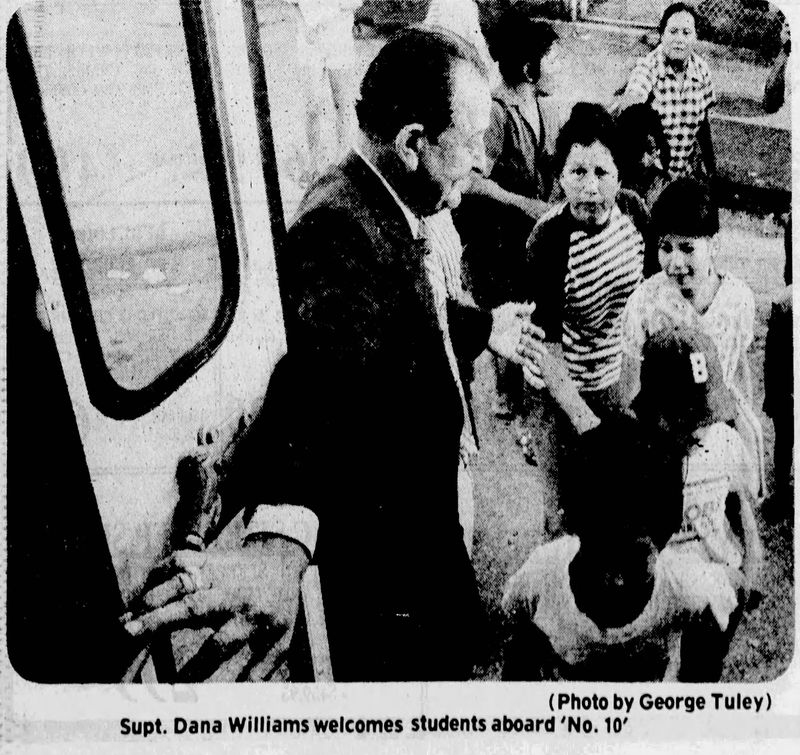
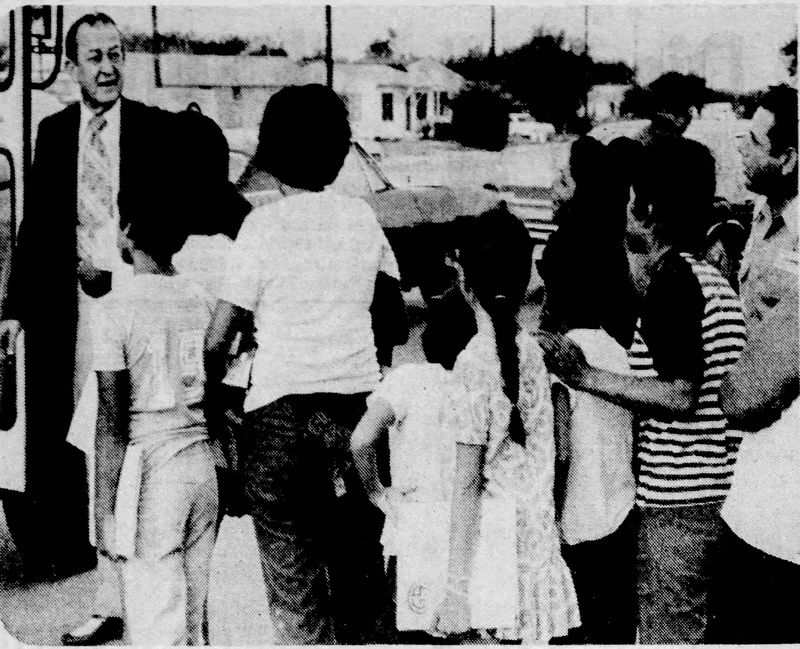
Corpus Christi ISD Superintendent Dana Williams rested one arm on the door of school bus No. 10, welcoming students onto the bus and easing the nerves of the parents who’d walked them to the bus stop in 1975.
This was no typical first day of school, nor would it be a typical commute on the bus.
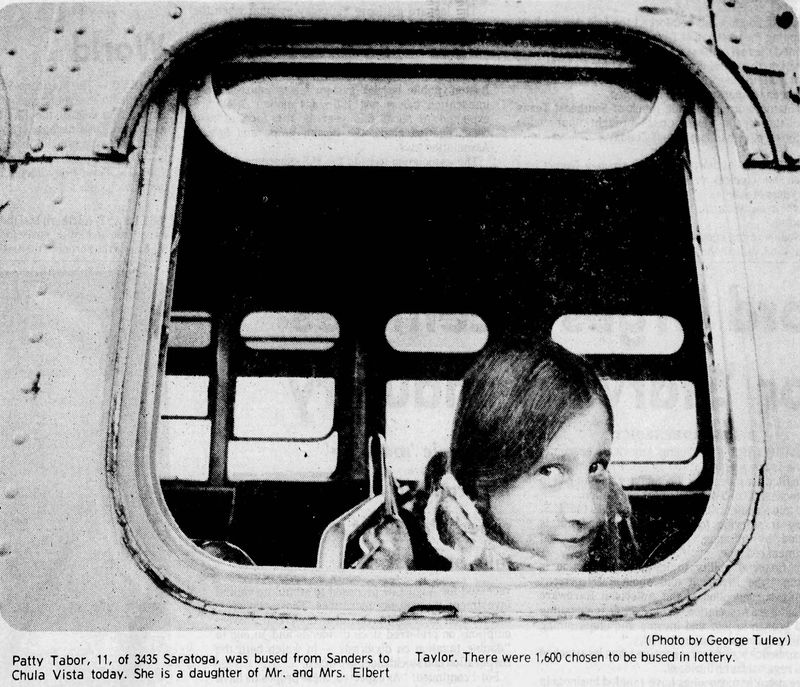
This was the year that the Corpus Christi Independent School District finally implemented court-ordered busing, swapping students who previously attended majority-White and majority-non-White elementary schools with the aim of eliminating segregation in the schools.
Already seven years since a group of two dozen parents sued the school district and five years since a federal judge ruled in the Cisneros v. Corpus Christi ISD case that the school district had operated an unconstitutional “dual school district,” busing was slow to arrive in Corpus Christi.
The delay was directly related to opposition from Williams and the Corpus Christi ISD school board, who disputed that students had been treated any differently on account of their race or ethnicity.
If not on board with the concept of busing, Williams and other district leaders were at least physically on board when the buses rolled, taking students to new schools.
Shortly after the initial ruling by U.S. District Judge Woodrow Seals in the Cisneros case in 1970, Corpus Christi ISD appealed the case. It failed to overturn the ruling but did win additional time to plan for integration.
“Lest the point be lost among the other pertinent facts, it is here asserted again that no evidence whatsoever was offered to establish that discrimination against the Mexican-American citizen because he is Mexican-American exists in Corpus Christi, Texas, or in the Corpus Christi Independent School District today,” the district claimed in its petition for permission to appeal the case.
Many of the school district’s proposals to the courts were rejected on the grounds that Seals and later judges didn’t believe they would actually reduce segregation.
U.S. District Judge Owen Cox took over the case, ordering Corpus Christi ISD to implement integration through “voluntary school transfers.”
This was basically how the district had previously been handling integration. As it had been in the 1960s, voluntary integration was insufficient in the 1970s as well.
Opposition to busing
In 1971, Dr. Hector P. Garcia was involved in an effort by parents seeking free transportation for Hispanic children who wanted to transfer to predominantly White schools.
The school board denied the request, and the parents had to set up their own carpools, eventually renting their own bus. Corpus Christi ISD declined to adopt a policy that would have made it eligible for state funds to transport students who lived more than 2 miles from their school, according to 1976 statements by Garcia.
The group staged a sit-in at the school board office, resulting in the arrest of several individuals, including Garcia.
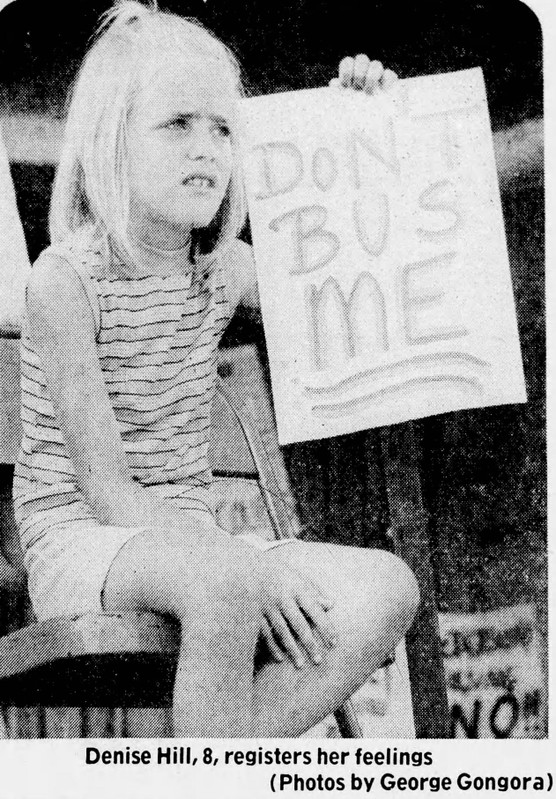
Busing had vocal opponents in the community.
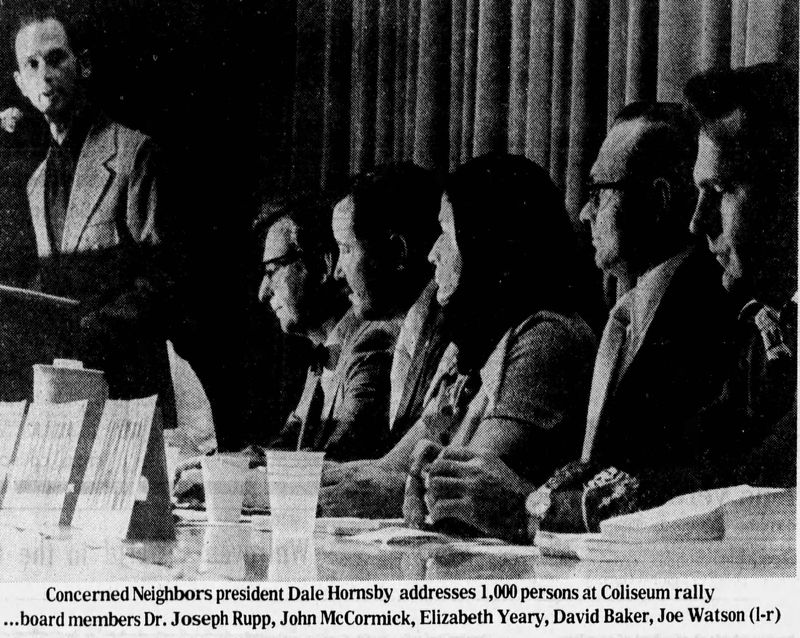
In 1970, citizen group Concerned Neighbors was formed primarily to oppose busing and preserve neighborhood schools. The group organized rallies, meetings and petition drives. It also called for a school boycott in 1975.
In 1975, Dr. Joseph Rupp made the novel suggestion that CCISD use a computer program to work out how to bus students. Though his “Computer Plan” would win the approval of Cox and be put into to practice that same year, Rupp was not the obvious source for a plan.
Rupp was the Nueces County coroner. He was also a Concerned Neighbors member and anti-busing advocate. But if busing was inevitable, Rupp suggested computer modeling as the best method.
“I am opposed to it [forced busing],” Rupp, also a parent of a child slated to be bused, told the Caller-Times in July 1975. “It’s a part of the erosion of our rights.”
In a rush, the district used The Computer Plan to come up with a busing plan over the course of a few weeks.
Students across the district were rezoned ahead of the 1975-76 school year, with most assigned to a campus within 2 miles of their homes. Due to this proximity, these students were expected to transport themselves, by walking or being driven to school.
But 1,500 students who lived farther and required crosstown busing to get to school were chosen by lottery.
Fearing turmoil and discontent, several community groups and leaders exercised their influence to call for calm and maturity.
Presbyterian Rev. Fred Swearingen and his wife brought influential religious and community leaders together to plan for desegregation. Swearingen put out a newspaper advertisement signed by many leaders urging citizens to encourage children to take full advantage of educational opportunities, to foster positive attitudes and not to protest in ways that interfere with schools.
The Corpus Christi Association for Mental Health also sponsored conferences to allow groups with different viewpoints to meet.
How students responded to busing
That summer, the Caller-Times interviewed local children about busing.
Several Southside children questioned the wisdom of busing. One child said he was transferring to private school. Several who were still attending public school but were not being bused expressed relief that they were staying with their friends.
Several Westside children told the Caller-Times they were excited to ride the bus — they thought it would be fun.
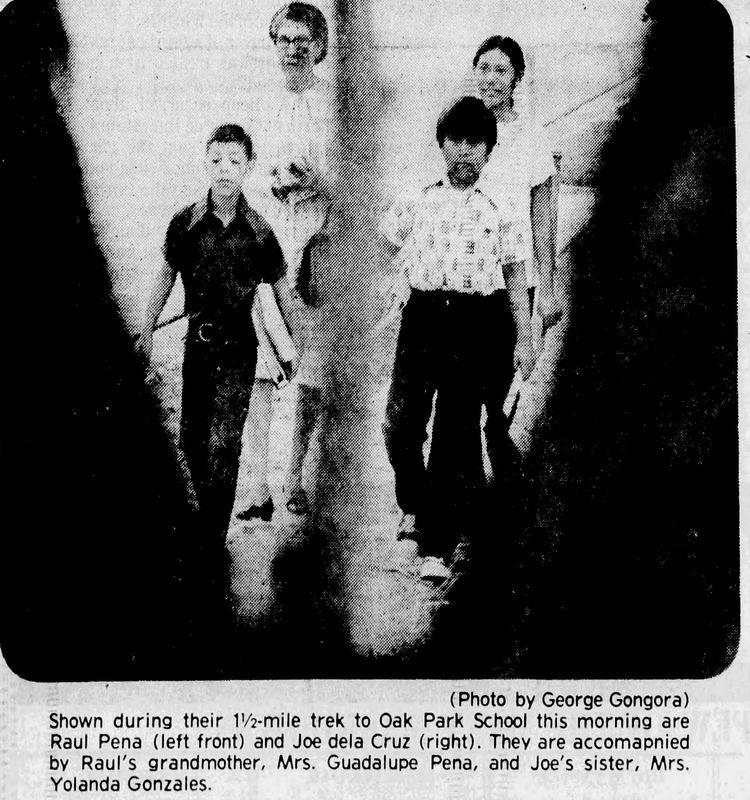
On the first day of school, the Caller-Times documented the experience, speaking to a 10-year-old and a 9-year-old who faced a 1.5-mile trek to their new school, Oak Park Elementary School. They previously attended Southgate Elementary School, just a block away from their homes.
Southgate Elementary School was closed by court order. They boys, both Mexican American, were eligible to transfer to a predominantly Anglo school on the Southside, but neither wanted to go to school far from home.
Ten thousand students were assigned a new school that year.
That same year, the court imposed an ethnic ratio on the district, requiring that no elementary campus have a 75-25 or worse racial split. In the 1975-76 school year, the district still had 16 out of 38 elementary schools that did not meet the court-ordered ratio.
The next year, busing began at the junior high school level, with another 1,400 students requiring transportation.
Despite all this, integration didn’t seem to be coming any more quickly.
Slow integration progress
The racial splits in Corpus Christi ISD schools were less extreme in 1976 than in 1969, but they still existed. Haas Junior High School was about 81% White, King High School was 78% White and Woodlaw Elementary School was about 80% White; Martin Junior High School was 98% non-White, Cunningham Junior High School was 99% non-White, Barnes Junior High School was 99% non-White and Moody High School was 96% non-White.
In 1977, the Texas Advisory Committee for the U.S. Commission on Civil Rights released a report based on hearings held in 1976.
“Any direction taken in Corpus Christi will require close cooperation between the school administration and the citizens of this community,” the report states. “There is strong evidence, however, that the school administration is not prepared to respond in an aggressive manner to many of the complex problems surrounding school desegregation.”
Williams, the superintendent, initially declined to participate in the hearings. The report states that when the superintendent was asked to review the report prior to republication, he declined.
The report includes a letter from Williams in which he wrote that he “knows of no way it would be helpful to me to ‘review it for accuracy and interpretation,’” though he also claimed there are “many inaccuracies in the report, conclusions not based on fact, and with almost complete bias from start to finish.”
The committee, which included Dr. Hector P. Garcia and Carlos Truan, interviewed community members on both sides of the busing issue.
“It is important to understand that this community has dealt with the issue of desegregation for more than 20 years, 8 of which have been spent in a long and costly litigative process — exhausting friends as well as foes of school desegregation,” the report states. “A climate of defeat and despair pervades many sectors of the community.”
A leader of a local antibusing group told the committee that she did not want White children “sacrificed” or “punished” for injustices of the past. She preferred “natural integration” through “people living together in neighborhoods sending their children to school together and attending Cub Scouts together.”
The report includes the response by Texas subcommittee Chairman Milton Tobian, noting the lack of integration progress at Moody High School.
“At that rate, it will be an infinity before we get there,” Tobian said, according to the report.
Busing hadn’t been the initial goal of the Cisneros v. Corpus Christi ISD lawsuit plaintiffs. But there were those who believed in it.
Jose Cisneros, the first plaintiff listed on the lawsuit, described busing as the tool to ensure minority students were given a quality education, according to the report.
If Westside kids went to Southside schools and Southside kids went to Westside schools, “the school board and Dana Williams will make damn sure that the Southside kids get a good education over here,” Cisneros is quoted as saying the report. “Consequently, ours will, too.”
At the time, Cisneros expressed disappointment in the lack of progress.
“I believe the lawsuit … has done some good; however, it has not accomplished as much as we wanted,” Cisneros told the committee. “I don’t believe the present plan … is doing any good at all.”
Another plaintiff, Mike Zepeda, told the committee that the goal of the lawsuit was to get equal education for all and better facilities, but that hadn’t been accomplished.
One consequence of the busing plan is that many students moved from school to school in the 1970s.
“From an educational point of view, it appears to me that there is a distinct lack of continuity in a child’s elementary school experience under this program,” Raymond Cross of Texas A&I University told the committee. “His/her relationship[s] … are not to be continuous because they are shifting back and forth between schools. The whole process gives a sort of nomadic quality to a youngster’s elementary school experience.”
In 1976, Abelardo Saavedra, who would go on to lead Corpus Christi ISD and other Texas urban school districts, completed a PhD dissertation on attitudes in Corpus Christi toward desegregation and busing.
He sent out a questionnaire to randomly selected Corpus Christi ISD parents and received 194 responses.
The survey found that though respondents were supportive of desegregation and integration, a slight majority opposed busing.
Anglos were the ethnic group most opposed to busing, while Black respondents were the most favorable. Chicano respondents were not as favorable toward busing as Black respondents but were still receptive.
“The people of Corpus Christi are not against desegregation,” the dissertation reads. “The study showed that all three racial groups had positive attitudes toward desegregation and integration. The author therefore concludes that the people of the community see the value of a good integration program or at the least believe that there is some value in desegregation.”
In 1977, Cox ordered a new plan. At that point, 16 Southside and Westside elementary schools were paired and attendance zones were shifted. More schools were paired in 1978.
Norma Torres started teaching in 1971 at Furman Elementary School, which was closed in 1975 as part of desegregation plans. She was moved to Lamar Elementary School, another heavily Hispanic campus.
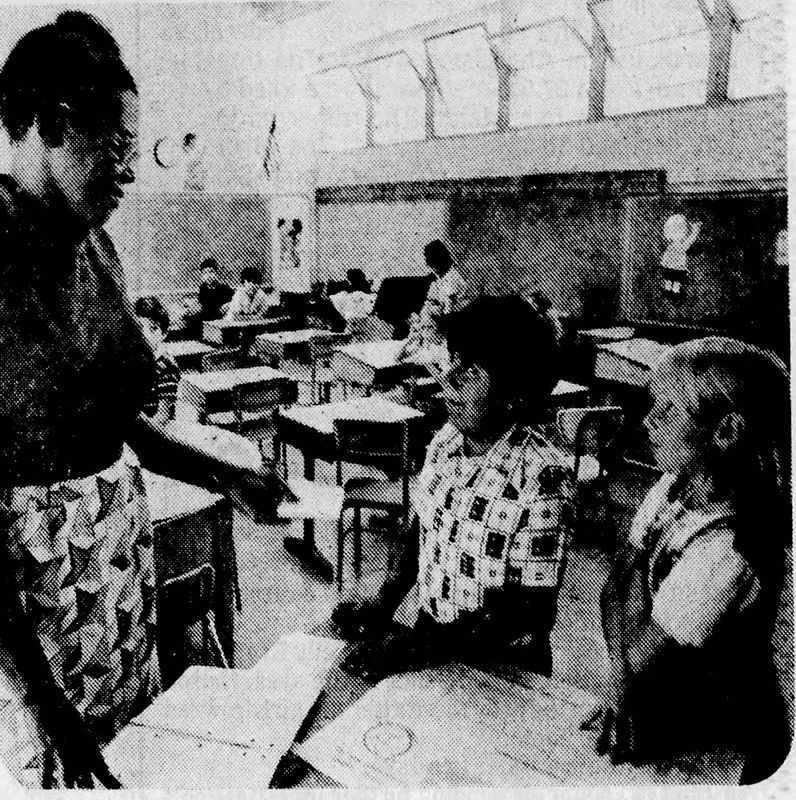
Lamar Elementary School was paired with a Southside school. Fourth, fifth and sixth graders were exchanged between the two campuses.
Torres told the Caller-Times in 2026 that Lamar Elementary School didn’t have the same educational materials as its Southside partner, so the two campuses had to share materials. The Lamar textbooks were older.
Nowadays, Corpus Christi ISD has standardized curriculums across the district. But back then, each school had its own materials and programs. A teacher moving to a new school would have to start over, Torres said.
Busing was not very well received, she said.
If a child was sent to a school on the other end of town and then got sick, parents couldn’t get to them easily, she said. Parents also didn’t have transportation to attend parent-teacher conferences.
But in the 1970s, Torres believed busing would work if everyone had the right attitude, “the attitude that all children can learn.”
Concerned Southside parents were invited to the school to see how things were going. The parents’ room, where parents could meet with staff and help make materials for the school, was located beside Torres’ classroom.
“They had some apprehensions, rightfully so, because it was different,” Torres said. “But once we started during the year, we seemed to have a good relationship on both sides.”
The desegregation battle was a matter of deep concern for Manuel Narvaez, a labor organizer and civil rights coordinator. Narvaez died in 2005.
“It cost our union half a million dollars to get justice,” Narvaez wrote in a statement 23 years after the case was filed. “It probably took more than a million [in] taxpayers money to fight against us. All these accomplishments did not come automatically.”
Throughout his life, Narvaez collected countless newspaper clippings, documents and his own notes about desegregation and educational issues in Corpus Christi. His daughter shared some of these documents with the Corpus Christi American Federation of Teachers.
“Plaintiffs did not want forced busing, but I’m sure glad we got it,” Narvaez wrote in the statement, explaining that the plaintiff’s advisory committee was able to fight for increased funding and special programs that boosted academic achievement at previously low-performing schools.
Among his collection of documents was an April 1976 report created for school board member Arturo Medina by X. Perez on desegregation.
The report included a statement from the Concerned Neighbors group issued six months after the start of busing that claimed that parent-teacher associations and after-school organizations saw fewer members, that some schools were overcrowded and that transportation costs represented a financial hardship for the school district.
The report also noted a lack of violent protest to busing.
“Forced busing has come to Corpus Christi, testing the maturity of its citizens,” Perez wrote. “So far, the citizens have passed the test with high grades. Whatever may be ordered in the future, at least the citizens of Corpus Christi will know how to accept it with grace, maturity, and human kindness.”
A challenge for integration was the departure of White students for private schools and other school districts.
Ahead of the 1975-76 school year, 1,411 students failed to re-enroll at Corpus Christi ISD. Between 600 and 700 told the district they were switching to a private school, according to school district Cisneros v. Corpus Christi ISD case files held at La Retama Central Library.
In the next decade, Corpus Christi ISD would turn its attention to new strategies under new leadership.
This article is part of a multi-part series examining school desegregation in Corpus Christi. Subsequent articles will examine what happened in Corpus Christi schools in the 1980s.
Olivia Garrett reports on education and community news in South Texas. Contact her at olivia.garrett@caller.com.
This article originally appeared on Corpus Christi Caller Times: Aimed to integrate, 1970s busing split opinions in Corpus Christi
Reporting by Olivia Garrett, Corpus Christi Caller Times / Corpus Christi Caller Times
USA TODAY Network via Reuters Connect
By Olivia Garrett, Corpus Christi Caller Times | USA TODAY Network