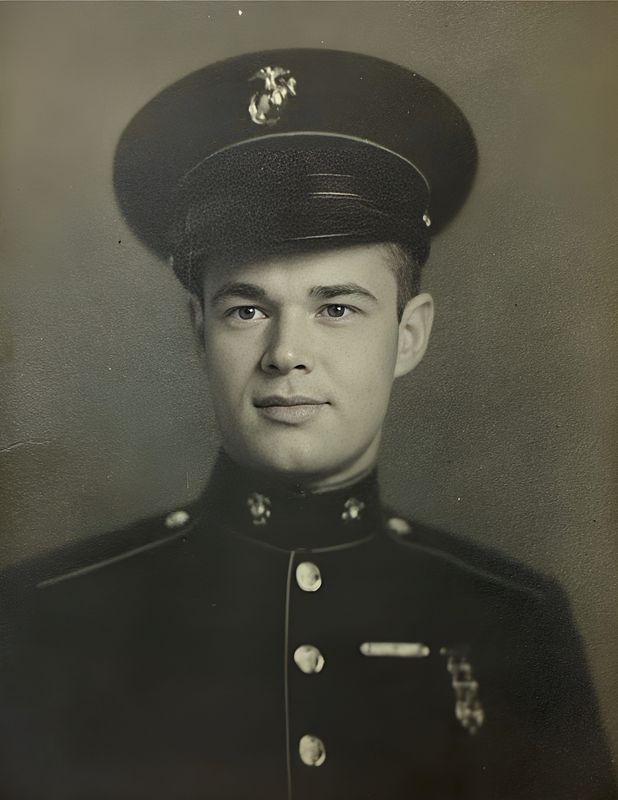
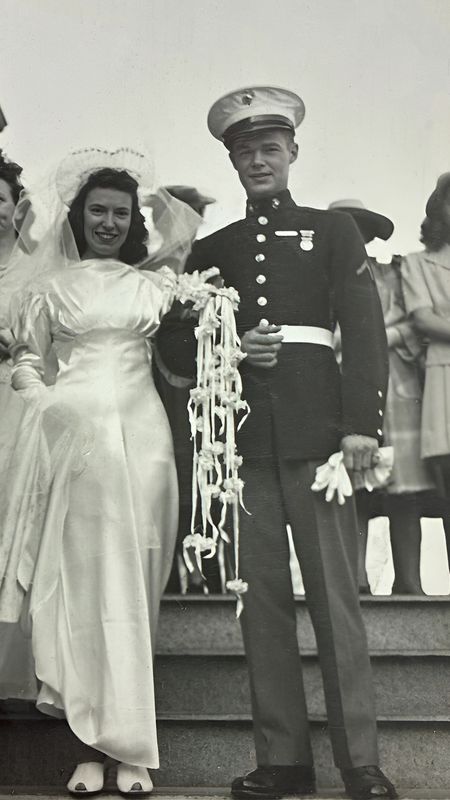
A Marine Raider from Cincinnati who went missing during a World War II firefight was recently identified and accounted for.

Private First Class Norton V. Retzsch, 25, died in the summer of 1943 during the battle of Enogai in the Solomon Islands, an island nation in the South Pacific near Australia. Retzsch’s dog tag was stolen by a Japanese soldier during the fight and for decades his remains could not be identified.
Now, thanks to modern forensic technology, Retzsch has been identified.
Retzsch’s great niece, Kim Opitz, of Minnesota, told The Enquirer the news has helped provide comfort for the family after so many years of unknowns.
“It was a feeling of elation, relief and disbelief, all at once,” Opitz said.
Hughes High graduate enlisted in 1941
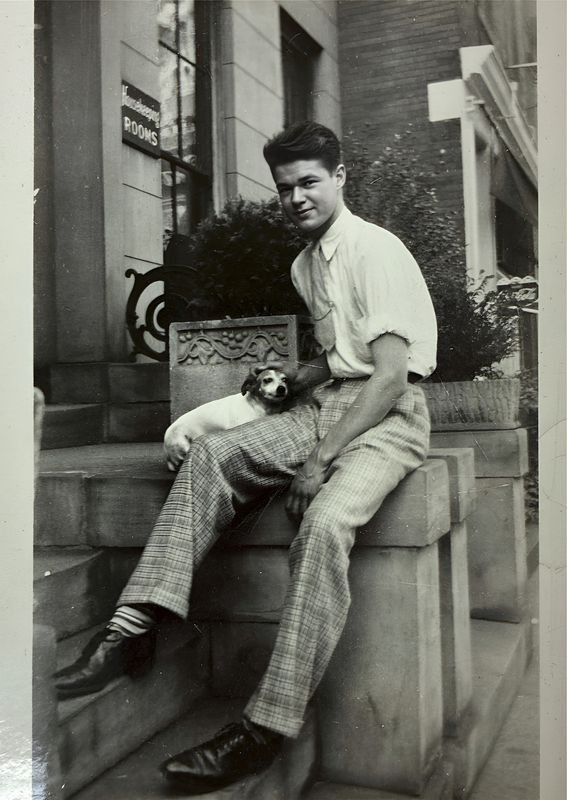
Retzsch, a Hughes High School graduate, was a page at the main branch of the Cincinnati Public Library prior to joining the armed forces. He also had worked for Trailmobile, a truck trailer manufacturer, in Oakley for some time.
He lived with his family at 456 E. Fifth Street, now the site of the Procter & Gamble headquarters. At the time, it was the site of the Ainsley Hotel, which Opitz said Retzsch’s mother owned.
In 1941, at the age of 23, Retzsch enlisted in the U.S. Marine Corps. He served in Company C of 1st Marine Raider Battalion, 1st Marine Raider Regiment, 1st Marine Division, I Marine Amphibious Corps., according to the federal Defense POW/MIA Accounting Agency (DPAA).
The Raiders were established during the war as a specialized commando-type unit to out-maneuver the Japanese in the Pacific Theater.
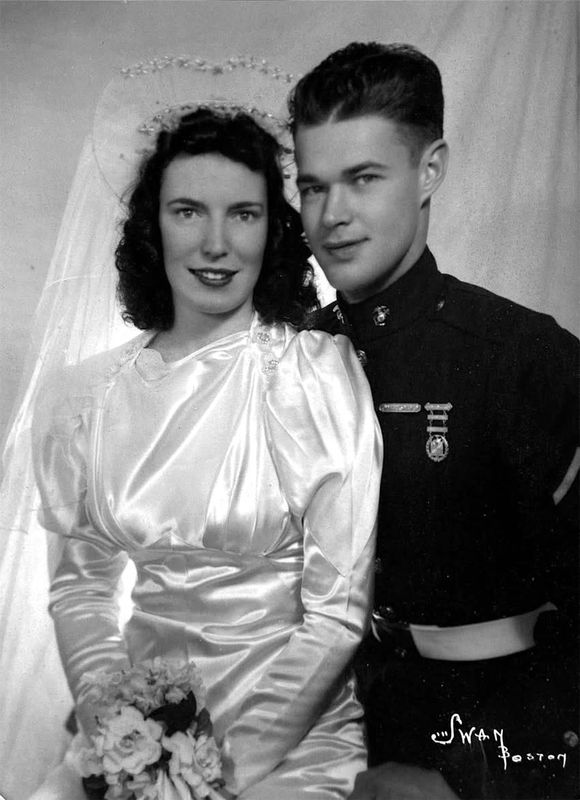
Prior to being deployed, he married his wife, Margaret (Toolin) Retzsch on his 24th birthday in 1942.
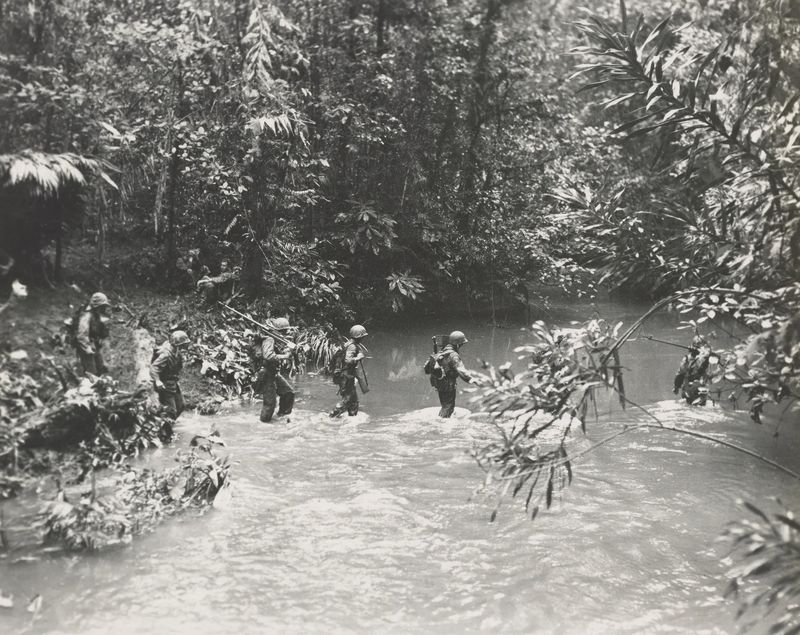
In early July 1943, his company of Marines advanced into the Enogai Inlet on Soloman Island, covered in dense jungle with thick swamps and swift rivers. After establishing a temporary camp and encountering limited enemy resistance, they came upon a larger Japanese force, which led to extensive fighting over three days, according to Marine Corps History and Museums Division
On July 9, 1943, Retzsch’s company crossed a swamp headed toward the port of Enogai. Around 3 p.m., they made contact with Japanese defenses. They were pinned down through the night, when the firing began to taper off.
Eight Raiders in the platoon were wounded or killed during the firefight that day. Retzsch and two others were reported missing and later declared dead.
Rev. Paul J. Redmond, a retired Catholic priest who served as chaplain of the Marine Raiders in World War II, recalled in a book how they were nearly ambushed by an enemy soldier with Retzsch’s dog tag.
“On the way back, we heard a noise in the bush ahead. Someone challenged, ‘who is it?’ A voice answered, ‘Rites’ and our men immediately opened fire. It was a small enemy ambush,” Redmond said.
Redmond said Retzsch always insisted his name was pronounced “Reetz,” giving away that it was an enemy soldier instead.
DNA analysis led to decades-later ID
For decades, units were unable to find and identify Retzsch.
Two sets of unknown remains were interred at the Enogai Cemetery on New Georgia in 1943. They were transferred to Finschhafen Cemetery in Papua New Guinea in 1945. Still, after multiple attempts, units were unable to identify the remains and they were buried in both the Philippines and Honolulu in 1950.
After researching losses on New Georgia, officials at the DPAA recommended another look at the remains.
Scientists used dental and anthropological analysis, as well as mitochondrial DNA analysis and mitochondrial genome sequencing data, to identify the remains.
A sample provided by Opitz was processed and used as part of the identification, the agency said.
“When they started doing DNA testing, the government notified us that we could submit samples, just a mouth swab,” Opitz said. “I thought, ‘Maybe there’s a chance they find something.’ ”
Opitz’ mother is Retzsch’s niece. Her mother’s middle name is Norton. Growing up, Opitz said her mother always reminded the children that on Memorial Day, they should remember Norton and the sacrifice he made.
“It was my grandmother’s greatest heartache, not knowing what happened to him, she always told us,” Opitz said.
Last fall, Opitz said the family got a call. The DNA sample was a match.
Now, Retzsch is finally returning home. He will be buried April 13, 2026, in Marana, Arizona, where his niece lives now.
The main branch of the Cincinnati and Hamilton County Public Library will also be holding a public memorial service at 2:30 p.m. the day of the funeral.Library community content coordinator Brian Powers says he wanted to organize a service to recognize Retzsch as both a library employee and a Cincinnatian.
This article originally appeared on Cincinnati Enquirer: WWII Marine from Cincinnati identified 80 years after going missing
Reporting by David Ferrara, Cincinnati Enquirer / Cincinnati Enquirer
USA TODAY Network via Reuters Connect