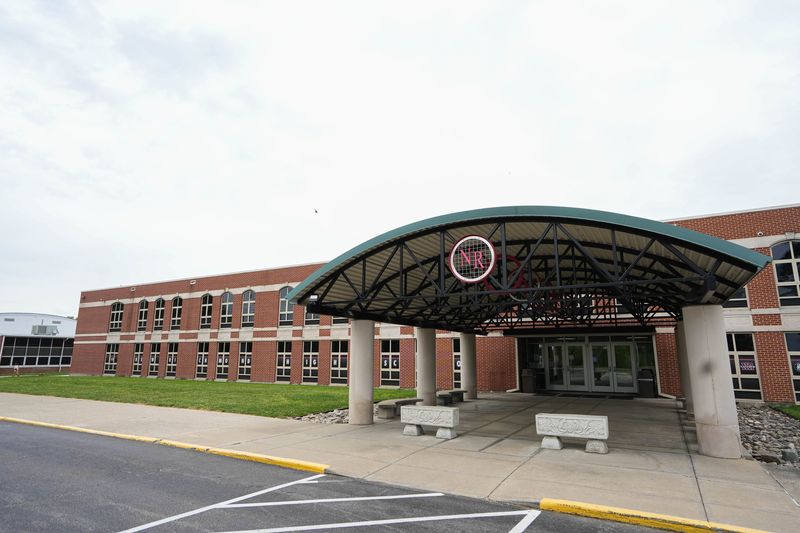
NEW RICHMOND, OH ‒ A rural, Cincinnati-area district says it’s in a “dangerous dance,” cobbling together reductions amid lessened statewide school funding, dropping enrollment and the departure of two taxpaying power plants.

This village tucked along the Ohio River 20 miles east of Cincinnati, considered its November income tax levy “plan A.” But after voters rejected the request, New Richmond Exempted Village Schools is conjuring up Plan B.
The district’s contingency plan is a 5-year property tax that chalks up to $280 per $100,000 of a home’s appraised property value per year.
It’s a last-ditch effort to steer the district away from a grim fate. In October last year, New Richmond schools was nearly placed under fiscal caution by the state, the lowest of three levels of state oversight, due to a projected deficit of more than $2.3 million.
Fiscal year 2028 would be the first year that New Richmond’s cash balance falls below $0, with a more than $2.3 million deficit projected, the Ohio Department of Education and Workforce’s letter stated. To get out of the red, New Richmond was required to submit a fiscal plan to the state last December, in which it tallied up roughly $1.5 million in cuts, including seven personnel and increasing pay-to-play fees to $300 per sport with no family cap.
With these cuts, the district’s deficit is scaled back to around $940,000 in negative cash in fiscal year 2030, the district’s treasurer Brett Floyd estimated.
But school officials in the relatively small district – hosting just over 1,700 students across four buildings – are weary.
Some residents say district is ‘fear mongering’ and ‘bleeding’ money
“We can’t do this anymore. We can’t slash a little here and slash a little there,” New Richmond’s Superintendent Paul Daniels told the school board in a December meeting.
If things continue the way they’re going, Daniels said, “We’re looking at reframing and restructuring the district,” like closing an elementary school or moving eighth-grade students to the high school.
All in all, making frequent, small cuts is a “dangerous dance,” Daniels told The Enquirer.
The levy that will greet Clermont County voters on their primary election ballots would amount to a more than $4.3 million boost in funds. The dollars would help New Richmond maintain services hovering on the chopping block like all-day kindergarten and busing for high-schoolers.
But the ask for property tax revenue is bold in a time when a loud and persistent coalition of voters is advocating for abolishing property taxes entirely. And many New Richmond residents are joining the fray, telling others via Facebook to resist the “fear mongering” of the river district, vote against the levy, put an end to people “losing their homes to this nonsense,” and “stop the bleeding.”
Meanwhile, a group of residents behind the Facebook page “We Are NR – Citizens for New Richmond Schools,” is trying to rally support for the levy, saying the real problems lie in the legislature underfunding schools.
Though it’s a fraction of the size of urban districts like Cincinnati Public Schools and has some village quirks (its board members begin business meetings with a prayer), the plight of New Richmond schools is one that districts across the state are feeling.
New Richmond is one of a handful of Ohio’s ‘plant districts’
Like the other school districts on the ballot this election cycle, New Richmond schools is finding itself at the dangerous intersection between dropping enrollment and a state funding system some say unfairly shifts the burden onto local taxpayers.
Another severed funding source has made a dire situation even worse, New Richmond says: the loss of two power plants, Beckjord in 2014 and Zimmer in 2022. In the “heyday” of the two plants running, Floyd said, New Richmond enjoyed over $206 million of taxable property value, amounting to 37% of the district’s total revenue.
Now, the district collects just 9% of its revenue from that same sector of businesses that provide public utilities. In turn, the burden is shifting to homeowners and farmers, which now make up 86% of the district’s tax base, Floyd said.
It’s a trend some education leaders call “plant districts,” or schools that run thanks to tax funds from local power plants. Of the seven plant districts in the state, Floyd said, New Richmond is the only district associated with not one but two local power plants.
And as a result, state support remains low because Ohio calculates funding using data from 2022, which includes the value of the plants, Floyd said.
“So, you know, we look wealthier than we are,” he said.
Some on Facebook say the district is using the power plants as an excuse to justify current constraints, with one commentator saying, “NREVSD has had plenty of time to come up with a plan for Beckjord … Grandma and Grandpa should not have to lose their home because NREVSD is fiscally irresponsible.”
New Richmond’s money troubles part of greater school funding debate
The district’s precarious financial state reflects a trend among public schools across the region, having to seek out local revenue as Ohio continues to rank in the bottom percentile in the country for its share of state dollars allocated to schools.
School officials and advocates alike often sing the praises of the Fair School Funding Formula, a law signed in 2021 that overhauled the way the state approached public school funding. It was a welcome change from its long-standing prior model, which was deemed unconstitutional in 1997.
The plan attempted to calculate the actual cost a district spends to educate every student, using measures like local property tax and income tax information to determine which communities had heartier sources of local revenue and which needed more dollars from the state.
But last summer, the Republican-led state legislature strayed from that plan, allocating what some say are insufficient funds toward the over 3,000 public schools serving more than 1.5 million students across the state of Ohio.
“Every superintendent and treasurer would love to get off going back out to the public every 3 to 5 years,” Daniels said about school levies.
“We would like nothing better than to get off of this merry-go-round of having to ask people to invest … but this is going to become a reality until the legislature decides to find a better way.”
This article originally appeared on Cincinnati Enquirer: New Richmond schools says tax hike will avoid ‘dangerous dance’
Reporting by Grace Tucker, Cincinnati Enquirer / Cincinnati Enquirer
USA TODAY Network via Reuters Connect