Bullets tore through three homes on an East Akron street while most people slept, just before 1 a.m. June 8.
No one was hurt, said Josh Ohlinger, whose house was struck by at least two of more than a dozen bullets fired during the drive-by shooting.

“Four inches to the left and the bullet would have gone through my wife’s head,” Ohlinger said.
As summer approaches, anxiety is rising among some Akron residents, police and others worried about gunfire hurting or killing people inside – or outside – their homes.
“There is a seasonality,” Lt. Michael Murphy “As we ease into summer, and it warmer, more extended daylight hours…we typically see spikes and increases as it relates to crime…It’s our peak time.”
Akron has already received a warm-weather preview:
On May 18, police said a spray of 9mm bullets struck a house just north of the Akron-Fulton airport in the 80 block of Stephens Road off of Triplett Boulevard.
A 34-year-old woman and her 15-year-old son were at home but uninjured. Police have not speculated about the motive for the shooting, but later said they charged two teens, a 16-year-old shooter and a 17-year-old accomplice.
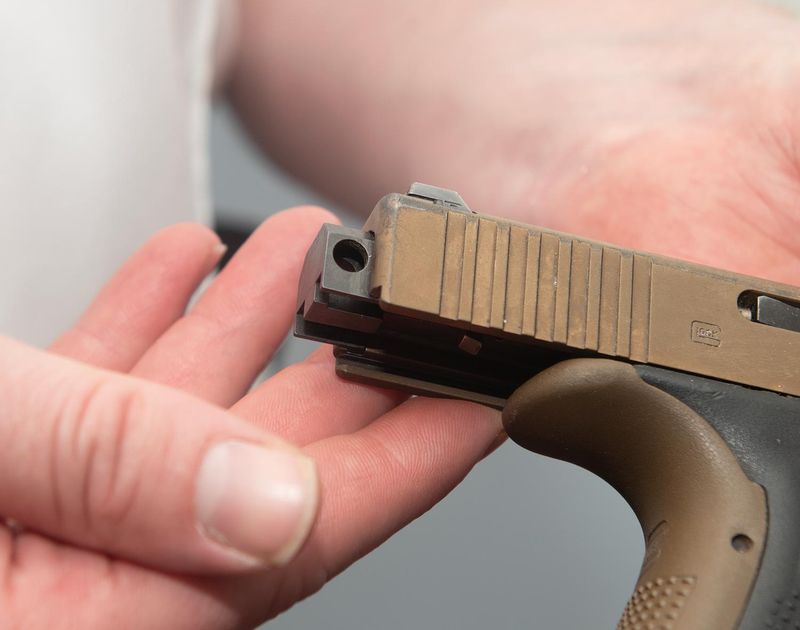
The 17-year-old was carrying a Glock 26 9mm handgun when he was arrested near East Market Street and Devonshire Road in the Ellet neighborhood.
On June 8 – the same day and about the same time as Ohlinger’s house was hit – bullets also struck two teens inside a different East Akron home.
A 14-year-old male and an 18-year-old female were hit by bullets fired at a home in the 900 block of McKinley Avenue just before 1 a.m.
A preliminary investigation determined that both teens were inside the home during a drive-by. There have been no arrests, and it’s not clear whether the McKinley shooting was connected to the Ohlinger shooting, which happened about a mile away on Weeks Street.
The following day, on June 9, two men were shot inside a home in a drive by targeting the 1100 block of Lindsay Avenue, also in East Akron.
That shooting, which happened about 11:15 p.m., injured two men, ages 26 and 26.
It’s too soon to say whether any of those shootings may be connected, said Lt. Murphy.
How drive-by shootings differ today
These types of shootings into Akron homes are nothing new. Beacon Journal archives reveal houses have been shot up over at least the past 15 years, often in spates.
In July 2022, 26-year-old Chelsey Jones was shot and killed while sitting on her couch in her Summit Lake home when a single stray bullet came through her front window. No one was ever arrested.
What’s changed, however, are the kinds of guns used and the technology Akron police now have to investigate.
Akron police ballistics tracking has shown the shift from low-capacity handguns in 2016 to high-capacity semi-automatic pistols and rifles by 2026.
Some also utilize “switches” or “auto sears,” cheap inserts that can convert semi-automatic firearms into illegal machine guns, capable of continuously fire rounds as long as the trigger is pulled and the gun has ammunition.
A pistol with a switch can fire at rates of up to 1,200 rounds per minute, according to the federal Bureau of Alcohol, Tobacco, Firearms and Explosives (ATF).
Authorities recovered and traced more than 11,000 of these switches between 2019 and 2023, a 784% increase, according to the nonprofit group Everytown for Gun Safety.
That means the number of bullets fired now in Akron drive-by shootings is often far greater now than a decade or two ago.
Tracing bullets to guns and their owners
In 2014, Akron police started working with the Ohio Attorney General’s office to target violent crimes involving guns and formed the Gun Violence Reduction Team, which is made up of a sergeant and four officers.
Its mission is to get illegal guns off the streets and target those who act with disregard for public safety.
The team relies heavily on ballistics testing, test-firing hundreds of confiscated weapons annually and entering the casings into the National Integrated Ballistic Information Network (NIBIN) to trace guns linked to multiple crime scenes across state lines.
But now police can often trace guns used in shootings even if they haven’t yet recovered a weapon.
In September 2025, that effort received a huge boost when the ATF announced that a new Crime Gun Intelligence Center was coming to Akron to help local, state and federal authorities respond to gun crimes.
The hub operates on city of Akron property under the leadership the ATF and aims quickly process ballistic evidence to prevent serial shootings.
Before than, it often took local detectives one to two weeks to submit bullet casing, enter them into a database and find out if they had a match.
Now, with everyone operating under one roof, results are often back in one to three days.
When someone pulls trigger, the gun they’re using acts as a sort of mechanical press: The firing pin, breech face, and ejector leave intense microscopic scratches and indentations on the soft metal of the spent cartridge casing, according to the ATF.
The Crime Gun Intelligence Center collects that information and uploads it to the National Integrated Ballistic Information Network, or NIBIN. It’s an automated 3D imaging system that scans shell casings recovered from crime scenes or confiscated firearms. It matches the unique “fingerprints” left by a gun’s firing pin to any other shootings from the same gun.
The Crime Gun Intelligence Center also uses eTrace, a digital system that tracks a seized gun’s history from its manufacturer or importer to its first retail buyer. Analysis of this information helps authorities identify gun trafficking rings and straw purchasers, people who legally buy guns for people who either can’t legally buy a gun themselves.
“These are key pieces of evidence that help us connect the dots to a specific gun or shooting,” Lt. Murphy said.
How residents can help after a shooting
Murphy said police try to find all of the pieces when they’re at a shooting site, but it’s often dark and it’s easy to miss bullet holes and fragments. He urged Akron residents to call police whenever they find a spent shell casing, bullet slug or bullet hole.
“It helps us recreate the crime scene (and) the trajectory of the bullets,” he said.
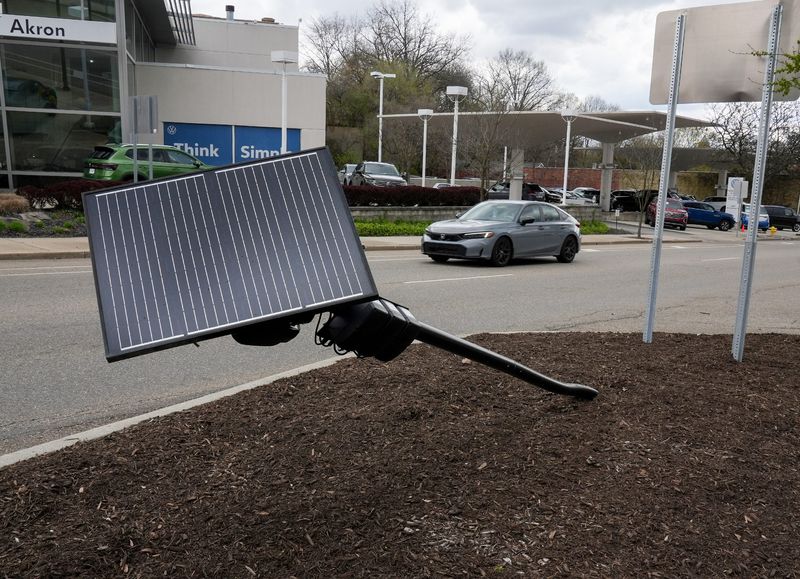
The other way residents can help is sharing their security camera footage, he said. In recent years, police have started using high-quality home security cameras alongside the 145 Flock Safety automatic license plate readers/cameras now watching over every ward in Akron.
Murphy said police always seek Ring or other security footage during a canvas of the neighborhood following a shooting hoping to catch a glimpse of a vehicle involved..
If a camera can provide the made and model of a vehicle, police can then input theat information into the Flock system, which can track the vehicle’s route through the city streets and provide its license plate number.
“There are amazing tools that help us advance investigations,” Murphy said.
‘Bullets don’t have eyes’
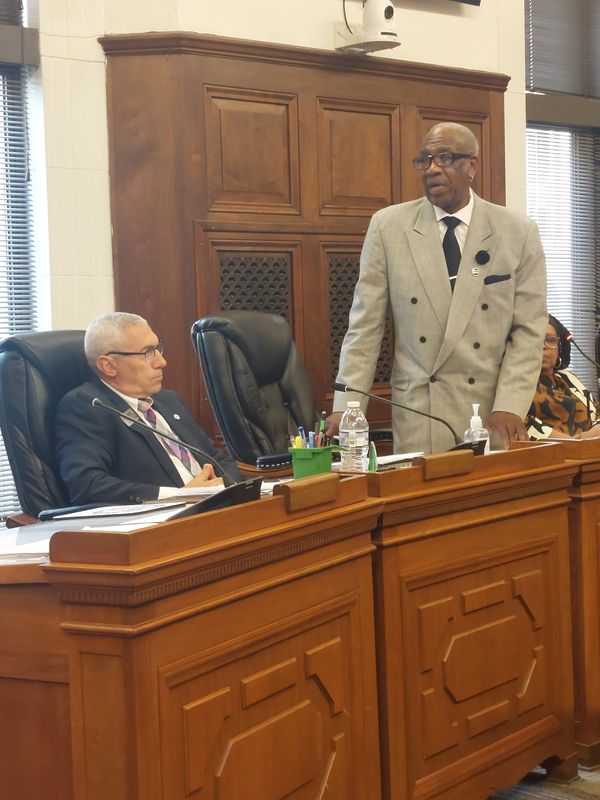
Akron City Councilman Johnnie Hannah was out walking Weeks Street earlier this month after residents called him complaining about the gunfire.
“When you start shooting from your car, bullets don’t have eyes,” Hanna said, expressing frustration over the gun violence rattling his ward and other parts of the city.
The night before the Weeks Street drive-by shooting, a man was shot and critically injured in Highland Square even though two police officers were within 50 yards of the shooting.
“What are we supposed to do?” he asked.
Even with police on the scene, he said, “all hell broke out.”
Stricter gun laws would help, Hannah said, but he doubts those laws would pass. He also laments that Akron doesn’t focus more on teenagers who dropped out of school.
“These shootings in our neighborhoods are going to increase,” he warned.
Hannah said he understands the danger. A few years ago, someone tried to burn his home down after he attempted to get a troubled bar closed. Hannah escaped and has since moved, he said, but no one was ever charged in that case.
Some of the drive-by shootings could be over similar revenge, he said. But it’s more likely over money owed or intimidation.
“When you go out and talk to residents, they understand that it’s a bigger problem than ward council people can solve,” Hanna said. “They understand there are guns in the neighborhood.”
Could bedside intervention curb retaliatory violence in Akron?
Akron officials recently announced a new program that’s been in the works several years aimed at both curbing retaliatory gun violence and helping victims of gun violence that already happened.
By intervening at the hospital bedside after a gunshot wound, the program aims to provide immediate trauma-informed care and prevent future retaliatory violence. It will also help victims of gun violence navigate the aftermath.
The Partnership for Intervention, Violence Outreach and Transformation, or PIVOT, is led by the city, Cleveland Clinic Akron General, Summa Health and Minority Behavioral Health Group.
Angelo Anderson, a clinical therapist with Minority Behavioral Health, said fear and uncertainty often grip those touched by gun violence and and they need someone to shepherd them through their pain.
Akron Mayor Shammas Malik said this kind of violence not only impacts the individuals and families involved, but entire communities.
“PIVOT represents our commitment to respond to violence not only through emergency response, but through intervention, healing, and opportunity,” Malik said.
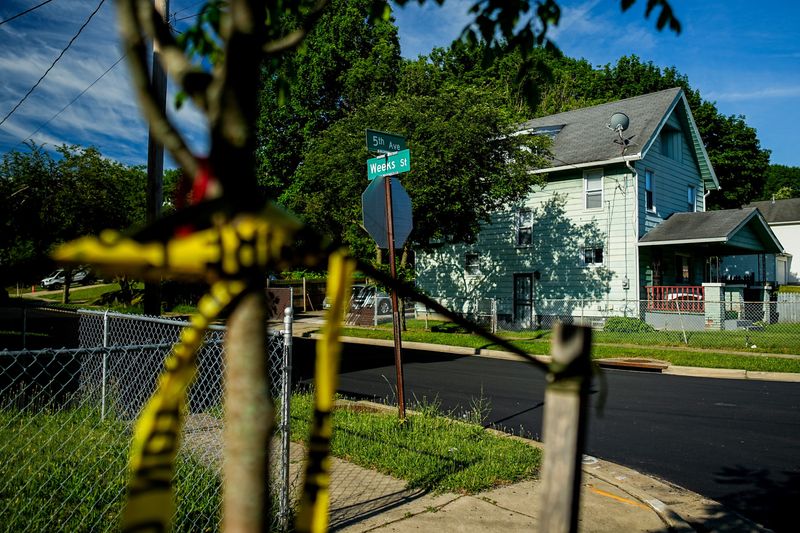
Bullets fly on Akron’s Weeks Street
Weeks Street must have been a great place to live when Akron’s tire factories were humming in the 1950s and the middle class seemed nearly indestructible.
Goodyear’s original production factory was less than a mile from Weeks Street, providing good wages and health care for thousands.
Now Weeks Street is a mix of older houses, vacant lots and and some newer homes that look like they’d fit better in a modern subdivision.
“I’m just wondering why there’s so much violence. I don’t want bullets flying through my house,” Ohlinger said. “I just want to live here in peace.”
Ohlinger blames the gunfire on neighbors who have been repeatedly targeted in one of the newer houses on the street.
Police records show shots were fired into the neighbor’s home in July 2025.
The previous year, in April 2025, Akron police recovered eight 9 mm shell casings from near the house. The same month, a man on the street was shot in the neck and at least 11 shots hit the neighbor’s house.
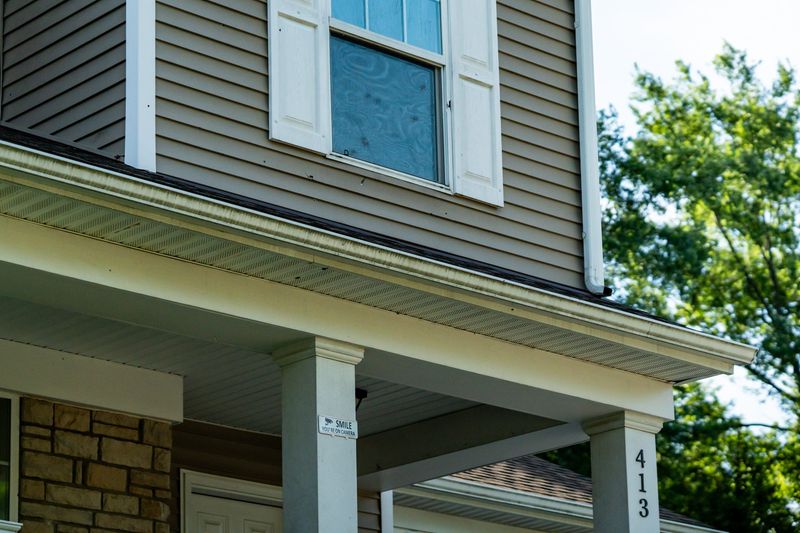
This week, a Beacon Journal photographer counted 15 bullet holes in the house neighbor’s say is the source of their problems.
Ohlinger, who has lived in his home since October 2007, said he watched the new house with the trouble being built.
“Normally, I don’t get into anyone’s business,” Ohlinger said. “But when you strike my home with bullets that business is my business.”
Ohlinger said he was rattled by the shooting this month, but even more rattled by the “rapid gunfire” bullets screamed across his side of the street.
“But here’s the thing: I’m not going to live my life in fear,” Ohlinger said. “I worked hard to buy this home. I’m not going to let these thugs chase me out.”
Beacon Journal reporter Amanda Garrett can be reached at agarrett@thebeaconjournal.com
This article originally appeared on Akron Beacon Journal: Why are Akron homes getting shot up in drive-by shootings?
Reporting by Amanda Garrett, Akron Beacon Journal / Akron Beacon Journal
USA TODAY Network via Reuters Connect


By Amanda Garrett, Akron Beacon Journal | USA TODAY Network