CANTON ‒ The DeVille mastodon has been catching gazes of curious visitors at the William McKinley Presidential Library & Museum for decades.

The skeletal remains were discovered July 22, 1970 — exactly, 55 years ago — by prominent real estate developer Roger DeVille and his crew, under four feet of muck on swampy land in Plain Township.
He later donated the remains, which later ended up in the museum.
“I remember it like it was yesterday,” DeVille, who still lives in the Canton area, said July 17.
Here’s the story behind the discovery and what this mastodon means to Stark County:
The DeVille mastodon — nicknamed Bondo Betty — is 87% real bones
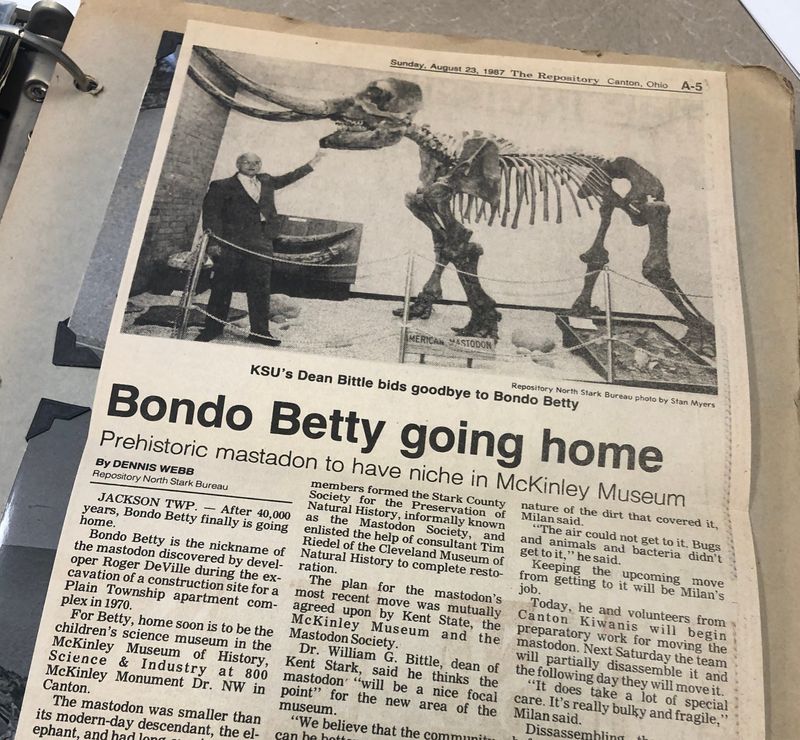
The mastodon story has made several headlines since 1970 — including, in 1987, when the skeletal remains left the Kent State University Stark campus for the McKinley Museum. It has been on display there since 1988.
DeVille retold his discovery in 2015 to the Canton Repository. He has frequently called the Ice Age find his most interesting project.
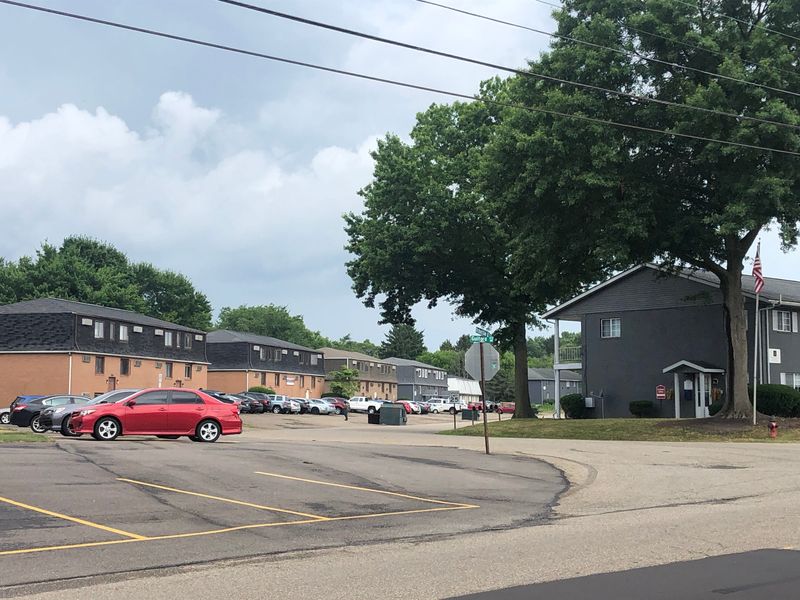
He said his company was starting to build apartments on Orchard Dale Drive NW near Guilford Avenue NW, near 38th Street NW, when a worker with a backhoe hit obstacles. DeVille said the project foreman thought the objects were large tree roots or trunks.
He said the obstacles were mastodon bones.
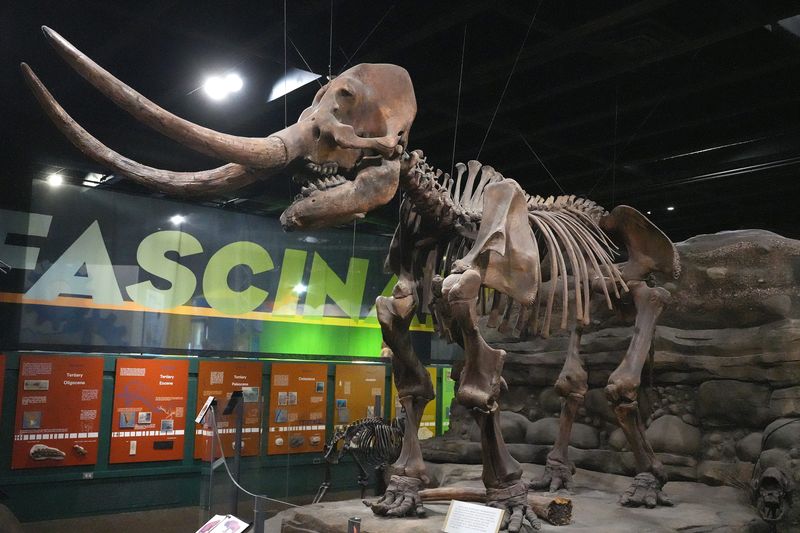
The area was partially secured and archaeologists were brought in to unearth the bones and remove the remains. The skeleton — formally known as the DeVille mastodon — is from a female mastodon and 87% of the bones making up the display are real.
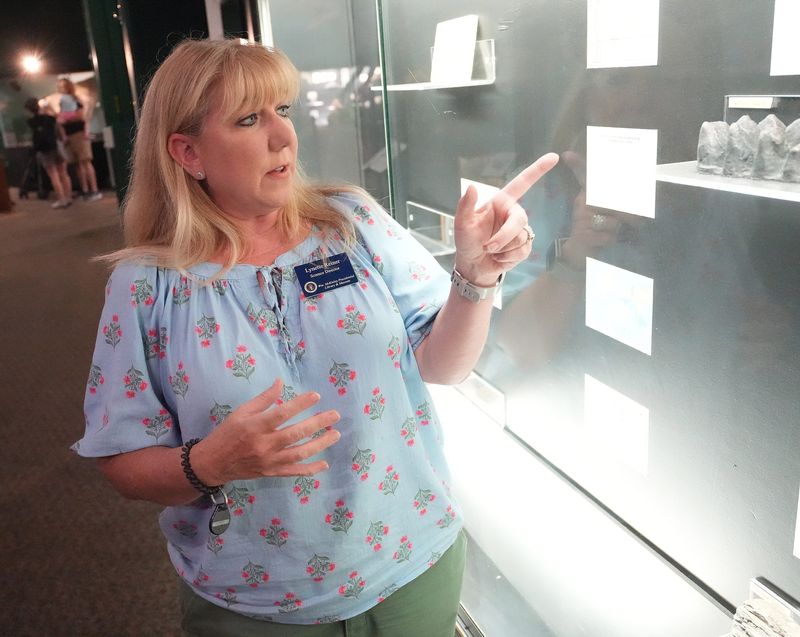
“We think it was a bog area from the Ice Age and she would have fallen in,” said Lynette Reiner, science director at the museum. “It would have been acidic, and it would’ve acted like quicksand.”
Reiner said the Deville mastodon skeleton — nicknamed Bondo Betty due to the adhesive used for assembly — is the “most complete in Ohio” and none of her bones are fossilized. They were well-preserved.
The skeletal remains of between 90 and 150 mastodons have been found in Ohio, according to different accounts, including the Ohio Historical Society. The famous Burning Tree mastodon found in 1989 in Licking County was 90% to 95% complete. However, it was sold in 1993 and resides in a Japanese museum.
Reiner said thieves, who took some bones from the archeological site in 1970, prevented a more complete picture of the DeVille mastodon.
“We realized some of the bones were stolen because we put it back together,” DeVille recently said. “Some of the bones stolen were the ivory teeth.”
Still Bondo Betty is an impressive prehistoric find.
“They always talk about the (Burning Tree mastodon). But ours is better and ours is not fossilized. It’s actual bone,” Reiner said. “I love her.”
McKinley Museum has numerous prehistoric artifacts on display
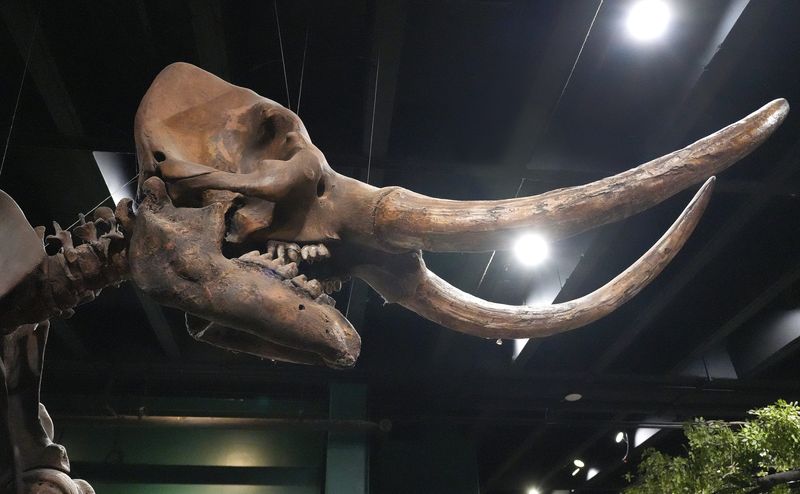
Now extinct, mastodons were cousins to mammoths and elephants from the last Ice Age which ended approximately 11,700 years They were smaller than mammoths with straighter tusks.
Reiner said mastodons were known to roam the Great Lakes area and likely died from climate change and Paleo-Indian hunters who migrated from Asia to the Americas.
Reiner said mastodons are “not dinosaurs.”
At just over nine feet tall, Bondo Betty towers over Discover World inside the McKinley museum. She is one of numerous prehistoric attractions for the National History Island area.
The museum also has real Tyrannosaurus and Allosaurus claws, parts of a giant sloth and the fossilized head of the armored fish called Dunkleosteus.
In fact, Reiner said all fossils — including one of Bondo Betty’s tusks — or artifacts in the glass displays are authentic. None of them are fake or replicas.
“Everything in glass is all real,” she said.
Bondo Betty weighs about 1,500 pounds and she was assembled with pins, iron rods and Bondo glue. The tusks on the display are replicas. The real one is behind glass.
Experts estimate the mastodon was a mature female who died at least 13,000 years ago.
Initial restoration efforts were done at Walsh College — now, Walsh University — until funds ran out in early 1976.
“The people at Walsh were very interested in anthropology and ancient things like that and they volunteered to come out and excavate the bones by hand,” DeVille said. “I had people calling me from across the country offering me $1 million for the bones.”
Kent Stark took guardianship of the mastodon bones for several years, while the Mastodon Society and the late Tim Riedel from the Cleveland Museum of Natural History finished restoration. DeVille said it later became apparent that the McKinley Museum was “the proper spot for it.”
Bondo Betty was moved there between 1987 and 1988.
“She is not the oldest, here, but she is quite honestly, the most important one. She’s an Ice Age mammal, you know, and she was right here in our hometown,” Reiner said.
Reiner added: “I truly believe there are more Ice Age mammals that we have not found between here and Nobles Pond and Jackson Bog. I’m pretty sure we’ve missed some.”
Reach Benjamin Duer at 330-580-8567 or ben.duer@cantonrep.com. On X (formerly Twitter): @bduerREP
This article originally appeared on The Repository: The story behind ‘Bondo Betty,’ the mastodon unearthed in Stark County 55 years ago today
Reporting by Benjamin Duer, Canton Repository / The Repository
USA TODAY Network via Reuters Connect