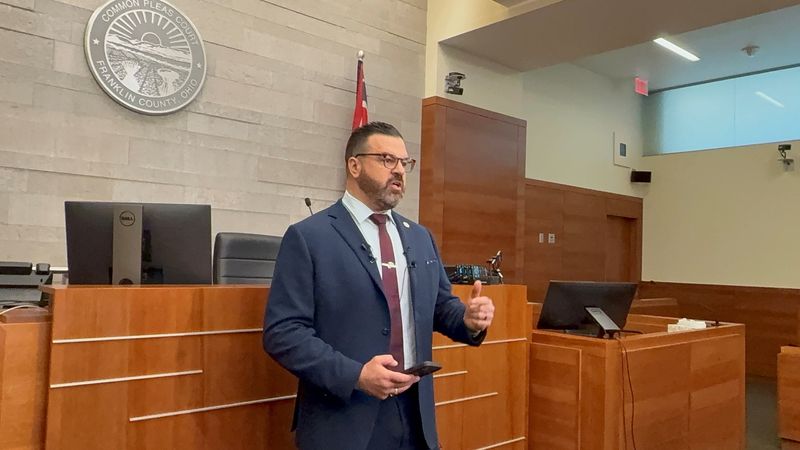
Sean L. Walton, Jr. is President-Elect of NAACP Columbus Branch 3177 and a partner at Walton + Brown LLP.
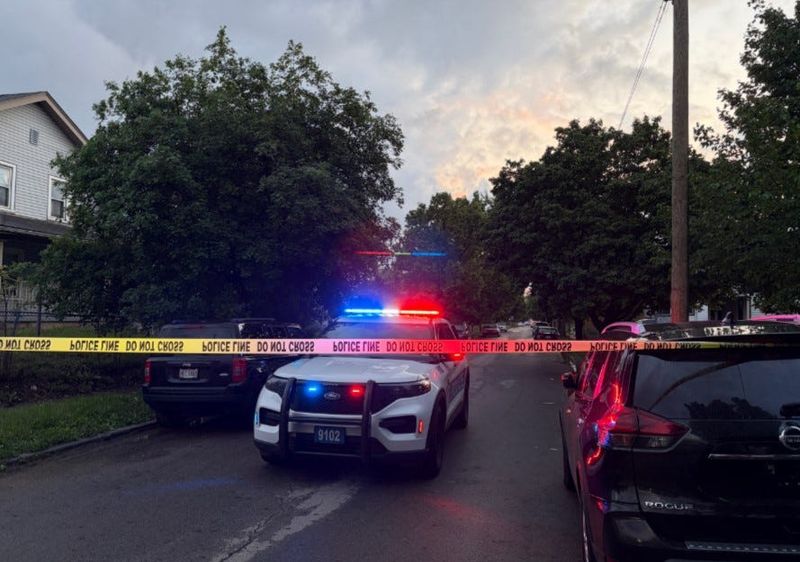
A Columbus police officer was shot in the line of duty April 29. He survived. We are grateful.

That is a human fact. It deserves to be treated as one.
What it does not deserve is to be used as a weapon in an ongoing narrative war.
Within hours of the shooting, the Fraternal Order of Police Capital City Lodge #9 issued a statement suggesting that the public unfairly second-guesses officers, that criticism of deadly force is inconsistent, and that accountability is an obstacle to safety.
That framing is both inaccurate and dangerous. It does not protect officers. It isolates them. It does not build community trust. It dismantles it.
Genuine advocacy for officers is key
I know something about this.
In my legal practice, I have represented dozens of law enforcement officers across the state of Ohio, not in use-of-force cases, but in discrimination cases. I have consulted privately with dozens more.
I have had the kind of candid, honest conversations about police-police relations that rarely happen in public. Officers treated unjustly by their own departments.
Officers whose labor union failed to protect them when it mattered. Officers who needed someone in their corner. I was in their corner.
In the case of Columbus police officer Karl Shaw against the Columbus Division of Police, the result was not just a settlement. It was an amendment to a division directive, reclassifying discrimination, retaliation, and hostile work environment as critical misconduct subject to suspension or termination. That policy has protected every officer who came after. It has done so for six years. That is what genuine advocacy for officers looks like.
For several years, I have served on the Ethics and Equity Advisory Council for Axon Enterprise, one of the largest public safety technology companies in the world.
The council has 15 members globally. Ten of us are based in the United States. I consult on product features and best practices designed to reduce harm on all sides of a police encounter, work that shapes how encounters play out across more than 17,000 state and local public safety agencies in this country.
I do that work because I believe policing can be made safer. Not just for communities. For officers, too.
Over the past year, I lobbied on Capitol Hill in support of the Law-Enforcement Innovate to De-Escalate Act, bipartisan legislation which the House passed in February 2026.
The bill removes barriers to next-generation conducted electrical weapons, giving officers a more effective, less lethal option in dangerous situations. I sat in rooms alongside some of the toughest sheriffs in this country, on the same side of the table, working toward the same outcome.
The National FOP supported the same legislation. That is what law enforcement and the community, together, can accomplish.
Accountability is not the enemy
The silent majority of officers in this city wants what the community wants.
They want to close the distance between the badge and the people they serve. They are not served by statements that treat accountability as the enemy.
They are not served by leadership that converts one officer’s pain into pre-authorization for the next use of deadly force. They are served by the kind of relationships and tools and policies that make every encounter safer for everyone involved.The April 29 shooting is one situation, with one set of facts, that has not yet been fully established.
Thousands of police and community interactions happen in Columbus every single day. Most of them are uneventful. A small number require split-second decisions on both sides. Nobody serious is debating whether policing is dangerous. It is.
What we are debating is whether our collective response to that danger brings us closer together or drives us further apart.
Officers in this country and in this city already carry a license to kill. It is codified in law. It is upheld by courts. Nobody is taking it away.
What we owe each other, as a city, as a community, is a commitment to something more: a license to heal.
That is the conversation I am committed to leading as president-elect of NAACP Columbus Branch 3177. It is a conversation that includes law enforcement, not as an adversary, but as a partner.
The officers who want to build with this community know who they are. This column is for them.When officers stand with the people, the people have their 6.
Sean L. Walton, Jr. is president-elect of NAACP Columbus Branch 3177 and a partner at Walton + Brown LLP, where he practices civil rights, personal injury, and employment discrimination law.
This article originally appeared on The Columbus Dispatch: NAACP pres.-elect: FOP should build, not dismantle trust. Shooting comments dangerous
Reporting by Sean L. Walton, Jr., Guest Columnist / The Columbus Dispatch
USA TODAY Network via Reuters Connect