Every city gets only a handful of chances to redesign its front door.

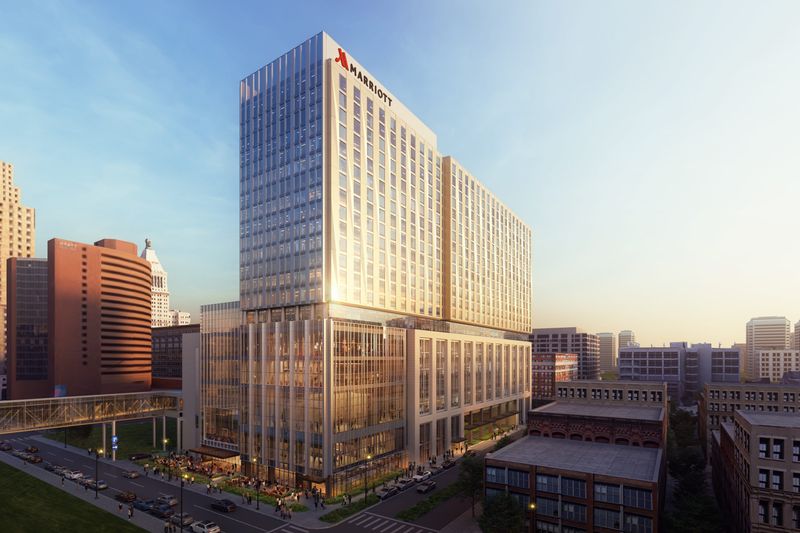
Cincinnati is doing just that with a glass-clad convention hotel that, by the end of 2028, will reshape how hundreds of thousands of visitors enter and experience the Queen City.
The 21-story tower’s price tag alone should signal its importance: just over half a billion dollars, one of the most expensive buildings in the city’s history. More than half of the $540 million cost is coming from public subsidy.
But there’s another reason it’s such a big deal: The firm behind it is one of the most influential hotel developers in U.S. history.
Created by a legendary architect-developer from Atlanta, the 69-year-old firm Portman Holdings is known for pioneering the modern hotel atrium and reshaping downtown development with landmark projects like the Hyatt Regency Atlanta and the New York Marriott Marquis. One of Portman’s seminal structures, a soaring 1,663-room convention hotel at Peachtree Center, has appeared over and over again in Hollywood, from Marvel films to the “Hunger Games.”
Portman’s interest in Cincinnati extends beyond building a new hotel at Downtown’s western edge. It’s about everything the city has done to get to this point. CEO and chairman Ambrish Baisiwala praised the city’s breadth of office-to-condo conversions and decades of work reviving Over-the-Rhine.
“A huge positive here is that both the public sector and the local corporate community have been very proactive with redevelopment,” he said. “Many cities are creating the space and conditions for other developers to come and build, but Cincinnati is very unusual because you are doing projects the private sector finds hard to do.”
The hotel is over a decade in the making
The decision to bring in Portman traces back more than a decade, when Cincinnati began confronting an uncomfortable truth: Its aging Millennium Hotel was holding back the city’s convention business.
Leaders at Cincinnati Center City Development Corp., or 3CDC, considered launching a nationwide search for a development partner in 2018. But the pandemic, followed by a lengthy legal battle involving the Millennium, forced them to wait.
By 2022, the effort was back on track. For Baisiwala, two major moves pushed Portman to get involved.
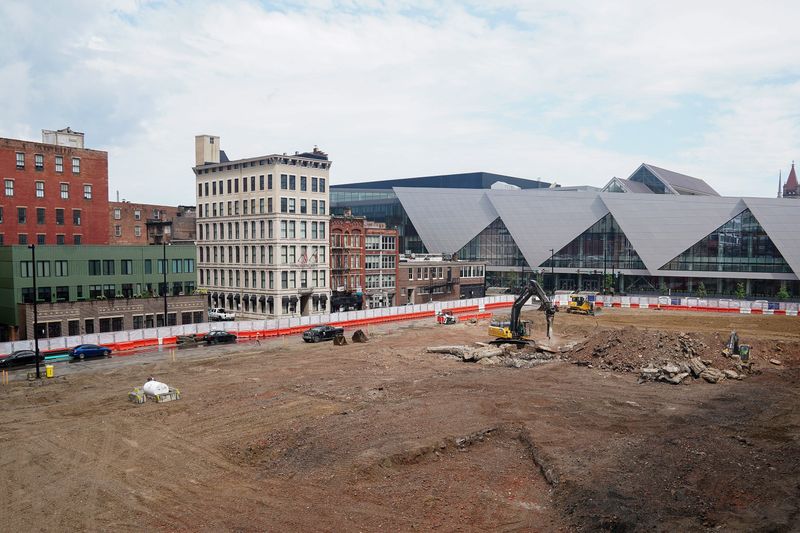
The city had already committed to demolishing the Millennium and invested hundreds of millions of dollars into a renovation of the convention center.
“Not a lot of cities would think holistically like that and completely lean into all this work before bringing somebody like us in,” Baisiwala said. “Demolition signals serious intent.”
What sold Cincinnati on Portman’s vision
Portman’s track record, combined with its plan to own the hotel rather than just build and sell it, convinced 3CDC to get on board. (The company is not related to Greater Cincinnati’s Portman family, which includes former U.S. Senator Rob Portman.)
The company also took an honest, open-book approach to financing such a large-scale development, according to 3CDC’s development lead Katie Westbrook. As the city’s first high-rise, full-service hotel built in decades, finding an experienced partner was crucial.
More than that, though, Portman had a knack for pairing hotel projects with larger efforts to revitalize urban districts. In 2022, the firm completed the Hyatt Regency Salt Lake City, which informed and bolstered the upcoming reconstruction of the city’s Salt Palace Convention Center.
“Wherever we go, we tend to look at not just what we’re creating but what’s going on around us,” Baisiwala said. “We think about what we can do to make it a better destination through our development.”
That approach is already at work in downtown Cincinnati. Last summer, Portman announced its acquisition of The Westin Cincinnati near Fountain Square. This purchase marked the firm’s first hotel acquisition ever, and plans call for a full renovation of the rooms, restaurant spaces and public areas, including the atrium. Baisiwala also wants to find a way to energize the street-facing retail.
Portman’s big-picture planning mirrors Cincinnati’s long-term strategy to reimagine the convention district. And the Marriott is the final piece.
While it’s designed to add hotel rooms and attract conventions, it serves a larger purpose.
In two years, it will shape many visitors’ first impressions of Cincinnati. And for those of us who call the city home, it will redefine a familiar skyline.
This article originally appeared on Cincinnati Enquirer: Meet the influential hotel developer adding to Cincinnati’s skyline
Reporting by Sydney Franklin, Cincinnati Enquirer / Cincinnati Enquirer
USA TODAY Network via Reuters Connect
By Sydney Franklin, Cincinnati Enquirer | USA TODAY Network