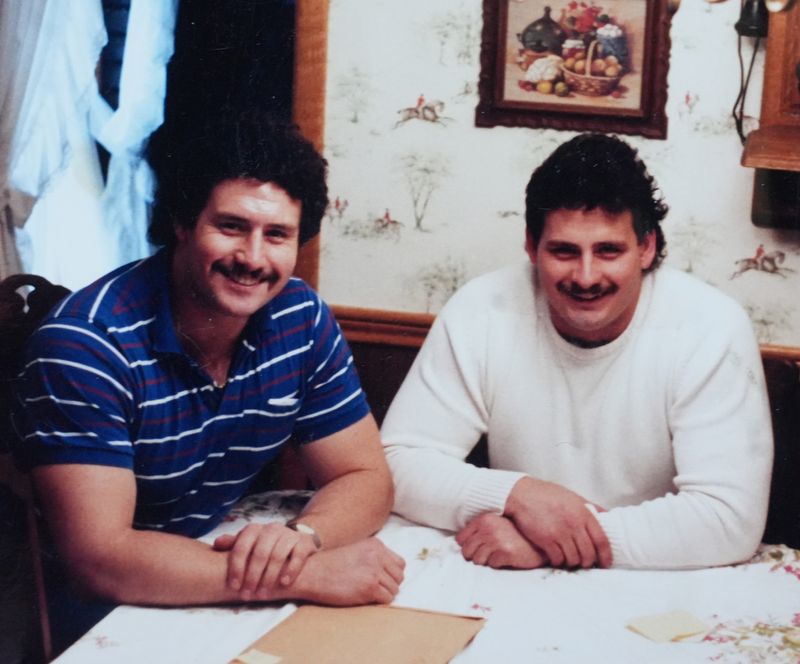
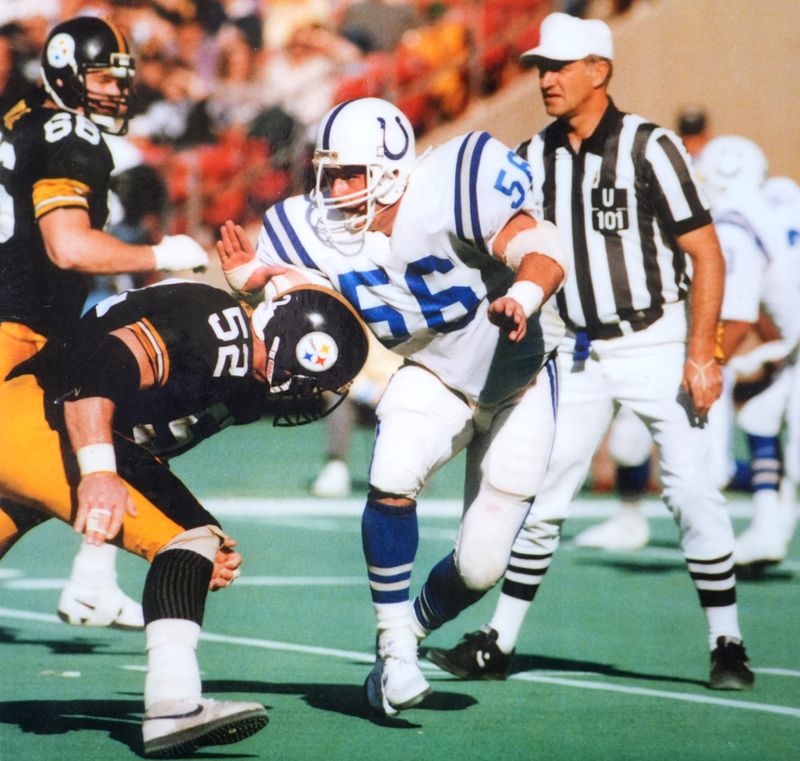
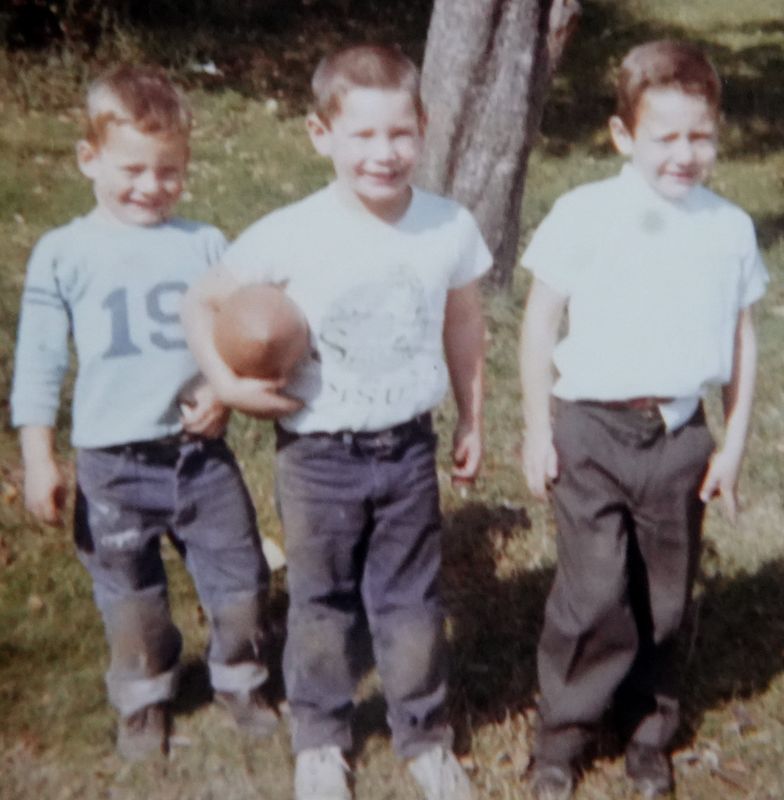
CANTON − In football, brothers John and Ed Grimsley sprinted a similar path. Both starred at McKinley High School, excelled in college, and made it all the way to the NFL as linebackers.
In death, they share a different bond.

Last month — a year after Ed Grimsley died at age 61 — a physician at Boston University completed her post-mortem exam of his brain. She confirmed what his family had long suspected.
That he’d suffered for years from chronic traumatic encephalopathy. It’s commonly known as CTE, a degenerative brain disease caused by repeated head trauma. Almost certainly from the countless blows to his head he took while playing football as a child, teen and adult.
Just like his brother, John, who died 17 years earlier.
“I think he knew it … all the signs were there,” said Ed Grimsley’s daughter, Brandi Kolsky, who lives near Columbus.
Prior to Ed’s March 8, 2025 death, she began to make arrangements to send her dad’s brain to Boston University’s CTE Center for analysis.
It’s a premier hub for research into the disease. And the center’s UNITE Brain Bank stores more than 1,900 specimens, making it the world’s largest repository for head trauma research.
Because CTE is caused by accumulated blows to the head, it’s most prevalent in athletes who played contact sports, such as football and boxing. The disease can be diagnosed only after death.
Those with CTE typically endure a variety of symptoms, such as memory loss, confusion, impaired judgment, lack of impulse control, aggression, depression and even suicidal tendencies.
Ed’s behavior checked most boxes.
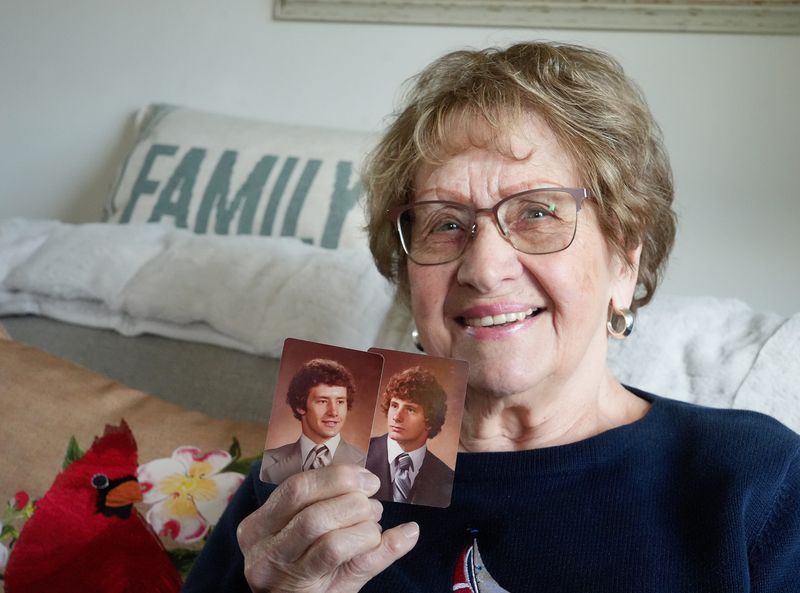
“I knew it was worse than John’s,” said the Grimsley brothers’ 89-year-old mom, Glenda Grimsley.
Center Director Dr. Ann McKee led the exam of Ed’s brain. A neurologist and neuropathologist, and pioneer in CTE research, she’s diagnosed hundreds of cases of CTE. The analysis takes at least three months, but often much longer, due to a large backlog of cases.
McKee is the same physician who’d examined John’s brain after he died in a firearms accident in 2008. At the time, John’s was her first CTE finding in a football player. He is donor No. 1 in the brain bank.
To this day, the image of John’s brain remains embedded in her memory.
“I could pick his out of a lineup,” McKee said.
Ed’s CTE, she discovered, was far more advanced than his brother’s.
Ed’s disease had progressed to final, stage four
“John’s (brain) looked unremarkable on external appearance,” McKee recalled. “Inside, though … was the epiphany moment.”
CTE progresses through four stages. Stage four is most severe. In 2008, the fledgling science hadn’t deciphered the particulars of each stage. In hindsight, McKee said, John was likely stage two.
Ed’s CTE, McKee said, was in stage four.
“His brain already showed signs of shrinkage,” she explained, adding that deep center changes also were visible, even without a microscope. “I could pick them out with the naked eye.”
Dr. Bennet Omalu is credited with discovering CTE. He also was the inspiration for the 2015 movie “Concussion.” A forensic pathologist and neuropathologist, Omalu first diagnosed CTE in 2002 during an autopsy of former Pittsburgh Steelers center Mike Webster.
McKee’s years of research since, has established that CTE can be diagnosed by an abnormal accumulation of tau protein around small blood vessels in the brain. When stained and analyzed with a microscope, the protein appears as dark, dense and irregular spots.
Aided by ongoing studies in Boston and elsewhere, the science continues to advance, McKee said.
“We have supplied tissue all over the world,” she said.
Among the answers they seek: Why will some people develop CTE, while others won’t? Which biomarkers could enable diagnosis in living patients? How can the disease best be treated?
“I think we’re getting closer and closer to diagnosing before death,” McKee said.
The Grimsley brothers, she said, are among only a few sets of siblings she’s examined. Some research, she said, is focused on genetic factors which can predispose some to developing CTE.
“It stands to reason (Ed) shares some genes with his brother, so it’s possible they had some heightened susceptibility,” she said.
Brief NFL career, long battle with alcohol abuse
Glenda Grimsley raised three daughters and five sons — Ed probably loved football more than any of the boys.
“He’d do anything and everything to get better,” she said.
During his senior year at the University of Akron in 1985, Ed told the Akron Beacon Journal he was a lean and mean 6-foot-1, 228 pounds. He was bench pressing 405 pounds and running a 4.68, 40-yard dash. He said he wanted his last season to be his best.
“Either someone’s gonna get me or I’m gonna get them,” he said. “Basically, I like to hit ’em as hard as I can every time.”
However, Ed wasn’t drafted out of college.
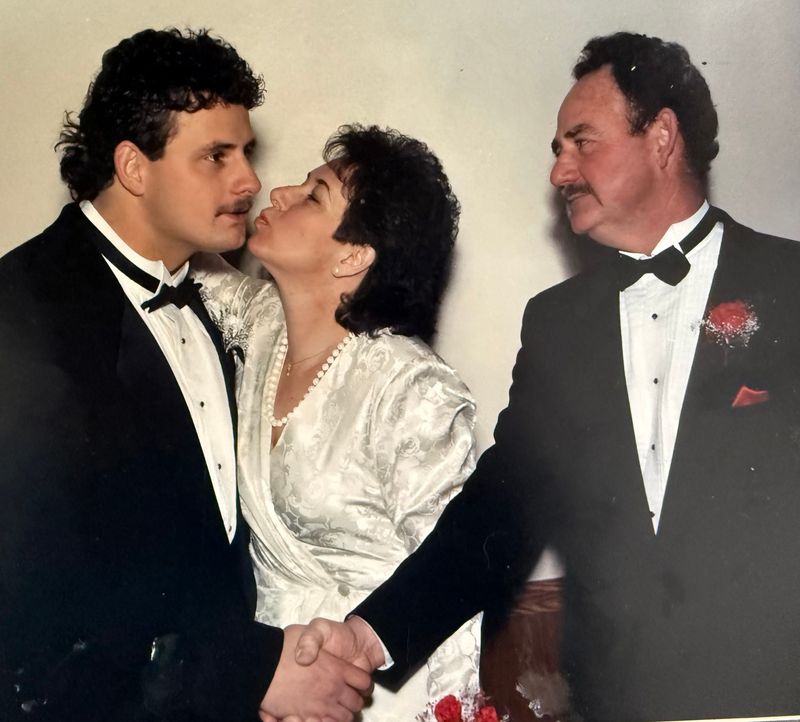
In early 1987, he married Gerri Venuto. They’d have two children, Brandi and Edward, but later separated. A few months after the wedding, Ed went to summer camp with the Indianapolis Colts.
He didn’t make the cut.
However, he got a second chance. A 24-day players’ strike created openings on the roster. Ed impressed the coaching staff. He was among a handful of fill-ins the team kept after the strike ended.
He’d played in five games, but a knee injury sidelined him.
It ultimately ended his career.
“He was reckless on the field,” his mom said.
Generations of Grimsley kin and offspring are practically local gridiron royalty. Ed’s uncle, Ronald “Ike” Grimsley played at Michigan State and was drafted by the pros. His dad, Willard “Whiz” Grimsley, who died in 2017, was a standout McKinley player in the early 1950s.
Willard Grimsley had taught his boys to play hard.
Along the way, like many hard-nosed players, Ed got popped in the head many times — and likely suffered concussions, too.
Ed shared war stories with Brandi and her husband, Cody Kolsky.
“I remember him telling us about a time he got knocked out.” Brandi said. “After he went back into the game … he had to look at his jersey to remember which team he played for.”
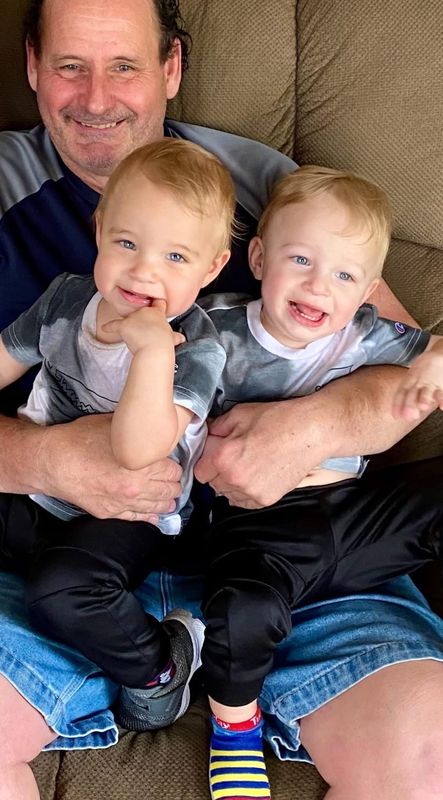
After football, Ed worked with Ironworkers Local 550. He loved the outdoors, the Catholic church and Florida beaches. He adored his grandsons, Elias and Aksel Kolsky — he called the latter “Little Grims.”
“My dad had a lot of other problems, too,” Brandi said.
His struggle with alcoholism was no secret.
Over the years, Ed was arrested numerous times for driving under the influence — he even spent time in prison.
Brandi said she first noticed symptoms of CTE 15 years ago. It got worse as the years passed. Radical mood swings. An eroding memory. He’d ask a question twice without realizing it.
“Really, everything about CTE, my dad had it,” she said.
Near the end of his life, Ed spent a lot of time with his mom.
“He would not disclose he was dying,” Glenda Grimsley said.
But she knew.
“I think, in a way, he came back home to his mom,” she said.
Concussions aren’t what causes CTE
Nearly 350 former NFL players have been diagnosed with CTE.
The roll call includes many of the game’s greats and Pro Football Hall of Famers, such as Ken Stabler, Junior Seau, Frank Gifford, Steve McMichael, Nick Buoniconti and Ollie Matson.
Two years ago, a survey of nearly 2,000 living former professional football players revealed that 1 in 3 believed they have CTE, based on their health problems and symptoms.
A decade ago, the NFL settled a series of concussion-related lawsuits in federal court. The league has since paid $1.2 billion to nearly 1,700 former players with CTE, dementia and other brain diseases.
The NFL has donated hundreds of millions of dollars to CTE initiatives, developing safer equipment and changed some rules to make the pro game safer. It also promotes flag football for youth.
That’s all good, McKee said.
Still, she added, much more work needs done.
Too much focus, she said, remains on concussions.
But the cause of CTE, she said, is not exclusively concussions. Research shows it’s caused by repeated blows to the head. The more blows to the head, of varying severity, the greater the chance of developing the disease — it’s possible to get CTE without ever having a concussion.
McKee said CTE is regularly diagnosed in athletes who never played professionally. The disease, she said, has been found in those who played only youth, high school and/or college football.
A 2019 study by Boston University and the U.S. Department of Veterans Affairs found the more years that someone plays tackle football, the more likely they are to develop CTE.
Experts say other sports — such as soccer, hockey, the martial arts and lacrosse — can also be a risk.
Three years ago, a Boston CTE Center study found that more than 40% of youth, high school and college contact-sport athletes who died before age 30 were suffering from the disease.
Last year, 27-year-old Shane Tamura killed four people and himself in a shooting at a Manhattan office building, which houses NFL headquartes.
Tamura, who’d played football only in high school in California, had asked that his brain be studied for CTE. The New York City medical examiner found evidence of early stage CTE.
Locally, Troy Ellis, an All-Ohio football player at Massillon Washington High, is a non-pro example.
He killed himself five years ago at age 34. He’d never played college football. But months after his death, McKee found evidence he was in stage one, or perhaps early stage two of CTE.
“Up to the age of 14, you should not be tackling, blocking or doing headers in soccer,” Chris Nowinski, co-founder and chief executive of the Concussion and CTE Foundation told the Canton Repository in 2022.
Football was in their blood and genes
Football may have taken as much as it gave John and Ed Grimsley.
But Glenda Grimsley said she’d never prevent her children from playing a sport they loved. She said good coaching, proper tackling technique and sound equipment go a long way toward safety.
“You have to let them be them … support them and pray a lot,” she said.
John Grimsley played collegiately at the University of Kentucky. He was drafted in the sixth round by the Houston Oilers. He played 10 years in the NFL, from 1984 through 1993, with the Oilers and Miami Dolphins.
His wife, Virginia, had donated his brain to the CTE Center after he accidentally shot and killed himself in 2008.
For her, McKee’s findings explained all the changes she’d seen in her husband’s personality. His failing memory. A growing number of angry outbursts. At times, she barely recognized him.
“The battle that must have been going on in that man’s head,” Virginia Grimsley told the Canton Repository last year.
Glenda Grimsley saw similar, but more radical, changes in Ed.
She said she helped care for him as his life slowed to an end. She went with him to medical appointments, where he’d get excess fluid drained from his body, caused by the cirrhosis to his liver.
“He was with me right here at the end,” she recalled.
He could still go for walks.
Until his body had enough and his organs began to fail.
She’d long witnessed ongoing changes to her son’s personality. The erratic behavior. Glenda Grimsley said Ed also had never quite recovered from his father’s death eight years ago.
Deep down, though, she could still see Ed’s familiar sense of humor, habitual stubborn streak and good heart. Of all her eight children, Ed was the one who could get a laugh out of anyone.
“The same good old Ed,” she said.
Reach Tim at 330-580-8333 or tim.botos@cantonrep.com.On X: @tbotosREP
This article originally appeared on The Repository: John and Ed Grimsley shared love of football, and CTE diagnoses
Reporting by Tim Botos, Canton Repository / The Repository
USA TODAY Network via Reuters Connect