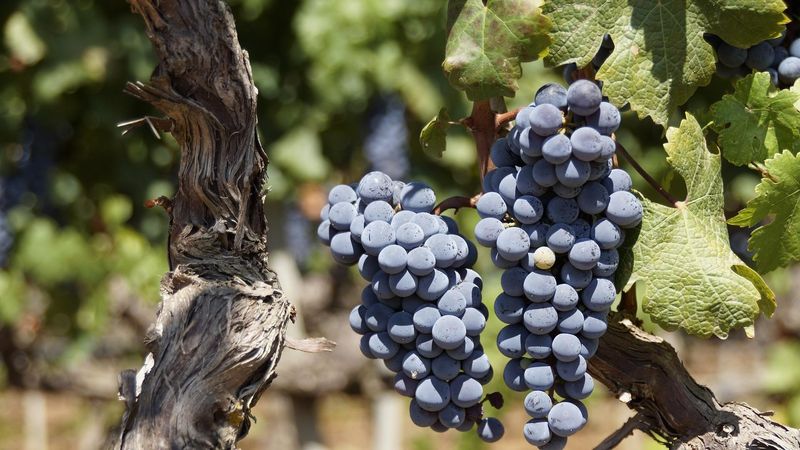
Cultivation of grapes can be traced back to the ancient Greeks and Romans. Grapes are an excellent small fruit to be eaten fresh or processed into jam, jelly, juice, pie or even wine. Grapes can also be grown in the home landscape as an ornamental and can be useful as a screen or a source of shade on a hot summer day.
Gardeners in central Ohio can have a bountiful grape planting, which can be productive for many years if the correct site, proper cultivars and appropriate pruning and training techniques are employed.

Cultivar selection
There are thousands of grape varieties (or cultivars) which fall into three main types: American, European and French hybrid. American and French-hybrid types are better suited to Ohio growing conditions as they tend to be more winter hardy.
It is important to select a grape variety with excellent taste and good tolerance of common grape diseases. For a complete listing of grape varieties suitable for Ohio along with specific characteristics such as their level of disease tolerance, go to go.osu.edu/growinggrapes.
Site selection and planting
Grapes will require a full-sun location in order to allow grapes to ripen properly. Grapes require 155 to 160 frost-free growing days in order to have a bountiful harvest. Grapes grow best in locations where the pH of the soil is acidic, between 5.0 and 6.0, which means that the pH level of many native soils in central Ohio will need to be amended with sulfur in order to lower the naturally occurring alkalinity of the soil.
Early spring is the best time to plant grapevines in Ohio. Fall planting is not recommended, as plants can be killed during the first winter due to heaving of the soil caused by cycles of freezing and thawing. Plants can be purchased as bare-root dormant plants from nurseries online or as potted growing vines from local garden centers.
Newly planted grapevines should be mulched to conserve moisture, regulate soil temperature and reduce competition from weeds. During the first year of growth, the plants should be pruned to have a single cane (or branch). Plants should be tied to a stake or trellis to keep them off the ground and prevent them from being damaged.
It is important that newly planted grapevines develop an extensive root system and produce a good amount of branch growth during the first season in the ground, so irrigation of the plants is critical, especially in years when we experience dry conditions in spring or summer.
For most backyard grape plantings, grapevines should be planted approximately 4 feet apart. It typically takes three years to establish a grape planting that bears fruit.
Pruning and training
Annual pruning of grapevines will be necessary for production of high-quality fruit. Grapevines should be pruned during the dormant season, after the danger of severe cold weather has passed. This usually occurs in March in central Ohio.
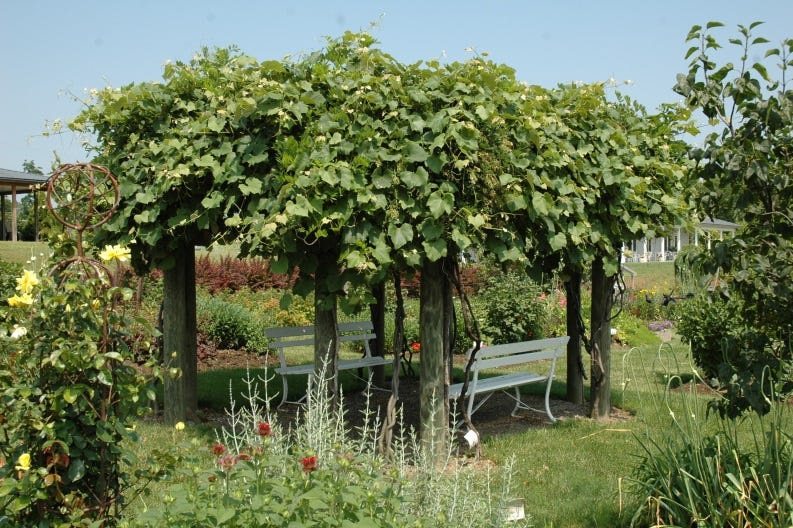
Some type of trellis or arbor will be required to support the growth of grapevines. If you wish to develop a shade space with a grape planting, an arbor with a horizontal top portion and two vertical sides works best. The arbor can be constructed with wood or sections of metal fencing material.
There are a few different pruning schemes for grapes, depending upon the trellis or arbor support system you choose. The basic principle of pruning grapes is to balance out the longer fruiting canes which develop fruit during the current year and the shorter canes which are renewal spurs that will bear fruit in subsequent seasons.
An in-depth detailed primer for learning how to prune grapevines can be found in the OSU Extension publication titled “Midwest Grape Production Guide,” available online at extensionpubs.osu.edu. This publication is available in hard copy and PDF formats.
Fertilization
In order for nutrients in the soil to be completely available for efficient uptake by grape plants, the pH (or acidity) of the soil needs to be between 5.0 and 6.0. A soil test can tell you the pH of your soil. The pH of our native soils in central Ohio tends to be more alkaline, so local gardeners who wish to plant grapes will likely need to lower the pH of their soil using elemental sulfur before planting grapes.
Grapes should be fertilized with approximately 8 ounces of 10-10-10 fertilizer per plant seven days after planting. In the second spring, the amount of fertilizer should be increased to 1 pound of 10-10-10 fertilizer per plant.
In the third and subsequent springs, apply 1.5 pounds of 10-10-10 fertilizer per plant about 30 days before new growth begins in the spring. Keep fertilizer 6 to 12 inches away from the trunk of the plant and spread evenly under the spread of the vine.
Managing pests
Even if you have just a few grapevines in your planting, insects, mites and diseases may occur at levels which require management or treatment with a pesticide. Selecting disease-resistant varieties, good sanitation practices and proper pruning to allow for air movement can minimize the risk of insect and disease outbreaks in the planting.
Some of the most common grape diseases include black rot, downy mildew, powdery mildew and Phomopsis. Major damaging insects of grapes include grape berry moth, Japanese beetle, grape flea beetle and European red mite.
An OSU publication titled “Controlling Diseases and Insects in Home Fruit Plantings” is a must-read for anyone growing grapes. The publication is available for purchase online at extensionpubs.osu.edu.
Mike Hogan is Extension Educator, Agriculture & Natural Resources and associate professor with Ohio State University Extension. He can be reached at hogan.1@osu.edu.
This article originally appeared on The Columbus Dispatch: Grow your own grapes in central Ohio gardens
Reporting by Mike Hogan, Special to The Columbus Dispatch / The Columbus Dispatch
USA TODAY Network via Reuters Connect
By Mike Hogan, Special to The Columbus Dispatch | USA TODAY Network