Fairfield County is home to a large and diverse manufacturing base that employs 5,000 people and continues to grow. In 2023, county commissioner Jeff Fix increasingly heard from many of those employers that there wasn’t enough housing stock to accommodate employees who wanted to move closer to their jobs. Some drove from as far as three counties away.

Knowing population growth isn’t slowing, with 3.1 million residents expected to call the Columbus region home by 2050 according to the Mid-Ohio Regional Planning Commission, Fix set to work. He and his team met with economic development experts, village mayors, township trustees, MORPC and builders. That research allowed the county to update its economic development and land use plans and zoning codes to remove barriers to new development.
“When we first did the master land use plan and started presenting it, we had a lot of angry residents who thought we were going to take all the farmland and build apartments on it,” Fix says. “After seeing so many people show up to vent their anger, we pulled back. … We then redid the plan in a way that was much more palatable to residents.”
Stay connected to the region’s business community. Subscribe to Insider, Columbus CEO’s newsletter.
Higher-density housing provisions help preserve farmland, and a New Community Authority provides funding for infrastructure and community needs when projects are constructed.
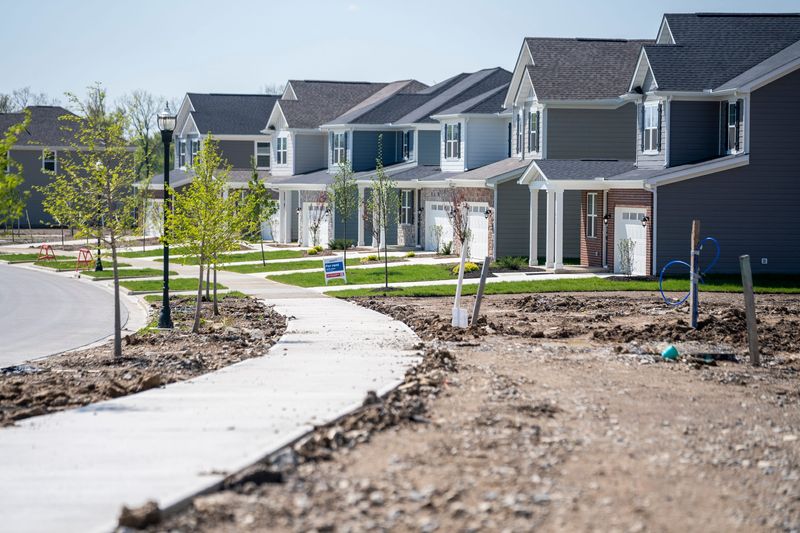
Today, Fairfield County is a hub of activity. From Jan. 1, 2025, to March 31, 2026, 1,666 new residences were created. Affordable, workforce and market rate apartments, patio homes and senior living facilities are the most common products.
Fix brings his experience to the Regional Housing Coalition, a new entity focusing on a coordinated approach to build more housing. It stems from a 2021 effort by Columbus Mayor Andrew Ginther, Lark Mallory (then president and CEO of the Affordable Housing Trust for Columbus and Franklin County) and Kenny McDonald (then president and CEO of the Columbus Partnership) to determine how best to maintain the region’s affordability as economic growth continues.
“The Columbus Partnership and One Columbus have been so successful in building an economic development engine, which has caused the need for more housing,” says Fix, a member of the coalition’s executive advisory board, which includes business, government and nonprofit officials in multiple jurisdictions. “They are taking that same knowledge base of how to get everyone to work together regionally to solve a problem and applying that same concept to housing. That’s what’s going to make this work.”
The coalition is a unique model that brings diverse interests to the table and gives them a voice while showcasing how well the region works together and embraces its interconnectedness, says Ann Aquillo, the Columbus Partnership’s chief policy officer. “The idea of trying to address the housing issue through a multijurisdictional landscape is unlike anything else being done in the country,” she says. “Counties, cities and townships are at the forefront of trying to solve for a national issue but doing it with a Midwestern pragmatism. The business community is lending its voice and its credibility to help people understand that housing is essential to economic growth and important to the health of our community.”
Trying to Keep Pace With Population Growth
The population of the Columbus metro area grew by more than 100,000 from 2020 to 2025, reaching 2.42 million people, according to U.S. Census data. The 2024-25 rate of growth (0.96 percent) is nearly double the national rate and positions the city as one of the fastest growing in the country.
Ginther has said in his last three State of the City addresses the Columbus region needs to build 200,000 new homes over 10 years to accommodate population growth and bring down housing costs. According to MORPC, roughly 80,000 families are spending more than half their income on housing, and nearly half of the housing stock predates 1980.
The city has committed to provide half of the new homes needed. Construction of approximately 9,100 new homes was authorized in 2025, according to the city. That’s a 50 percent increase over 2024 and the largest number of housing permits the city has issued in 25 years. The city estimates the metro area started construction on more than 15,800 new homes for families last year, which is a 17 percent increase over the previous year.
“We’re off to a good start,” Ginther says in reference to the rise in housing permits. “Success is housing [is] now being treated as a regional issue rather than a city-by-city problem. It’s an important shift because Columbus cannot solve the region’s supply crisis without the rest of the region being part of the solution. … We have the ability to do this. The challenge is to do things differently than we have in the past. It’s within reach if we continue to stay focused on the supply crisis and making housing more affordable for people regardless of what they do for a living.”
According to MORPC, the 15-county region added 10,806 units in 2024, up from 9,215 units 10 years earlier, but well below the 18,091 units that were added two decades ago. Home sale prices, meanwhile, have consistently risen year over year, reaching a median price of $340,000 in 2025, up from $235,000 just five years prior. The prices are rising faster than income in relative terms. MORPC reports the median household income had roughly half the homebuying power in 2024 it had in 2012.
According to the Ohio Housing Finance Agency, rents in the state have been increasing rapidly since the COVID-19 pandemic. Adjusted for inflation, the median rental price for a two-bedroom apartment in Ohio increased by 22 percent from December 2019 to December 2024, to $1,174 per month.
“You cannot grow a thriving regional economy if teachers, nurses and firefighters cannot afford to live here,” says Joe Garrity, MORPC’s chief strategy officer and senior director of external relations. “The coalition’s goal is 200,000 new homes, including 80,000 affordable ones, over the next decade.
“What makes this effort distinctive is the public-private partnership at its core,” he says. “When civic and business leaders sit alongside elected officials at the same table, it changes the conversation. Housing stops being a government problem and becomes a shared regional priority. The Columbus Partnership’s involvement signals to developers, lenders and suburban communities alike that the private sector has skin in the game.”
Garrity says Columbus already is backing that commitment with real dollars. Voters approved a historic $500 million affordable-housing bond in November 2025, the largest local housing investment in the city’s history, building on previous investments that created or preserved more than 7,000 affordable homes. “That kind of public investment, paired with private-sector energy, is exactly the combination that moves the needle,” he says. “Central Ohioans are at their best when we work together, and this coalition is built on exactly that.”
Why Stakeholders Are Focusing on Workforce Housing
For decades, there have been efforts to bring more affordable housing online. Housing is considered affordable when a family pays no more than 30 percent of its monthly income for total housing costs.
In Fairfield and other counties, workforce housing is a priority. The term surfaced in the 1990s for those who earn too much to qualify for affordable-housing subsidies but not enough to buy a home. Incomes within the range of 60 percent to 120 percent of area median income allow a person to afford rents, usually starting around $1,000 a month for a one-bedroom unit.
An active builder in this space is Metro Development. Since 2008, the company has constructed and sold more than 20,000 multifamily units in Central Ohio, representing more than $3.5 billion in construction. It has 15 different projects in the works with a focus on workforce housing, including two in Lancaster: 240-unit Fairfield Parks and 288-unit Victory Commons. Both will open to residents this year. Rents range from $1,150 to $1,600 with complexes containing one-, two- and three-bedroom units.
Developers can lock in workforce housing rental rates by tapping into Municipal Community Reinvestment Area programs that offer property tax abatements for up to 15 years.
Metro CEO Tre’ Giller attributes the company’s success in bringing these projects to market to an ability to identify sites, navigate the zoning process and manage construction costs while working with city, county and state governments. The company has developed long-term relationships with government officials and subcontractors and has the financial ability to reduce costs by buying in bulk. The result is a consistent process that leads to a product that’s cost effective, well received in the marketplace and hits in-demand rental ranges, Giller says.
Giller says other counties can look at Fairfield County’s success and apply that to their communities. “Fairfield County and the city of Lancaster were willing to identify the problem and work with their constituents to help them understand the problem,” Giller says. “They then created a plan where developers have certainty of execution.
“Columbus can’t build all the housing, so the whole region needs to pitch in to get the units we need across all the housing spectrums,” he says. “If we don’t, 10 years from now we’ll say we knew we had a problem and we’ll be in the same boat we’re in now. That will result in not getting the big job creators because we don’t have anywhere for their employees to live.”
More Multifamily Construction Is Needed
Brent Crawford, principal and founder of developer Crawford Hoying and a Columbus Partnership member, agrees the region needs more housing of all types and price points to bring costs down. He points to housing policy reforms in Austin, Texas, that led to a construction boom and drove down the median rent by more than 16 percent from 2021 to 2026. Reforms that help developers move through the permitting process quickly so they can break ground are key to reducing project carrying costs that can cause rents to spike when the demand exceeds supply. He applauds the city of Columbus’ update of its 70-year-old zoning code—known as Zone In—to expand housing options along key corridors and near job centers.
That’s significant because, according to MORPC, there’s a correlation between multifamily inventory under construction and rent growth. At roughly 4 percent of inventory under construction, Columbus is behind leaders such as Austin and Charlotte, which have rental construction rates exceeding 14 percent.
Outside of Columbus, places like Dublin that once resisted multifamily developments now embrace them. For example, Crawford says the city created the Bridge Street District to specifically allow dense housing, which Crawford Hoying delivered in its development of Bridge Park.
“We work with corporate headquarters tenants who don’t just ask about office space. They also want to see a list of apartments to see if their employees can comfortably live nearby,” Crawford says. “It’s critical to provide housing options to meet the demands of different income levels of each employee. It may be a 600-square-foot unit for an entry-level employee living next door to an executive of the same business in a 3,000-square-foot unit. For the approximately 30,000 people coming into the region each year, most are coming to take advantage of the tremendous job growth the greater Columbus area is experiencing. We need to deliver the right number and types of housing so everyone is impacted. The way to bring prices down is to increase the overall supply, just like Austin did.”
Housing Production and Prices By the Numbers
Housing Unit Production
Net annual change in the 15-county MORPC region
2004 18,091*
2010 3,637*
2014 9,215
2019 10,171
2024 10,806
*Highest and lowest years 2004 to 2024
Source: Mid-Ohio Regional Planning Commission
Home Prices
Average sale price in the 15-county MORPC region
Median Mean
2012 $145,000 $174,004
2016 $170,000 $203,141
2020 $235,000 $268,655
2024 $330,000 $377,223
2025 $340,000 $390,282
Source: Mid-Ohio Regional Planning Commission
Laura Newpoff is a freelance writer.
This story appears in the Summer 2026 issue of Columbus CEO. Subscribe now.
This article originally appeared on Columbus CEO: Columbus’ Civic and Business Leaders Aim to Move the Needle on Housing
Reporting by Laura Newpoff, Columbus CEO / Columbus CEO
USA TODAY Network via Reuters Connect
By Laura Newpoff, Columbus CEO | USA TODAY Network