Dozens of East Side residents pressed Cincinnati City Council on Aug. 4 to do something about flooding now, not decades from now.
“This is the kind of thing that if action is not taken – and I’m not talking about 20 years from now I’m talking about before my kids are done with school – this is the kind of thing that can kill a neighborhood,” said Jacob Bailey, a Hyde Park resident who said floodwaters damaged his home.

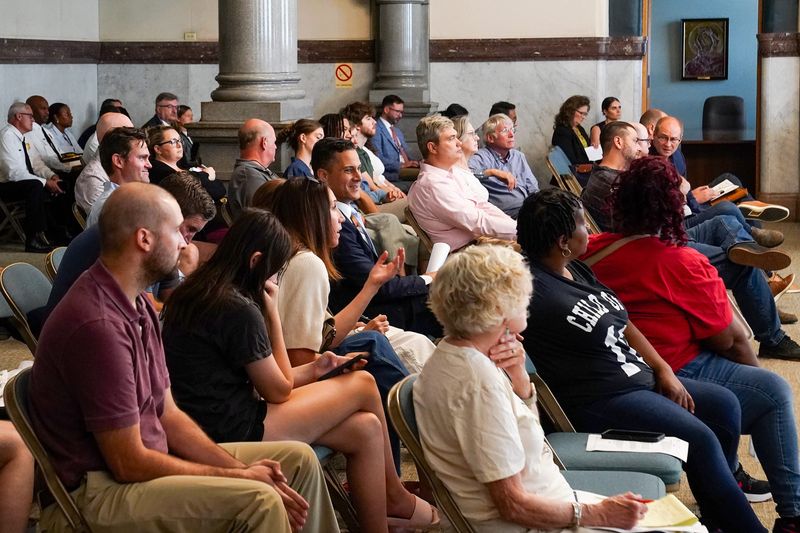
Residents packed council chambers and described the devastation the floodwaters wrought two weeks earlier. They recalled torrents of water from the July 17 storm that ran off the streets into their garages, cars and basements.
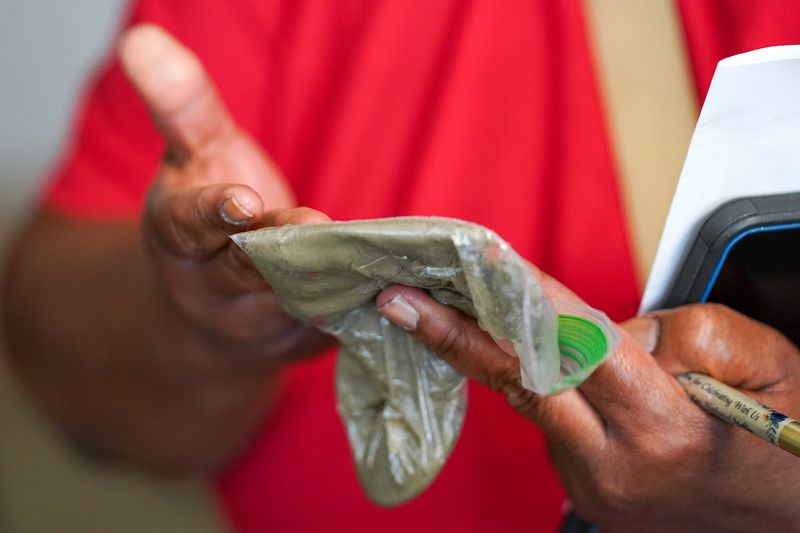
One Evanston resident held up a plastic bag with clay that came out of the ground near her home to illustrate how water from broken pipes has saturated the ground.
The 1,000-year-storm dumped 6 inches of rain in one hour on Oakley, Hyde Park and other East Side neighborhoods, according to weather service reports. On Aug. 4, City Council’s Climate, City Services and Infrastructure Committee met for the first time since the massive storm, giving residents their first opportunity to address council in an open meeting.
Residents pack City Hall
Bailey was one of the many residents, business owners and stormwater experts who attended the council Aug. 4 meeting.
Bailey moved to Hyde Park eight weeks ago and has been flooded three times. It’s cost him $15,000 in damaged property.
“My kids can’t go play in our backyard because it’s contaminated with human waste,” Bailey said.
Why one woman brought mud to City Hall
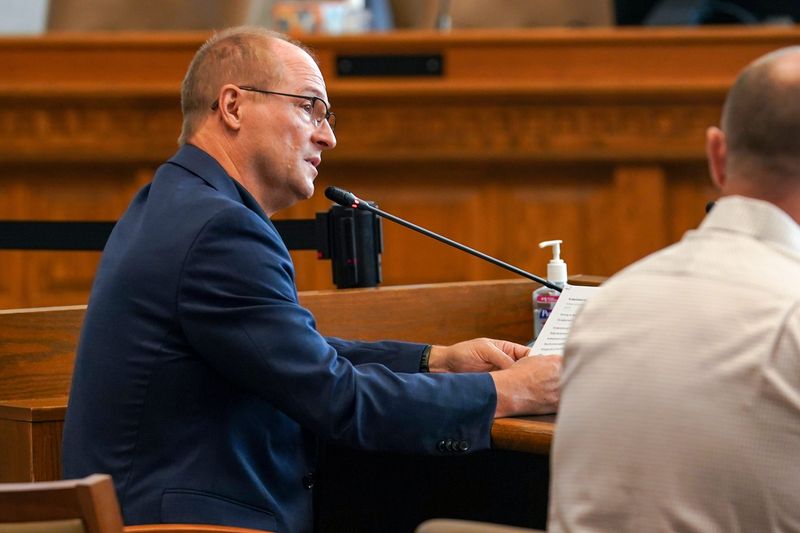
Longtime residents said it’s a problem they’ve dealt with for a while. Mount Lookout Community Council President Brian Spitler told council members his neighborhood flooded in 2016, 2021, 2024 and this year.
Floodwaters have risen in the basement of Jean Hall’s Evanston home frequently over the past decade. That’s why she brought mud in the plastic lunch bag to City Hall. She wanted council members to see what the porous pipes have done to the soil in her neighborhood.
“All the clay underground is solid rock, but when it gets wet, it becomes mush,” Hall said. “So we need these pipes fixed in Cincinnati. It ain’t just Evanston.”
Councilman says there’s no quick solution
During the two-hour meeting, city staff and council members discussed the response to the massive storm and how to prepare for the next one. They talked about more green infrastructure, retention basins and other measures.
Council’s climate committee passed a motion directing administration over the next few months to study different options and report back. At the urging of members of the environmental group Sierra Club, council added language to encourage the Metropolitan Sewer District of Cincinnati to implement an impervious surface charge on developers. They hoped such a charge would encourage developers to deal with the runoff from parking lots and paved surfaces.
Councilman Seth Walsh said he was disappointed the discussion didn’t address what he saw as the crux of the issue, that the solution to the flooding won’t be quick or cheap.
“The answer to this problem is going to cost us billions of dollars and decades to repair,” Walsh said. “Nobody in this room is naive to that. The longer we continue to not want to say that part out loud, the longer it’s going to take to solve the problem.”
City won’t likely get federal assistance
City staff also discussed efforts to help residents suffering from the floods. Mayor Aftab Pureval announced the city has set aside $1 million for assistance for flood victims. City Council is expected to vote on an additional $1 million this week.
Federal assistance is likely not going to come, said Assistant Fire Chief Matthew Flagler.
While the damage was severe, it won’t likely meet the Federal Emergency Management Agency’s threshold for disaster aid, he said. He said the city is looking at other grants and funding sources to help residents. Flagler didn’t give the dollar figure on the damage estimate.
The Hamilton County Emergency Management Agency released a report Aug. 4 showing 118 properties were assessed for damage in Cincinnati and Fairfax, with nine found to have sustained “major” damage.
The city still submitted the assessment to FEMA, he said.
Duck Creek floodgate working
The condition of a floodgate and bridge over Duck Creek along Madison Road has become one of the biggest concerns in the wake of the July 17 flooding. A mechanical malfunction kept the gate from closing automatically, city officials determined.
As floodwaters rose in Oakley, the floodgate across the Madison Road bridge remained open. Floodwaters poured through, swamping about 40 properties in the area.
Two weeks later, the floodgate is up and running automatically as expected, said Jason Fleming, Deputy Director of Greater Cincinnati Water Works.
It is being tested three times weekly. The city brought in out-of-town experts in the past week to fix the gate, Fleming said. The city will have staff ready to respond in a rain event to make sure the gate closes, he said.
“That’s 24/7 around the clock,” Fleming said. “We’ll continue that until we have a level of confidence that’s no longer required.”
Six years ago, an engineering firm recommended the city replace a bridge along Madison Road over Duck Creek in Oakley to reduce the risk of flooding. The city did not replace the bridge and floodgate, citing the cost.
Assistant City Manager Cathy Bailey told City Council the administration will “need to revisit” the Duck Creek floodgate.
“We certainly have it working now, but we know that we need to replace some parts of it, and so we need to know what that looks like and how quickly we can do that,” Bailey said.
Climate change driving the flooding
Experts and officials said climate change makes the issue even more urgent as storms are getting more extreme.
While annual precipitation hasn’t gone up much over the past century, the intensity of rain events in Cincinnati has increased significantly, said Oliver Kroner, director of Cincinnati’s Office of Environment & Sustainability. The average hourly rainfall for storms in Cincinnati since 1970 has gone up 10%, he said. Storms classified as 500-year and 1,000-year are happening multiple times in a decade, he said.
“It’s now pouring buckets in specific pockets of our city,” Kroner said. “Those buckets, those locations, are hard to predict. So it makes planning for this type of storm that much harder.”
Bob Hyland, a professor of environmental studies at the University of Cincinnati, urged council to consider the ramifications of development, including the expansion of Interstate 75, on water runoff.
“It is a pivotal moment,” Hyland said. “We’re colliding with climate change. You have the power to make a difference.”
This article originally appeared on Cincinnati Enquirer: Residents jam Cincinnati council chamber over recent floods, demand action
Reporting by Scott Wartman, Cincinnati Enquirer / Cincinnati Enquirer
USA TODAY Network via Reuters Connect
By Scott Wartman, Cincinnati Enquirer | USA TODAY Network