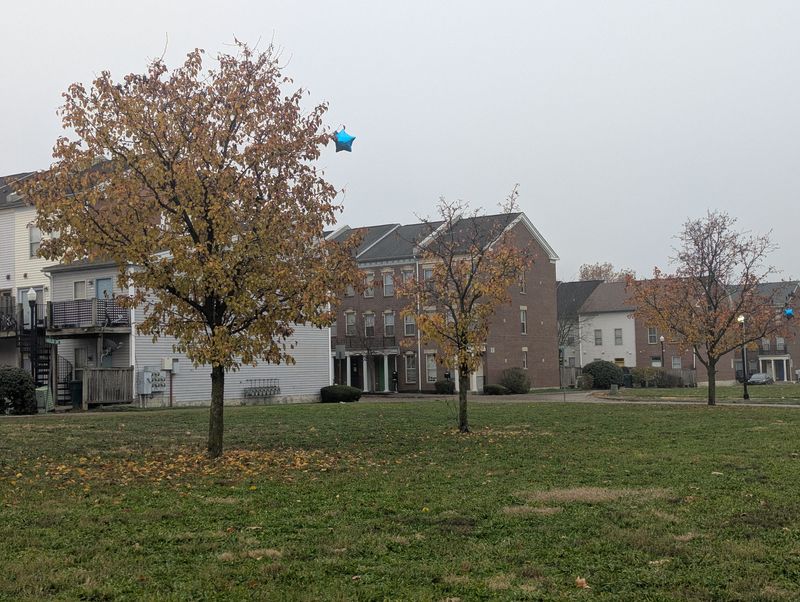
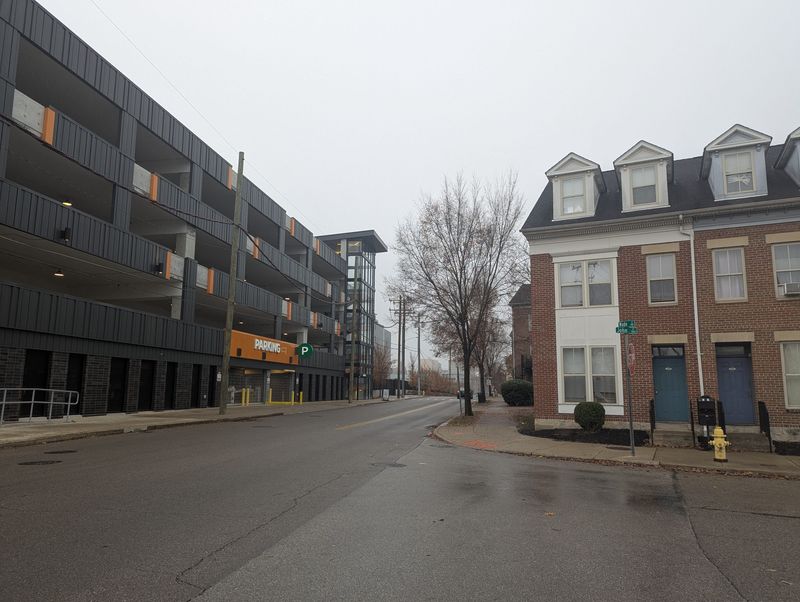
There is too much shade hanging over City West, the otherwise beautiful townhome community in the heart of Cincinnati’s West End. And we’re not talking about the tree canopy.

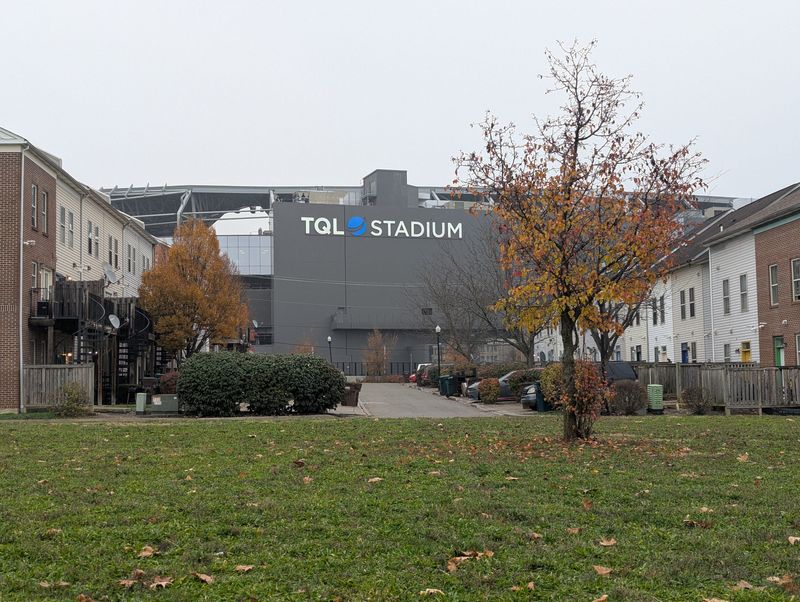
The West End has long lived in the shadow of “progress.” First came the interstate, which cut through the neighborhood and displaced families. More recently, a massive soccer stadium rose next door, reshaping the landscape yet again. Each wave has brought promises of revitalization − but too often at the expense of the people who already call this community home.
Now, history appears to be repeating itself.
A familiar pattern returns
In late 2025, The Community Builders chose to divest itself of 685 affordable housing units in City West, some of which are located adjacent to TQL Stadium. According to residents, this decision has followed years of neglect and questionable management. The Community Builders reportedly transferred the properties to the Cincinnati Metropolitan Housing Authority, along with roughly $4 million in debt owed to the Cincinnati Development Fund.
What has happened since raises serious concerns.
CMHA appears to have moved quickly to place 105 units of this newly garnered property on the open market. But under federal guidelines, the sale of HUD-regulated housing is not a casual transaction − it requires formal approval. A disposition request must be submitted, rigorously reviewed, and approved before any sale can proceed.
Has that happened here? There is no clear public indication that it has.
There are additional unanswered questions. The Ohio Housing Finance Agency, which reportedly holds liens on the property, would also need to be involved in any disposition. Yet there is no evidence that OHFA has approved.
Equally troubling is what appears not to have happened.
At a time when Cincinnati faces an acute shortage of affordable housing, why was the preservation of these 105 units not prioritized? Were alternatives explored to address the inherited debt without selling off critical housing stock?
More than 90 households − many elderly, disabled, or living on fixed incomes − now face uncertainty. Residents report receiving letters detailing incentives to vacate their homes, while officials suggest there are enough vacant units within City West to absorb those displaced.
That claim deserves scrutiny.
If sufficient vacancies exist, why is displacement necessary at all? And if CMHA does not have adequate available units, where exactly are these residents expected to go in a city already struggling to house its most vulnerable?
These questions land even harder in light of Cincinnati’s recent efforts to reckon with its past. The destruction of the Kenyon-Barr neighborhood − once a thriving Black community − remains a painful chapter in the city’s history. Today, there are renewed conversations about repair, reinvestment, and equity.
And yet, here we are again.
Once more, the burden of “progress” appears poised to fall on those least able to bear it − disproportionately Black residents, many of whom have spent years building their lives in this community.
A chance to choose differently
If Cincinnati is serious about learning from its past, this is a moment to prove it. That starts with transparency. Were proper procedures followed? Who made these decisions, and why?
It requires accountability. If rules were bypassed, there must be consequences.
And it demands a commitment to people over expediency. Affordable housing is not a line item to be liquidated − it is the foundation of stable communities.
The residents of City West deserve more than relocation offers and unanswered questions. They deserve clarity, respect, and the assurance that they will not be pushed aside yet again.
Cincinnati can choose a different path.
But only if we are willing to step out of the shadows and confront what’s happening in plain sight.
Brian Garry is the executive director, and Lew Ebstein is vice president of Neighborhoods United.
This article originally appeared on Cincinnati Enquirer: City West shows displacement still defines Cincinnati | Opinion
Reporting by Brian Garry and Lew Ebstein, Opinion contributors / Cincinnati Enquirer
USA TODAY Network via Reuters Connect