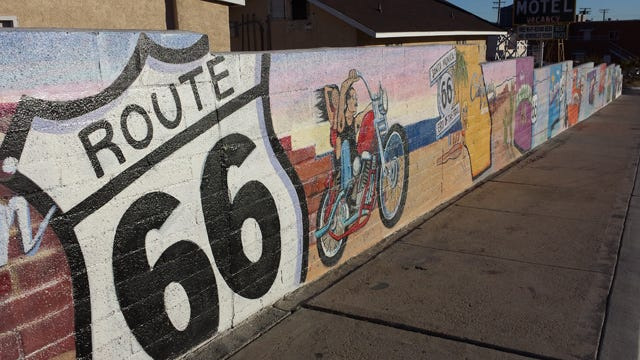
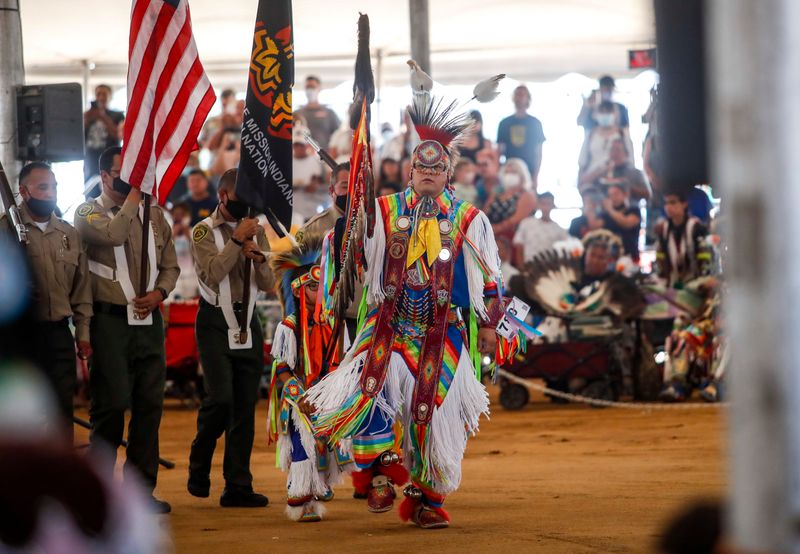
Native American land and labor laid the foundation for Route 66 in the Victor Valley.

Long before Route 66 was commissioned in 1926, the corridor through today’s High Desert followed Serrano, Mojave and Chemehuevi trade and travel routes that had existed for centuries. The most important was the Mojave Trail, an intertribal route that linked the Colorado River with the Mojave River and Cajon Pass.
The Mojave Trail, which sustained Indigenous communities with its year-round water, was used for trade, diplomacy and seasonal migration. It would eventually shape travel patterns that railroads and highways would later adopt.
The area’s Indigenous lands were declared public domain by the U.S. government in the mid-19th century without tribal consent or compensation, according to the National Park Service. The development that ensued, including Route 66, was shaped by Native American geography and displacement.
Land dispossession and Route 66 construction
According to the National Park Service, there is no evidence of negotiated land agreements with local tribes during Route 66 construction in the Victor Valley. This was on par with broader national patterns of infrastructure development on dispossessed Native land.
Shortly after Native land was declared public domain by the Dawes Act in 1887, the Chemehuevi people were shuttled to the Chemehuevi Valley Reservation 40 miles south of Needles. Today, approximately 250 people live there, but the broader tribal enrollment encompasses 1,145 members scattered throughout California.
The Serrano people were first introduced to non-Native ways of living in 1771 when the Spanish established missions in Southern California. Their land was not forcibly taken until after the secularization of the missions. In 1876, President Ulysses S. Grant created the Morongo Indian Reservation and hundreds of Serranos were shuffled off.
The Mojave tribe’s land was first encroached upon by Franciscans in the 1700s and later by Jedediah Smith and fur trappers. The 1848 Treaty of Guadalupe Hidalgo ended the Mexican-American War and gave several northern Mexican states to America, including California, which would eventually lead to the acquisition of many Native groups’ lands.
All Mojave people living in the area were carted to the Colorado River and Fort Mojave reservations starting in 1865. Approximately 1,100 members of the Fort Mojave Indian Tribe are currently residing on the reservation, which spans across Arizona, Nevada and California.
California tribes often revolted to save their land and ways of life, to little avail. With their land now freed, Route 66 planners built wagon roads atop the existing Native trails.
Why this history matters in Victor Valley today
Route 66 followed the ancient trade routes and homelands of 25 Native nations, three of whom used to call the High Desert their home. A complete history of the route opens more inclusive paths forward for education and preservation.
Recognizing why the ancestral paths of Route 66 matter today challenges the idea that Victor Valley’s story began with railroads or Route 66 tourism. Indigenous communities shaped movement and commerce here for thousands of years before the route was ever paved or asphalt laid.
Claim to Route 66 fame in the High Desert is not limited only to neon signs and American diners. Understanding the history from an Indigenous viewpoint reaffirms the notion that neither they nor their history disappeared.
McKenna is a reporter for the Daily Press. She can be reached at mmobley@usatodayco.com.
This article originally appeared on Victorville Daily Press: Route 66’s Indigenous past: The history Victor Valley tourism rarely tells
Reporting by McKenna Mobley, Victorville Daily Press / Victorville Daily Press
USA TODAY Network via Reuters Connect