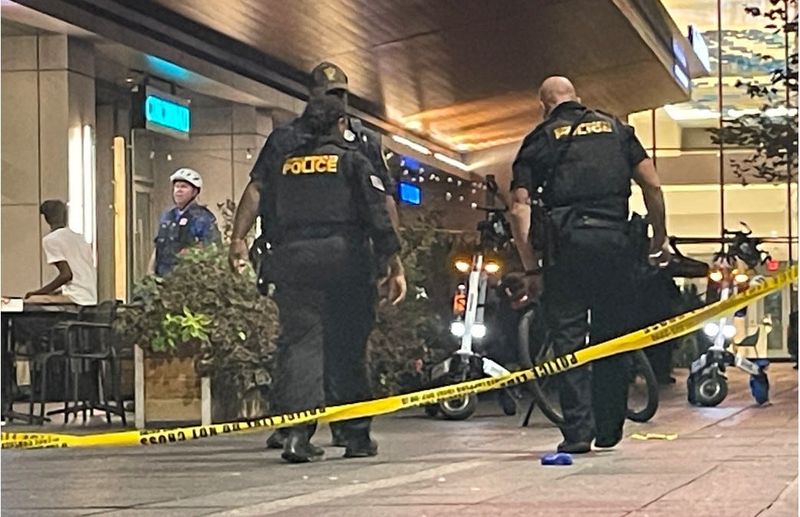
Enquirer Opinion Editor Kevin Aldridge is right to grieve. His recent column captured what decent people feel when another young man dies over something as senseless as a cell phone on a Metro bus. The sadness is real. The moral concern is genuine. But grief, repeated often enough without action, becomes its own kind of statement − that this is simply the way things are.

It is not the way things have to be.
The truth our leaders keep stepping around is this: Black children and young adults are killing their peers in this city, week after week, and no one in power is saying it with the urgency the fact demands. Not loudly. Not plainly. Not in a way that suggests the people responsible for governing this city find it intolerable rather than merely tragic.
Grief without action changes nothing
This is not about race. It is about a city that is failing a generation of young men − and about whether Cincinnati is willing to do something about it together.
Cincinnati’s City Council has a Black majority. The city manager is Black. The mayor leads a coalition with Black majority in legislative and administrative power. Representation is not a shield. It is a duty. And the duty here is not to mourn more eloquently. It is to compete.
Compete for what? For the young man who hasn’t decided yet which way he goes.
Gangs succeed because they offer belonging
Gangs are not a mystery. They succeed because they offer exactly what every young man needs − identity, belonging, brotherhood, and an adult presence that says you matter. The street provides all of that efficiently and reliably. It just comes with a gun and a short life expectancy. And today, with weapons readily accessible across Cincinnati neighborhoods, every conflict has lethal potential.
Greater Cincinnati reportedly has 77 social service organizations touching disadvantaged youth, spending millions annually. They are not filling that vacuum. If they were, the bodies would stop piling up. What has been built is infrastructure for the already-reachable. What has not been built is a direct intervention for the boy standing at the edge, deciding.
Attempts to disarm communities don’t work. The honest assumption has to be that every young man at risk has access to a weapon. The only intervention that matters is interrupting the formation of the gang before it forms − and providing an alternative identity before the street provides one.
That means competition. Direct, organized, relentless competition. A massive mentorship corps embedded in the lives of boys most at risk before the street gets there first.
Cincinnati needs a cross-community mentorship corps
But here is where Cincinnati has to think bigger than it has before. This mentorship corps cannot be drawn only from within any single community. It must include ministers and coaches, yes − but also young White professionals, tradesmen, contractors, and business owners who are willing to cross neighborhood lines and stand in front of a young man and say: I will hire you. I will teach you this skill. I will show you what your life could look like.
That is the most powerful rebuttal to what the street is selling. A young man who has never seen himself employed, skilled, and respected needs to see it − not in a brochure, but in a person standing in front of him. The gang offers brotherhood within the tribe. What Cincinnati needs to offer is something more expansive: adults of every background who say you belong in the broader world, not just the neighborhood. A tradesman who earns $80,000 a year and is willing to teach. A young professional who looks nothing like the boy he is mentoring but shows up every week anyway. That presence − sustained, cross-community, and honest − is what changes the calculation.
The models exist. Chicago’s Becoming a Man program reduced violent crime arrests among participants. My Brother’s Keeper built structured mentorship pipelines in cities across the country. Big Brothers Big Sisters has decades of evidence that consistent adult presence improves outcomes and reduces dangerous behavior.
These programs succeed for the same reason gangs succeed − they offer identity, accountability, and belonging. The difference is they don’t end with a funeral.
Cincinnati should stop studying these models and start building. A cross-community mentorship corps, funded seriously, operating in the neighborhoods where the dying is happening, with one mission: Get to the boy before the gang does.
Political leaders can pass ordinances. They cannot tell a young man what kind of man he is supposed to become. They cannot give him an identity. They cannot give him a vision of his own future. That has always come from adults who show up − consistently, personally, and honestly − and say: You have a future, stay in school, learn a skill, carrying a gun is a short life or a long sentence, and I will stand here with you while you figure that out.
Kevin Aldridge is right that something has gone wrong with our moral grounding. What has gone wrong is that we stopped competing for these young men. We built organizations and assumed that was enough. We grieved and assumed that was sufficient. We elected leaders who reflect the community and assumed representation was the same as protection.
None of it has been enough.
Cincinnati does not lack money. It does not lack organizations. It does not lack leadership. What it lacks is presence − adults of every background, crossing every line, showing up for young men who are running out of time.
Until we build that presence, we will keep mourning. And the young men who might have been saved will keep making the only choice anyone ever showed them how to make.
Dennis Doyle lives in Anderson Township and is a member of the Enquirer Board of Contributors.
This article originally appeared on Cincinnati Enquirer: Cincinnati cannot keep surrendering young men to violence | Opinion
Reporting by Dennis Doyle, Opinion contributor / Cincinnati Enquirer
USA TODAY Network via Reuters Connect