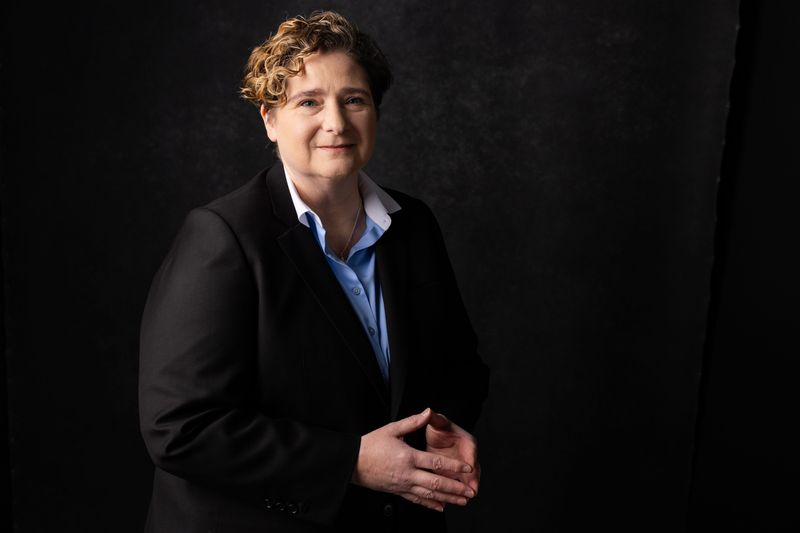
Two candidates are seeking the nod from Democratic voters in Franklin County to take a seat on the bench in Juvenile and Domestic Relations Court.
George Leach, 66, the incumbent judge in that court, and Kelley Boller, 55, a local attorney, are on the ballot for the May primary as Democratic candidates for an opening on Franklin County Juvenile and Domestic Relations Court. Boller received the party endorsement.

This court oversees criminal delinquency and truancy cases for juveniles, as well as family court matters like divorces and custody issues.
The winner likely will take the seat on the bench in January. No Republican or third party candidates have filed to run.
Ohio’s primary election is May 5, with polls open from 6:30 a.m. to 7:30 p.m. Voters also may cast their ballots early at the Franklin County Board of Elections, 1700 Morse Road.
The information below was supplied by candidates responding to a questionnaire. The Dispatch only edited responses for length or clarity.
Kelley Boller
Age: 55
Campaign website: www.bollerforjudge.com, Kelley G. Boller For Judge (Facebook)
Background: I have been an attorney for almost 30 years, having practiced family law exclusively for 25 years. I have an MBA as well as a law degree. Prior to practicing law, I worked in the corporate arena, overseeing product development of legal software. I also worked for Hamilton County Juvenile Court, managing its Recovery Court, Mental Health Court and Mediation programs. Upon moving to Columbus, I worked for Columbus Legal Aid Society in its Family Law Unit. After leaving Legal Aid, I founded my own family law practice. I have taught legal and criminal justice classes at the college level.
Why are you the best candidate? In addition to my unwavering dedication and commitment to fairness and equity, I have the breadth and depth of experience necessary to become a successful judge in Domestic and Juvenile Court. This is why I have proudly received the endorsement of the Franklin County Democratic Party. I have 25 years of experience practicing exclusively domestic relations and juvenile law. I built my career helping those who are traditionally under-served. I managed the Recovery Court, Mental Health Court and Mediation Programs for Hamilton County Juvenile Court. I worked for Columbus Legal Aid in its Family Law Unit, where I represented survivors of domestic violence. While at Legal Aid, I represented hundreds of clients in divorces, civil protection order and custody matters. I left Legal Aid to start my own law firm, where I was able to branch out and practice juvenile law as well. This includes guardian ad litem work, where an attorney is appointed to represent the best interest of a child, as well as representing juveniles in delinquency cases. I love family law and I truly enjoy helping people. I welcome the opportunity to become a judge where I can make systemic changes to help even more people.
What do you see as the most important aspect of the role of a judge in the Juvenile/Domestic Relations Court and why? The most important aspect is to be fair and impartial. Domestic Relations is a court of equity; therefore, it is essential to have a judge striving to find fair and equitable results for all litigants and parties. Of course, to be fair and impartial means that the judge also has to have integrity, consistency, honesty, accountability, and a whole host of other qualities in order to reach an equitable result. Having an exceptional work ethic also needs to be added to the mix in order to achieve appropriate outcomes in a timely manner.
Juvenile crime has continued to be a topic frequently discussed within the community, particularly when it comes to violent crime. What role and responsibility does the juvenile court have in protecting the community while also weighing a need for rehabilitation? Rehabilitation is not at odds with protecting the community; rehabilitation is the most effective way to achieve public safety long term. Juvenile Court only comes into play once a youth has allegedly committed an offense. If it is proven that the youth committed the offense, the Court owes a duty to both the youth and the public to ensure that child does not reoffend. The Court must hold the child accountable, and in so doing, rehabilitate the youth. Youth do not commit offenses in a vacuum. In order to successfully help the youth, holistic approaches are essential. As a judge, I would utilize holistic and evidence-based practices to both hold the child accountable and help change the environment that led the child to commit the offense. Utilizing holistic and evidence-based practices should result in reduced recidivism. Effective rehabilitation therefore increases community safety.
In the last 12 months, there have been multiple deaths of children under the care of parents who had prior engagement with children services and/or the court. What role and responsibility does the court hold in ensuring a child’s safety in whether or not they are placed with family or in the custody of FCCS? The court plays a critical role in making decisions that ensure a child’s safety once a case is filed. Judges are limited to information presented; therefore, it is essential to ensure that the court has the highest quality information available. To achieve this, it is vital to appoint highly trained guardians ad litem. It is a Guardian ad litem’s job to conduct a thorough investigation, independent of children services, and represent the best interest of the child in court. This investigation should include regular meetings with the child and advocating for any changes needed to ensure safety. Throughout a case, it is important to hear from all parties and professionals and ensure that the child’s best interest is served and safety is maintained. A case should be closed only when there is consensus among the professionals that there is no longer a protective need.
George Leach
Age: 66
Campaign website: www.judgeleach.com, Judge George W. Leach for Franklin County Judge (Facebook)
Background: Six years as Judge. Twenty years as private counsel and court appointed attorney representing parents and children in the Domestic and Juvenile Courts.
Why are you the best candidate? As the incumbent Judge, I have gained valuable experience beyond my twenty years of private and court appointed experience. Prior to being elected to the bench, I have represented parents and children in several central Ohio counties. For more than 15 years, I have been one of a handful of criminal defense attorneys qualified to represent juveniles facing serious adult crimes where the state is seeking to transfer the juvenile from the juvenile justice system to the criminal justice system. That juvenile, if transferred, will face adult charges with adult penalties and sentences.
I have also presided over and represented many Jane Doe minors seeking the consent of the court to allow Jane Doe the right to terminate a pregnancy.
What do you see as the most important aspect of the role of a judge in the Juvenile/Domestic Relations Court and why? As a trial judge, I am obligated to follow established legal precedent, in my District (10th) and as set by the Supreme Court of Ohio. When the current precedent is not perfectly aligned with the fact pattern and evidence before the court, I believe the judge may decide the matter inconsistent with precedent and potentially establish new case law precedent. As judge, I now have several cases as precedent in the Tenth District.
Juvenile crime has continued to be a topic frequently discussed within the community, particularly when it comes to violent crime. What role and responsibility does the juvenile court have in protecting the community while also weighing a need for rehabilitation? The juvenile court must perform its duties within the framework of the laws passed by the legislature and to follow case precedent while also focusing on proven rehabilitative and preventive practices. Additionally, the court must use the community’s resources to meet the needs and trends of the juvenile justice system. When our community was faced with increasing juvenile auto thefts, I created a diversion program with former Franklin County Prosecutor (Gary) Tyack that has been reworked by our current county prosecutor. Both programs are aimed at early intervention and prevention of repeat offenders, while providing an opportunity for rehabilitation.
In the last 12 months, there have been multiple deaths of children under the care of parents who had prior engagement with children services and/or the court. What role and responsibility does the court hold in ensuring a child’s safety in whether or not they are placed with family or in the custody of Franklin County Children Services? The safety of all children involved in the juvenile justice system is paramount to the court. The court must hold all persons and participants accountable for caring for the children involved in the actions before the court.
This article originally appeared on The Columbus Dispatch: Boller, Leach vying for Franklin County Juvenile judge seat
Reporting by Bethany Bruner, Columbus Dispatch / The Columbus Dispatch
USA TODAY Network via Reuters Connect