ASHLAND – Members of the Ashland University Department of Psychology co-authored a research project on the trustworthiness of scientific studies that landed on the cover of Nature magazine on April 1.
The project, Systematizing Confidence in Open Research and Evidence (SCORE), brought together 865 collaborators across many fields of social science, including most of AU’s psychology department.

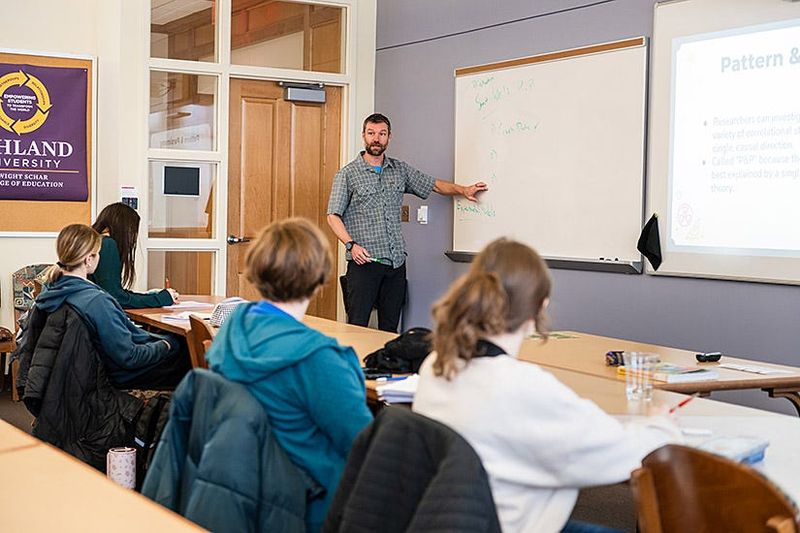
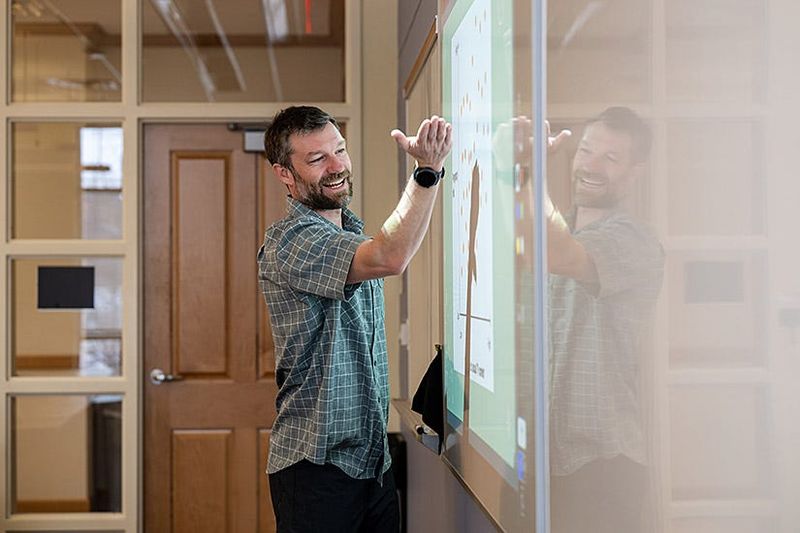
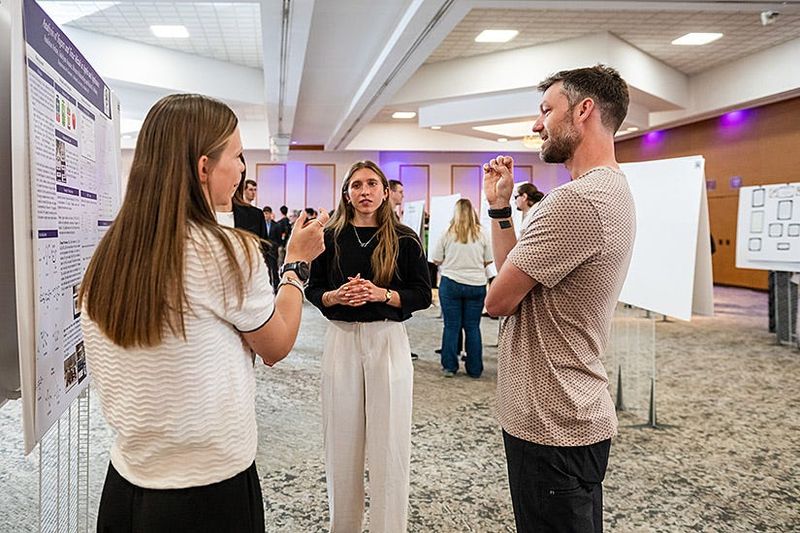
Christopher Chartier, Ph.D., professor of psychology, took on a central role from the outset and Diane Bonfiglio, Ph.D., student-now-alumna Savannah Lewis ’20, Mitchell Metzger, Ph.D., and Kathleen Schmidt, a former research scientist at AU, all made significant contributions as well and are listed as co-authors, according to the community announcement.
Findings from SCORE were published in Nature as a collection of three papers, offering new empirical evidence on the reproducibility, robustness and replicability of research across the social and behavioral sciences, and the predictability of replicability.
Chartier, who summed it up as a “big health check on the scientific community,” was invited to be part of this project due to his founding of the award-winning Psychological Science Accelerator and subsequent work with the Center for Open Science, a non-profit organization with a mission to increase openness, integrity and trustworthiness of scientific research.
“One of the main things I was involved in was kind of pairing research laboratories from the (PSA) network with available and required replications, particularly in psychology,” explained Chartier in a news release. “I was kind of like a team builder, coordinator of that aspect of the project.”
Chartier also was one of the team leaders when it came to the paper focused on replicability, a core principle of science. Titled “Investigating the replicability of the social and behavioral sciences,” the team of 292 researchers from around the world tested if findings from 164 published papers of well-known journals could be replicated successfully when tested again with new data.
“The main goal was just to have a solid estimate of replicability in the social and behavioral sciences to understand what is the current situation in this arm of the scientific enterprise,” explained Chartier. “The reason we care is that replicability is a fundamental principle of science, if somebody publishes a finding, we, at a baseline, expect some reasonable percentage that an independent team can go look for that same thing.”
Even though Chartier’s primary focus is on the psychology aspect, he is excited about the broad scope of the project, touching on other disciplines.
“It wasn’t constrained to just psychology. You’ve got sociology, political science, education, behavioral economics, experimental philosophy, many fields that are similar to psychology in substance and how people do and publish their work,” he noted.
The paper revealed that roughly 50% of the findings replicated successfully. While Chartier admitted that some people may continue to be skeptical of scientific findings, the implications of the study point to uncertainty—not failure—and a need for more cautious confidence in research claims.
“Turns out the answer is somewhere in the middle, and so what it suggests is that science is valid and probably our best source of truth in the universe. But, it’s far from perfect and we shouldn’t take every published finding at face value,” he summarized. “It means that it should not and cannot be ignored. It’s our best source of evidence, but it means you have to remain critical and evaluate all the evidence for a finding anytime you’re trying to understand something.”
This article originally appeared on Ashland Times Gazette: Ashland University psychology project makes Nature’s cover
Reporting by Staff Report / Ashland Times Gazette
USA TODAY Network via Reuters Connect