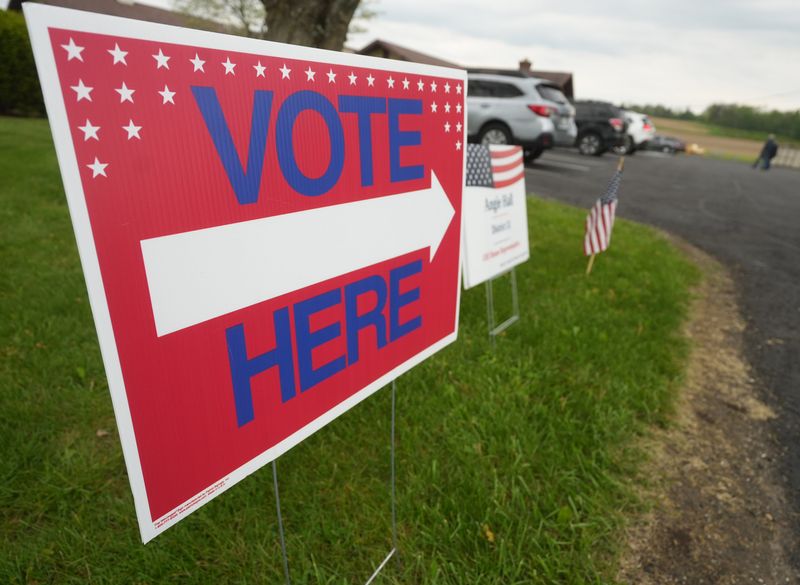
On May 5, voters turned down a request for a small increase in the Stark County sales tax to support SARTA, the Stark Area Regional Transit Authority, which operates the countywide bus system.

As the costs of groceries, utilities and gasoline grow by breathtaking leaps and bounds, it’s hard to fault people for not wanting to pay more, though public transportation is an important element of any viable community.
It seems that with every election, some organization is seeking more public funds.
It is impossible to gauge how many SARTA riders voted. SARTA serves approximately 4,500 Stark residents every day, providing a cumulative 1.5 million rides per year, but the fact is, low-income people, its primary clientele, are the least likely group of people to vote — period — even when it involves issues which most impact them.
Too many folks in general have talked themselves into believing that voting doesn’t matter; that the powers-that-be will do whatever they want anyway. In a county with 244,054 registered voters, just 62,232 people cast ballots on May 5.
What nonvoters don’t understand is that their cynicism becomes a self-fulfilling prophecy. They tend to ignore local elections, even though the results have more direct impact on our lives than presidents and members of Congress.
Around the country, some people are up in arms about the U.S. Supreme Court’s recent decision which they say guts the 1965 Voting Rights Act.
That a voting-rights law (which was passed with bipartisan support) is still even necessary in a country with a constitution containing the 14th, 15th and 19th amendments is a whole other conversation for another time.
The court ruled that congressional districts cannot be drawn based on race, thus allowing states to redraw new districts — but they don’t have to. However, some state legislators in the Deep South practically ran to their statehouses to draw new maps that either dilute or eliminate majority-minority districts.
The ink wasn’t even dry last week before the Alabama Legislature eliminated a district.
Unfortunately, the practice of redrawing new maps every 10 years based on census figures has gone the way of the buggy whip. Both major parties are guilty and are responsible for what has become the electoral version of “Duck, Duck, Goose.”
But one thing has not changed: Voting still matters. If enough Americans do it, and do it consistently, it won’t matter what anyone tries.
Knowing that people don’t vote makes it easy for some in gerrymandered districts to coast, and to take such privilege for granted. But if more of us would participate in the process, gerrymandering could well become a case of “Be careful what you ask for.”
Start bouncing such people out of office, and watch how their former colleagues’ priorities change.
For instance, the reason higher education costs or affordable housing for first-time buyers aren’t a higher priority for elected officials is because they know young people, for all their social media argle-bargle, don’t follow through by voting.
Econofact cites a Brookings report which found that in the 2022 election:
Lawmakers might toy with the idea of reducing Social Security benefits, but they don’t dare try it. Older people vote.
In contrast, Medicaid regularly gets chopped by state legislators because its prime constituents are the poor, who vote less often than any demographic.
So, it’s not about culture or ethics or fiscal responsibility.
It’s math.
Even the ineptest elected officials have this figured out.
Fair Vote reports that the U.S. voter participation lags behind other developed countries. Just 40% of eligible voters participate during midterm years, and just 60% vote during presidential years.
Therein lies the problem.
When we fail to take part in the process, protests won’t help. The marches for voting rights in the 1950s and 1960s brought attention to the injustice, but it took the election of people — by those who could vote — to do something about it.
Math doesn’t lie. Not enough people vote — they just don’t.
When we don’t vote, we have no business being surprised at the government we get.
Charita M. Goshay is a Canton Repository staff writer and member of the editorial board. Reach her at 330-580-8313 or charita.goshay@cantonrep.com. On Twitter: @cgoshayREP
This article originally appeared on The Repository: Was the SARTA measure a victim of voter ambivalence? | Goshay
Reporting by Charita M. Goshay, Canton Repository / The Repository
USA TODAY Network via Reuters Connect