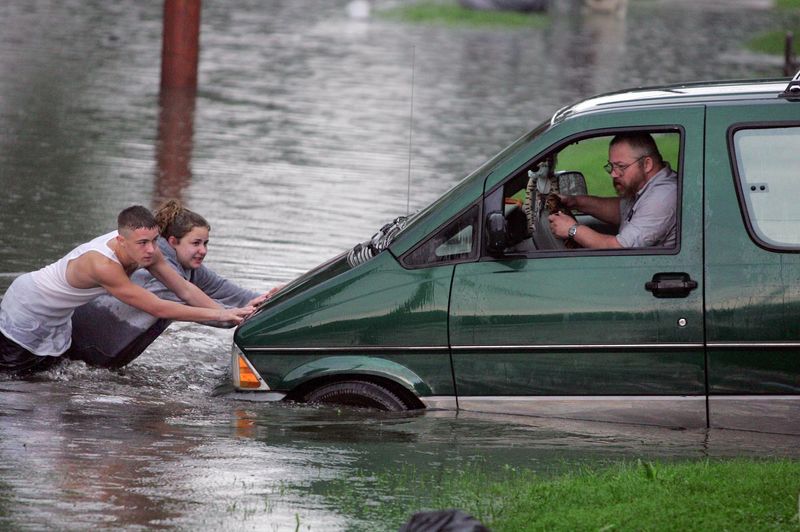
At least 81 people, including children, have been confirmed dead by Texas authorities in historic flash floods due to heavy rain. As of Sunday afternoon, 41 people were still missing across the state, including 10 children and a counselor from Camp Mystic, a Christian girls’ camp southwest of Austin.
The National Weather Service (NWS) in Wilmington, Ohio, warns of possible torrential rain and localized flooding on Monday as thunderstorms move through the Buckeye State, according to the July 7 NWS Hazardous Weather Outlook. Several parts of Ohio have already experienced recent severe weather and flooding events, leading to washed out roads, evacuations, power outages, and water rescues, the Columbus Dispatch reports.

What’s the worst flood Ohio has ever seen? Here are a few standouts.
What is the worst flood in Ohio’s history?
The Great Flood of 1913 is recorded as “Ohio’s greatest weather disaster,” according to Ohio History Connection. In March 1913, the Ohio Valley experienced such heavy rainfall (six to 11 inches across the state) that it caused rivers to overflow, washing away bridges, railways, and property, NWS states. Floodwaters from the Ohio River at Cincinnati rose 21 feet in 24 hours.
The death toll in Ohio reached nearly 500 people and left 250,000 homeless. At the time, the Great Flood of 1913 was considered one of the worst natural disasters in U.S. history.
3 more of the worst floods in Ohio history
The NWS also lists the winter flood of 1959, where 16 people died, the Shadyside Ohio flooding of 1990 that killed 26, and the Independence Day flood of 1969 that led to 41 deaths as significant floods in the state. Each of these floods started because of sustained heavy rainfall and resulted in dozens of deaths, hundreds of injuries, and thousands of properties being damaged.
What was the deadliest flash flood in Ohio history?
The Xenia Flood of 1886 is named the deadliest flash flood in Ohio’s history, per NWS.
On May 12, 1886, late night storms led to extreme flash flooding in Xenia, about 16 miles east of Dayton. “Runoff from seven to nine inches of rain poured into Shawnee Creek, and a wall of water several feet high moved through Xenia,” Ohio History Connection states. “The waters rose so quickly that the sleeping families had little time to escape.”
The flood killed 28 people and displaced more than 300 residents, NWS states.
What’s the difference between floods and flash floods?
According to the National Weather Service, flash floods are more sudden, happen when there is heavy rainfall in a short period of time and occur within minutes or a few hours of excessive rainfall. Flooding takes place over a longer period, which can last days or weeks.
How to stay safe if a flood hits Ohio
One of the best ways to stay safe in a flood event is to be prepared. Here’s what Ohioans should do before, during and after a flooding event, according to previous Enquirer reporting:
This article originally appeared on Cincinnati Enquirer: As Texas floods wreak havoc and rain moves into Ohio, what are the worst floods Ohio has seen?
Reporting by Alex Perry, Cincinnati Enquirer / Cincinnati Enquirer
USA TODAY Network via Reuters Connect