The role of religious leadership in history has often been fraught. To members of the queer community in recent times, it has often been religious leaders who have caused the most pain. In the United States, religious leaders were some of the greatest apologists for racist policies like Jim Crow and slavery. And certainly, in Jewish life past and present, religious leaders of other faiths have stimulated or even taken part in the most heinous outbursts of antisemitism.
And, nevertheless, I believe that the moment we are in desperately requires the moral clarity that religious leaders are often uniquely called to provide.

Although I am no moral relativist, I am a pluralist. I believe that every religious tradition sheds light on ineffable questions in much the same way that the many facets cut into a diamond, each brings light to its stone. From every religious tradition in our world, we learn aspects of humanity’s highest endeavors, even at the same time as each tradition may periodically − or even often − fall short of its own ideals. The keepers of these traditions, and the sieves tasked with sorting the wheat from the chaff, as it were, are the clerics, clergy, and others who devote their lives to understanding their respective tradition and advocating for it to be its best self within the world.
Religious leadership must engage the present
This is no small part of why I think religious leaders are presently particularly suited for and obligated to important work. The faithful within our ranks − “amcha” as we’d call them in Judaism − bring faith into their lives, the Holy into the profane. For the average Church-, Mosque-, Gurdwara-, Temple-, or Synagogue-goer, religion “lives” in its place of worship and parishioners seek to bring it with them from there into the world. The task, then, is to bring their faith into life, ensuring that its impact goes beyond the four walls of a religious edifice.
For a religious leader, though, the duty includes this but also almost an inversion: Yes, we also seek to bring faith into lives, both for ourselves and for our communities. But the job of being a religious leader runs much deeper; our calling is to bring life into faith.
Part of what makes religious traditions so special is their historical status and antiquity. As a Jew, I find great meaning in the fact that my tradition has transformed over thousands of years, and that I can identify myself as a single link in a millennia-long chain of Jews. I love the fact that when I say the “Shema” from my “bima” (the central prayer of Judaism and the place where Jews lead worship, respectively), I am doing the same thing with the same words as my ancestors hundreds of generations ago.
But at the same time, because I chose to become a leader, a rabbi, my work runs deeper. Reciting historic words from an historic tradition and being an expert in the historic texts of my people is an integral part of my job. But my duty goes further, requiring me to ensure that my ancient tradition offers relevant, contemporary wisdom and guidance. If Judaism can’t help us interpret and make a stand against the rise of populism in the West, anti-immigration xenophobia, racism, or dehumanizing anti-queer movements, what use is it to me, or the world, really?
Naturally, I don’t believe that every religious tradition leads to all the same answers on these issues or other eternal questions. The value of religious leaders’ voices in this moment is not dependent on unanimity, but honesty and a willingness to speak truth to power, even if it may be dangerous or provoke worldly consequences.
Comforting the afflicted and afflicting the comfortable
Many these days look at religionists advocating for their values in the political arena and share a sentiment that makes me uneasy: that politics be kept out of religion. As a rabbi, the rebuttal I make is, “Are they reading the same scriptures as me?” I say that because my scriptures, at least, are exceptionally political.
The Torah cares deeply about how we treat strangers, the poor, immigrants, and more. And although the values in my ancient texts are not always perfectly consonant with many’s contemporary political feelings, there can be no question that every religious tradition, in its own way, through its own sacred writings, engages in what we in 2026 call “politics.”
Of course, when people say things like this, trying to drive a wedge between religious leadership and political position, my generous interpretation of their perspective is that they want to be able to engage in religion in a way which brings them peace, rather than riling them up. But one of the greatest lessons I learned in rabbinical school was that the job of a religious leader is not just to comfort the afflicted, but to afflict the comfortable. That usually isn’t the most fun part of being a religious leader, but we aren’t doing the sacred work with which we have been tasked if we fail to balance both sides of that equation.
The job of a religious leader isn’t to dispense bromides to the flock to ensure they leave worship services feeling eternally righteous, satisfied, or happy. Lord knows religious leaders love getting to do that. But our job is to connect our profound, respective traditions to the needs of the moment, come what may.
In a time where divisiveness grows deeper, bigotry is on the rise, and basic kindness seems to be a relic of the past, I think it is the voice of religious leaders that our society needs − now more than ever.
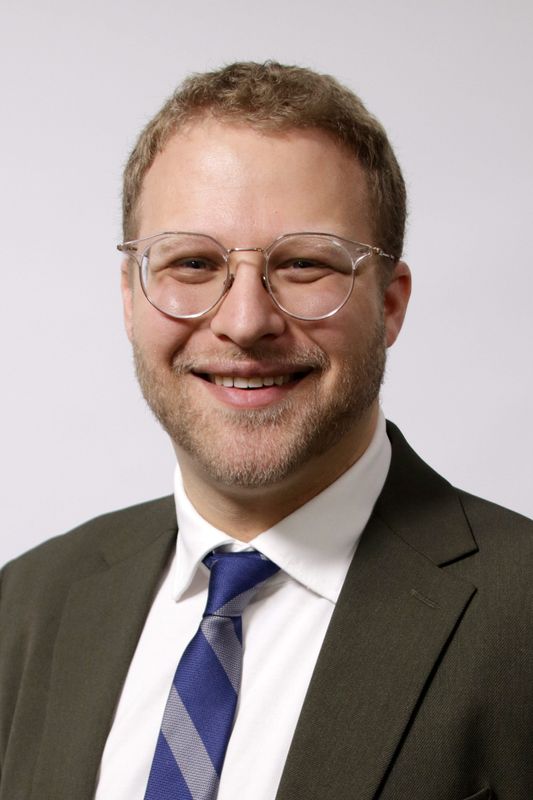
Ari Jun is the senior rabbi of Cincinnati’s Temple Sholom and the newly elected president of the Greater Cincinnati Board of Rabbis.
This article originally appeared on Cincinnati Enquirer: America’s moral vacuum demands more from religious leaders | Opinion
Reporting by Ari Jun, Opinion contributor / Cincinnati Enquirer
USA TODAY Network via Reuters Connect