A healthy man went for a bike ride on Wednesday, July 15, but quit after about 20 minutes because he wasn’t breathing normally.
That’s how people need to monitor themselves during periods of poor air quality, said Dr. Gary Zimmer, chef medical officer for the Mohawk Valley Health System who knows the anonymous cyclist.

“The most important thing is people need to listen to their bodies and use common sense,” Zimmer said. “If you’re short of breath or you’re coughing, stop doing what you’re doing.”
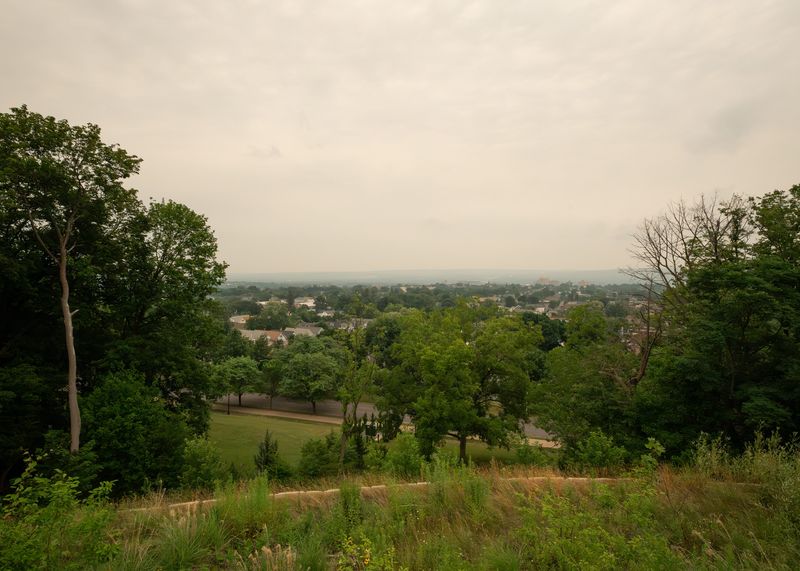
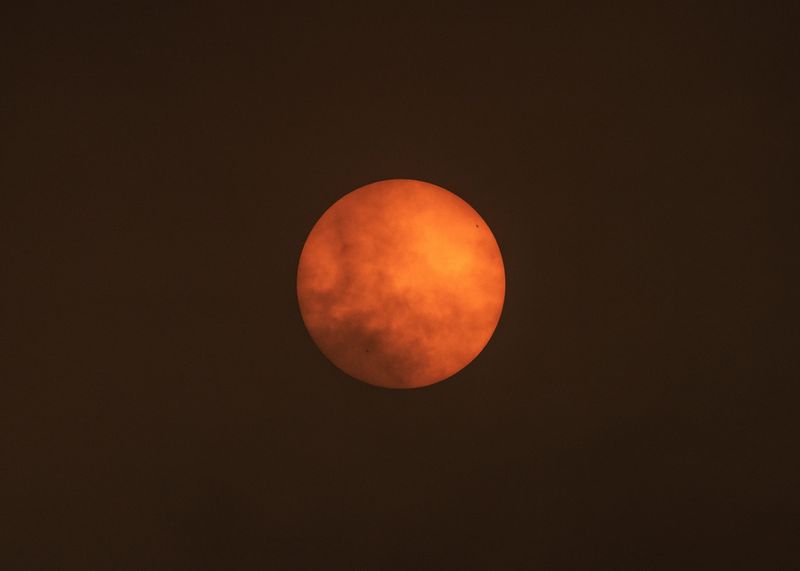
Canadian wildfires have sent smoke carrying potentially dangerous levels of fine particulate matter across New York and triggering health advisories in Central New York (which includes Oneida and southern Herkimer counties) on July 15, 16 and 17 as well as much of the rest of the state.
“You can smell it. You can see it. It isn’t a great time to be exerting yourself outdoors,” Zimmer said.
And when poor air quality is accompanied by heat and humidity, the combination can make symptoms worse, he said.
Anecdotal effects
The Wynn Hospital emergency department has treated more patients with some degree of respiratory distress this week than usual, Zimmer said. But he can’t say for certain that the smoke was the cause of patients’ symptoms.
The emergency department was busy this summer even before the smoke blew in, he said.
“But we’ve definitely seen an increase in respiratory complaints (lately),” he said. “Obviously we can’t prove causation.”
But the timing does match the movement of the smoke, he said.
The emergency department isn’t seeing many asthma attacks, Zimmer said. But it is seeing chronic obstructure pulmonary disease, or COPD, patients who tend to be more frail than asthma patients, he said.
Air quality does normally fluctuate, but without much impact on healthy lungs, Zimmer said. But when particle levels get as high as they did this week, that’s not necessarily true, he said, arguing for a mindful reduction of outdoor activity for health people and that people in sensitive groups refrain from outdoor activities at higher levels.
Sensitive groups
The DEC defines sensitive groups as children, teens, the elderly, pregnant people, people with lung or heart conditions, people who exercise or work outdoors, and people from disadvantaged communities.
And anyone with a chronic conditions that affects the lungs would be considered part of the sensitive group, Zimmer said. That includes asthma, COPD, congestive heart failure (with fluid in the lungs), cystic fibrosis, possibly multiple sclerosis, a spinal cord injury that affects normal lung action, or any other condition that brings underlying respiratory abnormalities, he said. It would also include anyone who’s at high risk for pneumonia and has had it multiple time in the past, he said.
But particulate matter can also carry a higher risk for people with immune problems, because of infections caused by particulate matter damaging the cilia lining the airways, Zimmer said.
And poor quality puts a strain on all the organ systems so, for example, people with healthy lungs but heart conditions or dialysis patients could also face increased risk, he said.
Air in CNY this week
The New York State Department of Environmental Conservation issued air quality advisories for particulate matter for Friday, July 17 for Central New York (which includes Oneida and southern Herkimer counties), Western New York, the Eastern Lake Ontario region, the Lower Hudson Valley, the New York City metro area and Long Island.
The air quality index for Central New York at 10 a.m. on Friday was 158, which is considered unhealthy, according to AirNow, a partnership of federal agencies, and state and local air quality agencies. The DEC forecast for the day was 170, also unhealthy.
The air quality index for particulate matter is based on a 24-hour average. (There is also an AQI number for the eight-hour average of ozone levels.) Air quality will likely improve and get worse over the course of a day.
On Thursday, July 16, Central New York’s air quality index was 176, which is unhealthy, according to the DEC. But the DEC forecast was for an AQI of 235, which is considered very unhealthy.
On Wednesday, July 15, the AQI for Central New York was 135, or, unhealthy for sensitive groups, the highest level recorded upstate on that day.
Smoke from the wildfires is expected to move around the country and the state over at least the next several days with local air quality potentially shifting between hazard levels.
Air quality index
The air quality index for particulate matter is broken down into color-coded ranges indicating that level’s potential impact on health.
Here are the activity suggestions made or each level on that scale:
Breathing easy
When levels of fine particle pollution are high, take refuge from the smoke outside in your air-conditioned home. But make sure that your air conditioning filter has been changed recently, Zimmer suggested.
If you don’t have air conditioning, but do have forced air heat, you can turn on the system’s fan (without turning on the heat) so that the air in your home goes through the filter, Zimmer said. Just make sure that your furnace has a fairly clean filter in place, he said.
Can masks help? There is currently no public health recommendation that anyone wear a mask no matter the AQI, Zimmer said.
And certainly a regular surgical mask, such as the ones everyone started out wearing during the COVID-19 pandemic, wouldn’t help at all. The microscopic particles would simply pass through it and enter your airways anyway, he said.
Zimmer said he hasn’t seen any specific data on the breakdown of what particles are in the wildfire smoke, but it’s possible that a properly fitted filtering mask, such as an N-95, might help, he said.
But there are still a lot of knock-off masks from the pandemic out there that don’t meet the regulatory standards for N-95 masks, he cautioned.
If the AQI gets high enough, should sensitive people think about leaving the area?
With pretty much all of the Northeast affected by the smoke, where could anyone go, Zimmer asked. And traveling would expose them to more pollution, he said.
The high levels usually pass within a day or two anyway, Zimmer sad, recommending that people with health issues simply stay inside.
“The key thing is not to overexert yourself,” he said.
Healthy people just need to pay attention when they’re outdoors, like his cyclist acquaintance, Zimmer said. If the AQI is at the purple or maroon level, it’s best not to exert yourself, he said.
Otherwise, you can try to do your normal activities, he said. “If you’re feeling OK,” Zimmer said, “then go ahead and do it.”
Take a break if you’re coughing or short of breath, and take breaks more often if you’re outside, he suggested.
“A lot of people have to live their lives outdoors,” he said. “That’s just how they make their livings.”
Emergencies
As a general rule of thumb, seek medical attention if you have significant respiratory symptoms, such as shortness of breath, Zimmer said. If you are chronically short of breath, then go to the ED if your breathing becomes significantly worse, he said.
People with asthma may cough instead of wheezing, he said. People with asthma can try using their rescue inhalers if they experience a sudden fit of coughing.
If you’ve been exerting yourself outdoors and become short of breath, go indoors somewhere cool and see if your symptoms improve, Zimmer said.
“If there is something new or off that is a concerning symptom, that needs to get checked out by a health care provider,” he said.
Always go to the emergency department if you experience unexplained chest pain, he added.
But New Yorkers are going to have to learn to breathe easy despite wildfire smoke.
“For better or for worse, wildfire are a natural part of our environment,” Zimmer said. “They happen every year around the world and the key thing is to be aware of the air quality and to listen to your body. And to not do anything that’s going to push unnecessary risk.”
This article originally appeared on Observer-Dispatch: ‘You can smell, see it’: Your guide to wildfire smoke in Oneida County
Reporting by Amy Neff Roth, Utica Observer Dispatch / Observer-Dispatch
USA TODAY Network via Reuters Connect
By Amy Neff Roth, Utica Observer Dispatch | USA TODAY Network