In just seven pages, the nonprofit that oversees New York’s electric grid offers up a thorough, if alarming, take on an issue confronting ratepayers statewide.
Why are my electric bills so high?

“Fuel cost volatility, increasing demand due to economic development and new technologies, infrastructure upgrades, and supply chain challenges are all contributing to higher costs,” the white paper issued by the New York Independent System Operator concluded.
A lot to get your head around.
But were you to boil down to two words where blame for New York’s surging bills belongs it would be these: natural gas.
Why natural gas is driving up NY’s soaring electric bills
Natural gas is the primary source of around half the electricity generated in New York, says NYISO, whose job is to gauge demand and identify supply for the state’s grid. And that leaves the state hostage to a volatile global market. States dependent on natural gas saw tremendous increases in electricity prices in 2022 and 2023 after Russia invaded Ukraine.
And, as the U.S. has become a net exporter of natural gas, prices have gone up. “The ability to export gas overseas means producers can sell their product in more lucrative markets, placing upward pressure on domestic prices,” the report notes.
How Indian Point nuclear plant closure drove up utility costs
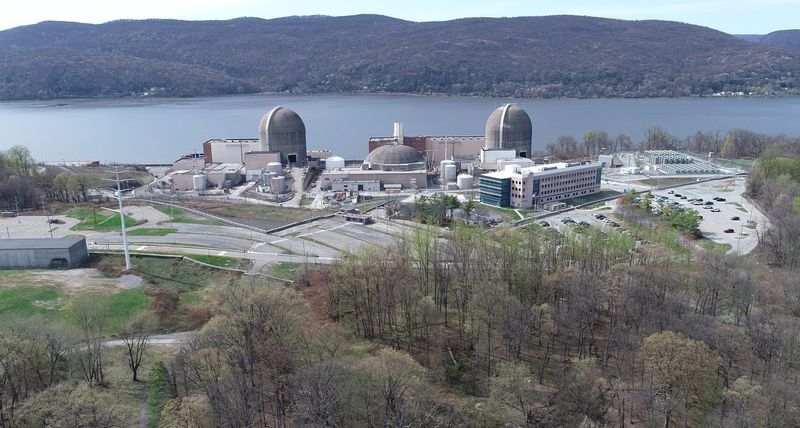
The downstate region that includes Westchester County and New York City became even more dependent on fossil fuels after the shutdown of the Indian Point nuclear power plant in Buchanan, which generated electricity for roughly 25% of the region’s energy needs for a good part of nearly six decades.
By one measure nearly 94% of generation downstate now comes from fossil fuels.
And, the report notes, many of the facilities that are generating that power are aging, which also hikes costs.
Why NY’s clean energy struggles are impacting utility costs
So what happened to all those renewable sources of clean energy — wind and solar power — the state envisioned would by now be sidelining dirtier fossil fuels, a central goal of the Climate Leadership and Community Protection Act passed in 2019?
Of 106 projects to clear a key NYISO hurdle known as interconnection — a sign-off that says a project can connect to the grid — since 2019, only seven have even begun construction. Efforts to develop solar and wind generation upstate have gotten so bogged down by local opposition, the state created a new agency to streamline the process.
Couple that with the Trump Administration’s move to eliminate federal tax credits for renewable projects. In December, the New York Power Authority said 16 wind and solar projects it was developing with its partners had been eliminated from its plans.
“As fossil-fuel plants have retired, new energy projects have struggled to come online fast enough to replace the departing capacity,” the white paper notes. “As a result, the margin between the amount of generation required to operate the grid reliably and the amount of generation available to the grid is narrowing.”
The report is one of the few to draw a straight line between the state’s increased dependence on natural gas, the struggling renewable build-out and higher bills, an issue that’s impacting ratepayers across the economic spectrum.
What are NY lawmakers doing about utility cost crisis?
At the end of December, more than 1.2 million households were behind at least two months on their gas and electric bills. Last year, utilities across the state shut off gas or electric service for over 400,000 households for not paying their bills, surpassing the yearly totals logged during the Great Recession between 2008 and 2010.
The state’s utilities and the state Public Service Commission, which oversees them, have been cast as villains in all this. On Wednesday, Feb. 4, the state Senate leadership unveiled a series of reforms designed to give the PSC more power to rein in utility spending.
The utilities hit back, suggesting lawmakers were trying to score political points by targeting them. Central Hudson, for one, noted that 60% of every dollar it receives from ratepayers in its Hudson Valley territory are for costs outside its control like state-mandated fees and payments to companies that supply natural gas.
“If we’re going to produce meaningful and lasting relief for New York residents, policymakers should take a careful, honest look at the policies in place that have directly contributed to these rising costs,” Central Hudson spokesman Joe Jenkins said.
“Central Hudson stands ready and willing to work with lawmakers on practical solutions that deliver real help now — rather than additional legislation that may generate headlines but ultimately results in limited impacts for customers,” he added.
The utilities have defended their rate hike requests saying they’re needed to upgrade aging infrastructure and transmission while supporting the state’s clean energy goals. But, they note, those costs come out of the delivery side of ratepayer bills, not the supply side where natural gas volatility plays an outsized role.
The USA TODAY Network has reached out to groups with differing perspectives on energy issues for their take on NYISO’s white paper and what it could mean for the state’s future.
Is nuclear the solution to reducing NY utility rates?
Dietmar Detering is the chairman of Nuclear New York, a nuclear power advocacy group.
Its members opposed the 2017 deal to shutter the Indian Point negotiated by the administration of former Gov. Andrew Cuomo. The plant’s former owner, Louisiana-based Entergy, cited competition from cheap and abundant natural gas as one reason for shutting down.
“At a high level, New York’s wholesale electricity prices are set at the margin by fossil gas, both before and after Indian Point,” Detering said. “What changed with the shutdown was increased system dependence on gas in the downstate and eastern (New York) zones, without a corresponding increase in gas supply or transmission capacity.”When Indian Point’s two working reactors were retired in 2021, he noted, roughly 2,000 megawatts of minimal-fuel-cost, always-available generation was replaced almost entirely by gas-fired power.
“But New York did not expand gas pipeline capacity into constrained regions, nor did it complete sufficient transmission or renewable projects in time,” Detering added. “The result has been more frequent and more severe gas supply squeezes — especially during winter cold snaps — where gas prices spike and those spikes flow directly into electricity prices.”
Detering notes the price spikes in electric and gas bills during the winter of 2021 and 2022 reappeared during the state’s recent cold spell.
“So I would say it’s not only Indian Point — increased gas exports are raising fuel prices in general, the weather, transmission limits, and delayed renewables all matter — but Indian Point’s closure clearly amplified price volatility downstate by removing a large stabilizing resource and increasing exposure to constrained gas markets,” he said.
Nuclear New York is supporting Gov. Kathy Hochul’s push to add some five gigawatts of nuclear power upstate. But the group would like Hochul and state lawmakers to reconsider opposition to adding nuclear power downstate, perhaps at the Indian Point site.
“How and where that nuclear capacity is ultimately sited is still an open question, and one that deserves careful, community-level discussion rather than assumptions up front,” Detering said.
Hochul has ruled out the idea.
But, in a letter sent to Westchester County Executive Ken Jenkins in October, Hochul acknowledged that Indian Point was shut down prematurely.
“The decision to close and decommission Indian Point precedes my administration and I believe was done in haste,” Hochul wrote. “We lost 25 percent of the power that was going to New York City without having a Plan B in place. Emissions have risen as a result. But the answer is not reopening Indian Point or considering other nuclear options for the site.”
Transmission moves clean energy south
Paul Haering is the vice president of Capital Investments for New York Transco, the consortium behind a portion of the AC Transmission project, the biggest transmission upgrade in the state in 40 years.
NYISO frequently refers to the state’s power system as a “Tale of Two Grids.” Upstate, there’s plenty of clean energy — nuclear and hydropower — while downstate, where demand is greatest, relies mostly on fossil fuels.
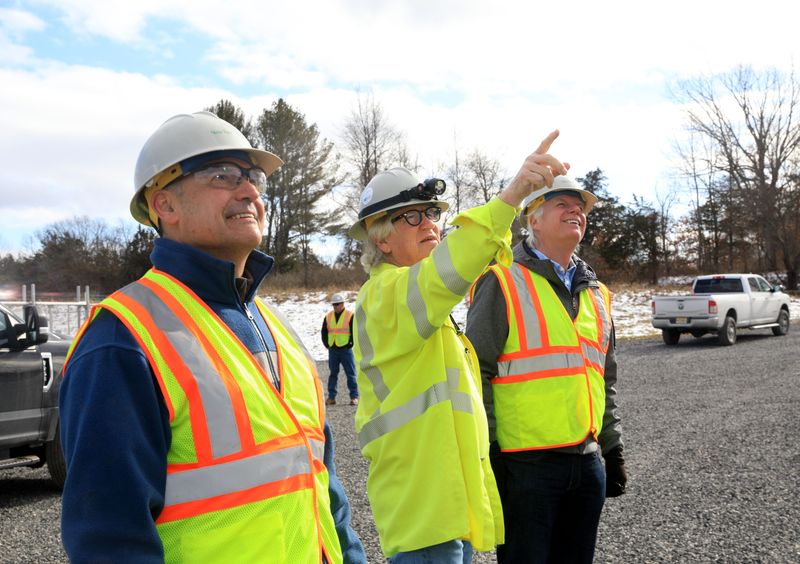
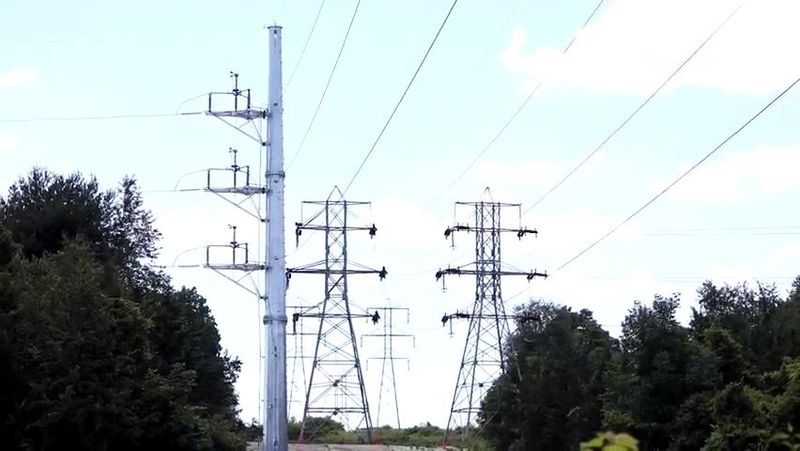
The project will help allow upstate energy to flow south along 55 miles of new overhead transmission lines, which have eliminated a stubborn bottleneck south of Albany.
After more than a decade of planning and construction, the project was up and running in 2023 with the last substation switched on in Dover late last year.
When it went into service “the capability of transmission system between the Capital Region and the Hudson Valley quickly reached 2,000 megawatts, getting around a 400-megawatt boost from the last substation components online and working with our recent 55-mile transmission build out,” Haering said. “This project’s increased transmission system capacity alone can send power to serve an estimated 1.5 million homes.”
“The bottom line is investment in our grid is needed now to address energy reliability and affordability to benefit all New Yorkers for generations to come,” Haering added.
When could NY utility rates come down?
The NYISO white paper says transmission upgrades will, at least in the near-term, increase costs for ratepayers. But, Haering and others say, over time those upgrades will save ratepayers’ money by making the grid more efficient while delivering more clean energy downstate.
The consortium also has a contract to build 90 miles of new underground and underwater transmission lines across parts of Long Island, New York City and Westchester as well as three new substations on Long Island next to existing ones.
The Propel NY Energy project has been in the permitting stage since 2024, with construction slated to start this year and finish in 2030.
“Limited, aging and constrained transmission directly drives up electricity costs,” Haering notes. “We saw this firsthand last summer, when during certain peak periods downstate New Yorkers paid more than double the per megawatt-hour cost of energy as compared to the rest of the state.”
“When evaluating those impacts over a 12-month period, had the transmission build out from the Propel NY Energy project been available, ratepayers on Long Island, for example, could have collectively saved well over $100 million,” he added.
Unions back pipelines
Gary Arnold is the director of energy and infrastructure for the United Association of Journeymen and Apprentices of the Plumbing and Pipe Fitting Industry of the U.S. and Canada. The organized labor group has 393,000 members, including some 25,000 members in 14 New York locals.
Its members build and maintain gas pipelines as well as nuclear facilities. Thousands of its members will be hired to build semiconductor factories for tech giant Micron in Clay, N.Y.
“I think this (the white paper) really highlights the importance and the need to truly embrace an ‘all-of-the above’ option that includes multiple forms of generation,” Arnold said. “And I think natural gas clearly plays a very important role in ensuring you have the three legs of the stool that I typically look at, which is how do we maintain affordability, reliability and environmental responsibility at the same time.”Investing in energy infrastructure like gas pipelines attracts business, which means jobs at semiconductor factories, data centers and industrial manufacturers, Arnold noted.
“You’ve got folks that are going to help pay for infrastructure that clearly needs to be replaced no matter what,” Arnold said. “And at the same time, you reap the economic benefits that come downstream of that, which is the jobs that are created, the economic benefits and the tax revenues that are generated for the local communities.”
Hochul has embraced the “all-of-the-above” approach and, in a move criticized by pro-renewables advocates, agreed to allow the state to approve a key permit for a gas pipeline that will deliver natural gas to New York City by way of Pennsylvania and New Jersey.
Will NY build more renewables to curb utility rate hikes?
Alex Patterson is the campaign coordinator for Public Power NY, a group pressing the state to abandon the “all-of-the-above” approach and go all in on renewables.
The group says natural gas generation facilities, particularly peaker plants located in New York City, are causing health problems for low-income communities and need to be shut down.
With ratepayers complaining of gas bills doubling and tripling during weeks of freezing temperatures, Public Power highlighted the state’s dependence on natural gas.
“It’s not the first time notoriously volatile gas markets have sent energy bills skyrocketing,” Patterson said.
“Every time we face a bomb cyclone or some other supercharged weather event, we pay for New York’s reliance on gas through our utility bills, he said. “Governor Hochul’s energy plan will lead to higher energy bills for New Yorkers and more pollution in our communities. There’s only one solution to the energy affordability crisis and the climate crisis: building public renewables.”
Thomas C. Zambito covers energy, transportation and economic growth for the USA TODAY Network’s New York State team. He’s won dozens of state and national writing awards from the Associated Press, Investigative Reporters and Editors, the Deadline Club and others during a decades-long career that’s included stops at the New York Daily News, The Star-Ledger of Newark and The Record of Hackensack. He can be reached at tzambito@lohud.com
This article originally appeared on Rockland/Westchester Journal News: Why are NY electric bills so high? Here’s everything you need to know
Reporting by Thomas C. Zambito, New York State Team / Rockland/Westchester Journal News
USA TODAY Network via Reuters Connect